Pangenome analysis of nine soybean cyst nematode genomes reveals hidden variation contributing to diversity and adaptation
Lucas Borges dos Santos, Kurt C. Showmaker, Rick E. Masonbrink, Kimberly K.O. Walden, João P. Gomes Viana, Khee-Man Kwon, Alvaro G. Hernandez, Zhihai Zhang, Christopher J. Fields, Thomas R. Maier, Andrew J. Severin, Thomas J. Baum, Melissa G. Mitchum, Matthew Hudson

TL;DR
This study reveals hidden genetic diversity in soybean cyst nematodes using a pangenome of nine populations, showing how they adapt and overcome soybean resistance.
Contribution
The novel contribution is the construction of a pangenome from nine SCN populations, revealing extensive gene duplication, loss, and structural variation.
Findings
SCN populations show significant genetic diversity with 19,000 orthologous gene families and 12,000 secreted proteins.
Rapid evolution is evident in 40% of core genes, particularly those involved in host recognition and immune modulation.
Gene-family expansion and structural variants in regions under selection suggest ongoing adaptation in SCN populations.
Abstract
The soybean cyst nematode (SCN) is a persistent threat to soybean production. SCN populations continually overcome resistant cultivars, causing significant yield losses. Studies conducted with a single reference genome restrict our understanding of intraspecific diversity, masking significant mechanisms of virulence evolution and host adaptation. Here we report a pangenome constructed of nine SCN populations of different pathotypes, including eight newly generated high-fidelity genome assemblies. We detected over 19,000 orthologous gene families and more than 12,000 putative secreted proteins in SCN. Combined, these data indicate substantial diversity across populations. Gene content analysis showed that 35% of gene families were the conserved core, 15% were soft-core, and 48% were accessory. Evidence of rapid evolution was identified in a high portion (40%) of core single-copy genes,…
Genes, proteins, chemicals, diseases, species, mutations and cell lines named across the full text — each resolved to its canonical identifier and authoritative record.
Click any figure to enlarge with its caption.
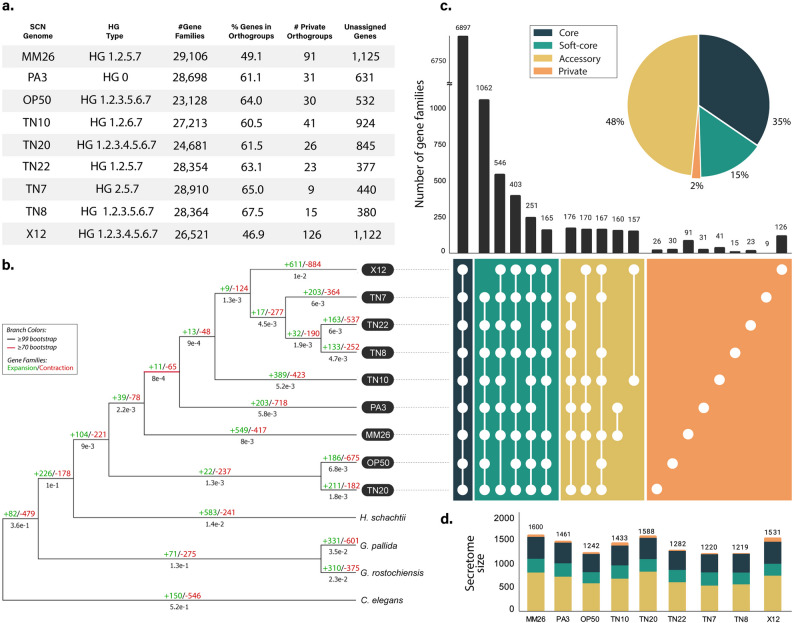 Figure 1
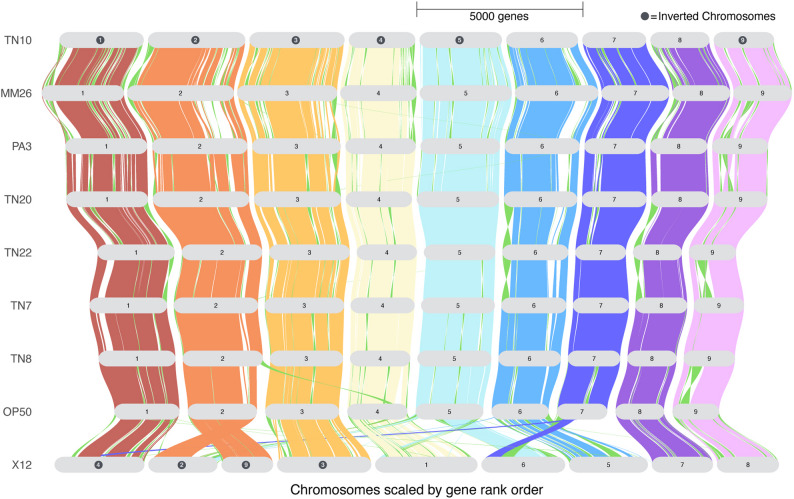 Figure 2
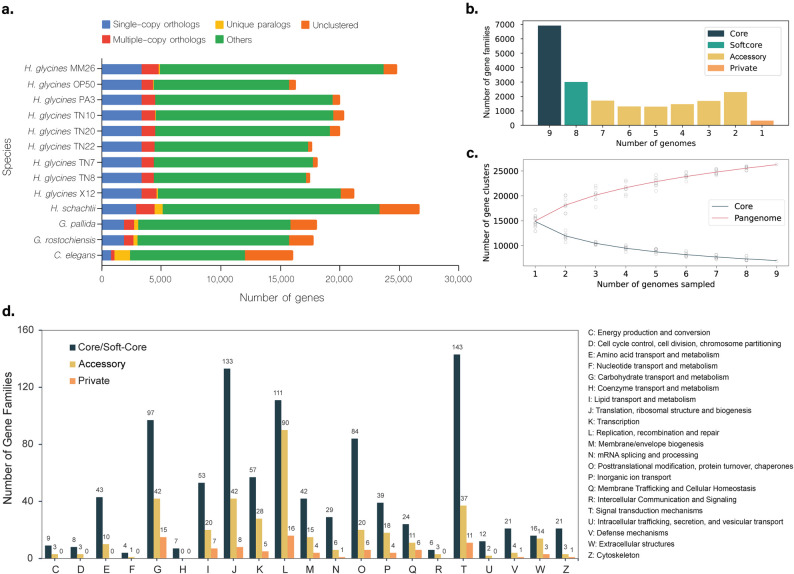 Figure 3
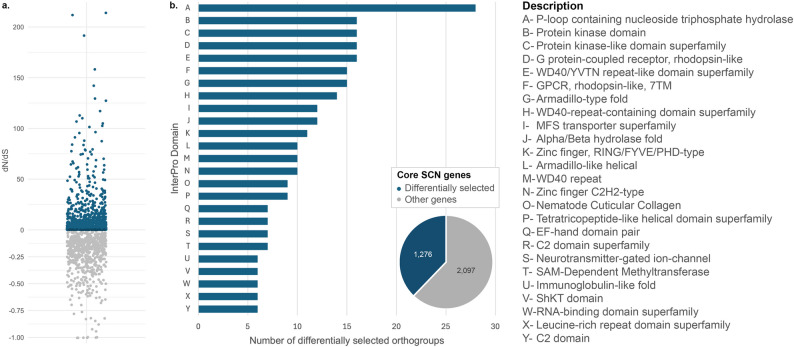 Figure 4
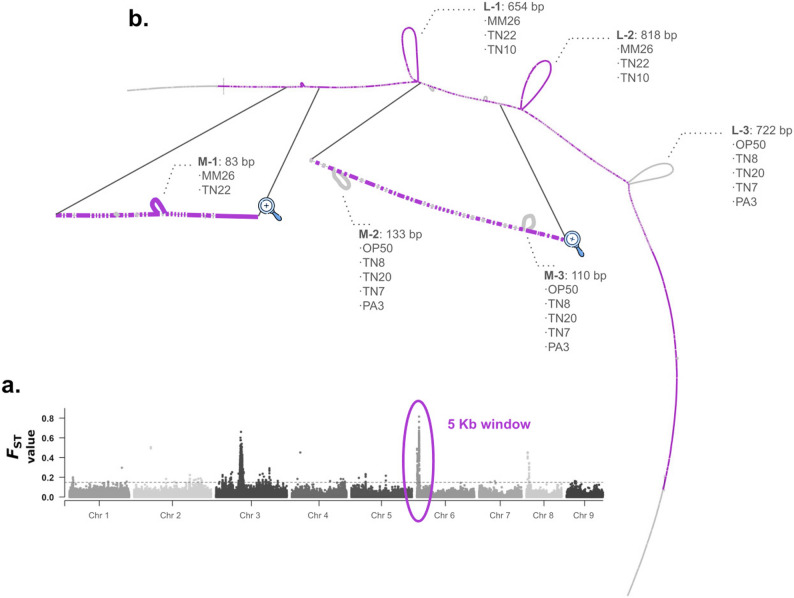 Figure 5
Peer Reviews
No public reviews on file for this paper yet. If you reviewed it on a platform where reviews are public (OpenReview, ICLR, NeurIPS, ICML), you can paste yours below so the community can read it here.
Videos
No videos yet. Explain this paper in a talk, walkthrough, or lecture? Add one.
Taxonomy
TopicsNematode management and characterization studies · Soybean genetics and cultivation · Legume Nitrogen Fixing Symbiosis