Prospective study assessing the validity of accelerated 2D Fast Spin Echo (2D FSE) based high-resolution knee MRI and T2 mapping using deep learning reconstruction
Xiaxia Wu, Weiyin Vivian Liu, Kejun Wang, Jiawei Jiang, Changsheng Liu, Yunfei Zha

TL;DR
This study shows that deep learning reconstruction can speed up knee MRI scans while maintaining image quality and improving detection of cartilage damage.
Contribution
The study validates the clinical utility of deep learning reconstruction in accelerating high-resolution knee MRI and T2 mapping.
Findings
DLR improved image sharpness and objective metrics (SNR/CNR) compared to conventional FSE.
DLR-based imaging showed higher diagnostic performance for cartilage lesions than standard FSE.
Combining DLR with T2 mapping improved diagnostic accuracy for cartilage injury detection.
Abstract
A routine fast spin-echo (FSE) MRI protocol is widely used to evaluate structural injuries of the knee. While adding a T2 mapping sequence to this protocol increases sensitivity for detecting early cartilage lesions, it is time-consuming. Deep learning reconstruction (DLR) can provide accelerated, high-quality imaging but requires further clinical validation. This study aimed to evaluate the image quality and diagnostic performance of an accelerated, high-resolution 2D FSE protocol using DLR. Additionally, it sought to determine whether a routine MR imaging protocol combining an accelerated T2 mapping sequence with DLR could improve diagnostic performance for the detection of cartilage lesions, using arthroscopy as the reference standard. A total of 92 patients underwent 2D FSE based routine knee imaging on 3.0T MRI, 39 of whom also underwent sagittal T2 mapping with different…
Genes, proteins, chemicals, diseases, species, mutations and cell lines named across the full text — each resolved to its canonical identifier and authoritative record.
Click any figure to enlarge with its caption.
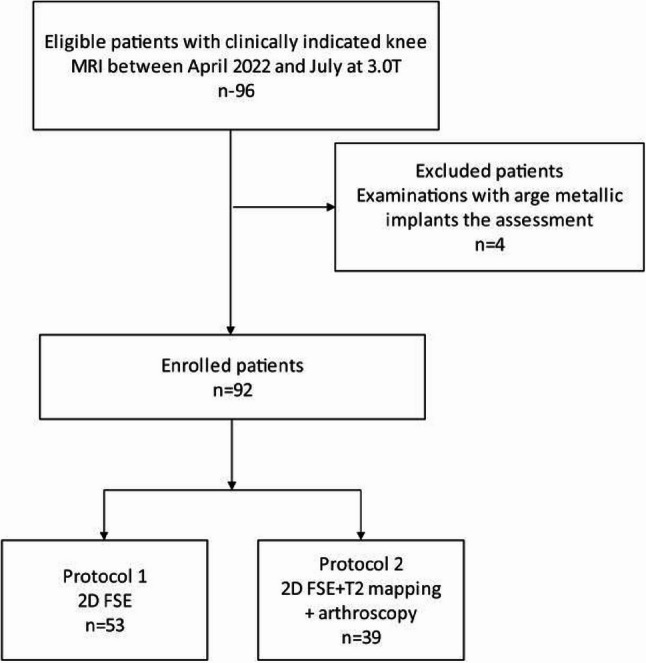 Figure 1
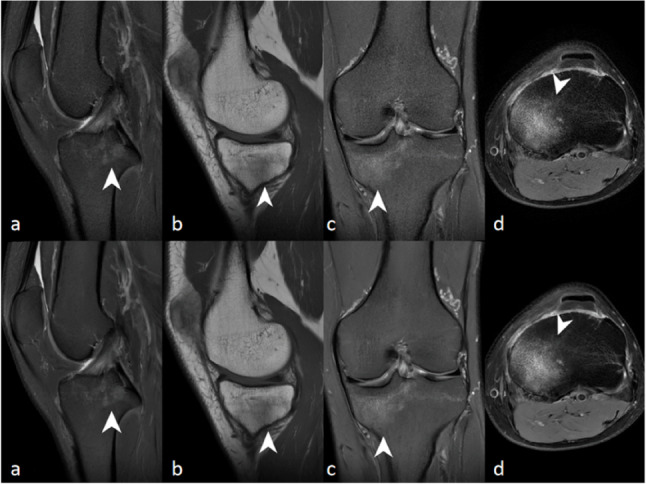 Figure 2
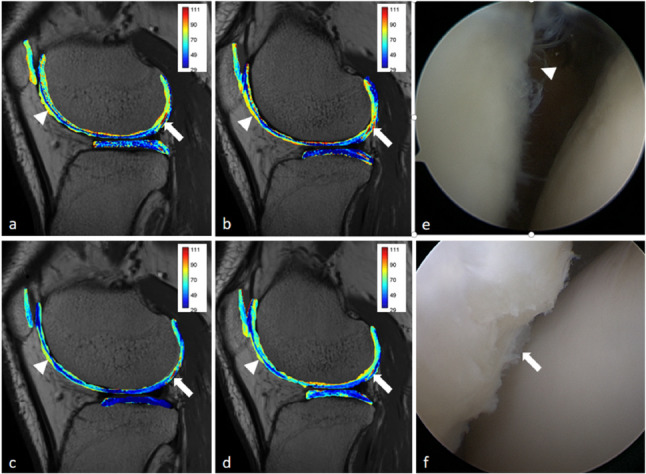 Figure 3
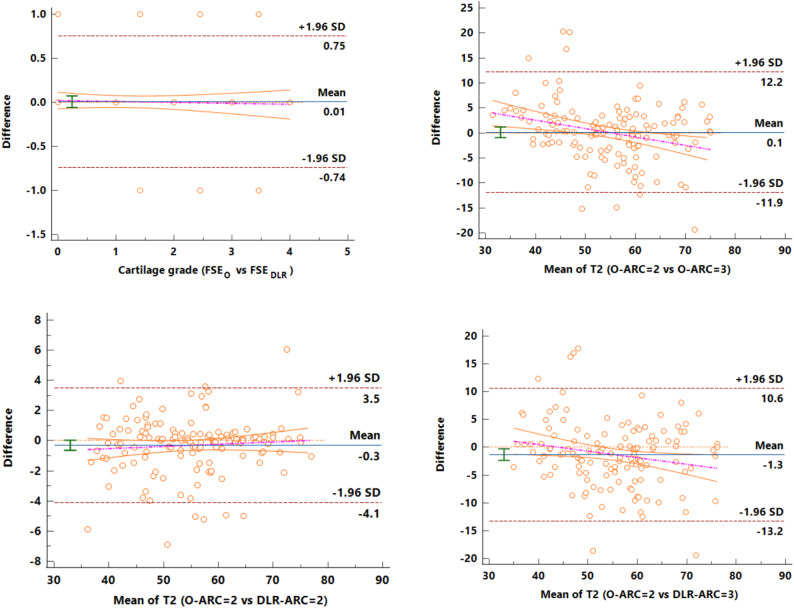 Figure 4
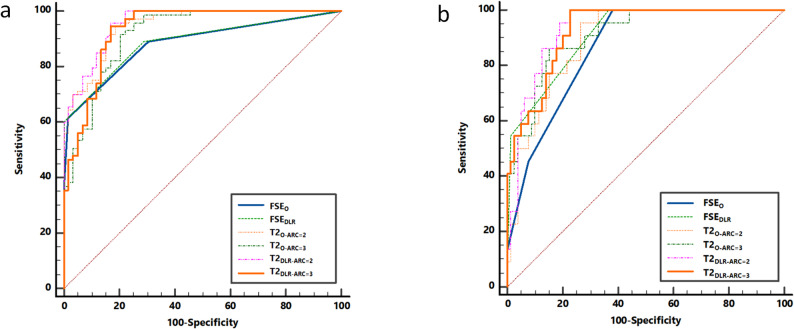 Figure 5
Peer Reviews
No public reviews on file for this paper yet. If you reviewed it on a platform where reviews are public (OpenReview, ICLR, NeurIPS, ICML), you can paste yours below so the community can read it here.
Videos
No videos yet. Explain this paper in a talk, walkthrough, or lecture? Add one.
Taxonomy
TopicsOsteoarthritis Treatment and Mechanisms · Knee injuries and reconstruction techniques · Total Knee Arthroplasty Outcomes