Epicardial adipose tissue mediates the association between circulating hsa-miR-4750-3p and coronary artery disease in patients with type 2 diabetes mellitus
Joanna Szydełko, Tomasz Zapolski, Monika Lenart-Lipińska, Marcin Czop, Alicja Petniak, Janusz Kocki, Beata Matyjaszek-Matuszek

TL;DR
This study shows that epicardial fat and a specific microRNA (hsa-miR-4750-3p) are linked to heart disease in people with type 2 diabetes.
Contribution
The study identifies hsa-miR-4750-3p and epicardial adipose tissue as a regulatory axis in diabetic atherosclerosis.
Findings
EAT thickness was significantly higher in T2DM patients with CAD compared to controls.
hsa-miR-4750-3p was a strong standalone predictor of EAT thickness.
Combining EAT and miRNA data improved CAD detection accuracy in T2DM patients.
Abstract
Epicardial adipose tissue (EAT) is a metabolically active visceral fat depot contributing to coronary atherosclerosis, yet the molecular mechanisms underlying EAT-related coronary artery disease (CAD) in type 2 diabetes mellitus (T2DM) remain unclear. Previously, we identified novel circulating miRNAs targeting fatty acid metabolism in T2DM-CAD. This study aimed to investigate whether EAT may explain the association between dysregulated hsa-miR-4505, hsa-miR-4743-5p, hsa-miR-4750-3p and CAD in T2DM patients and whether it can detect diabetic atherosclerosis alone or in a multi-modal combination. Seventy-six patients with T2DM and/or CAD along with eighteen healthy controls were enrolled in the study. All participants underwent transthoracic echocardiography to assess EAT thickness on the free wall of the right ventricle at end-systole and bioelectrical impedance analysis for body…
Genes, proteins, chemicals, diseases, species, mutations and cell lines named across the full text — each resolved to its canonical identifier and authoritative record.
Click any figure to enlarge with its caption.
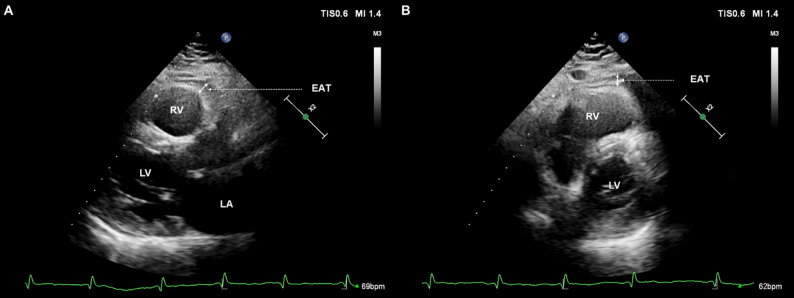 Figure 1
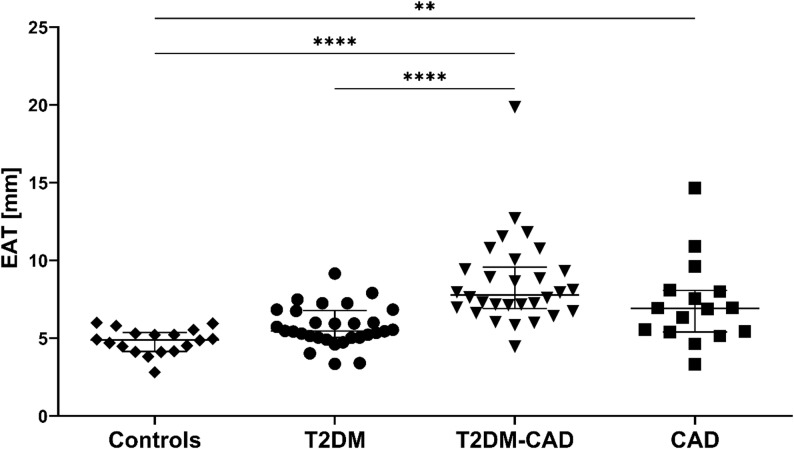 Figure 2
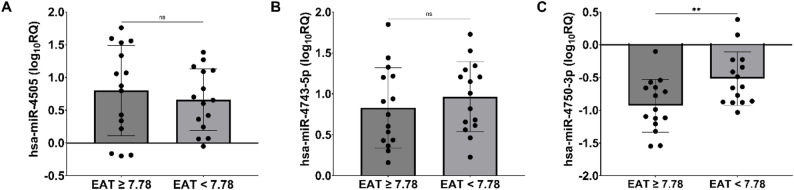 Figure 3
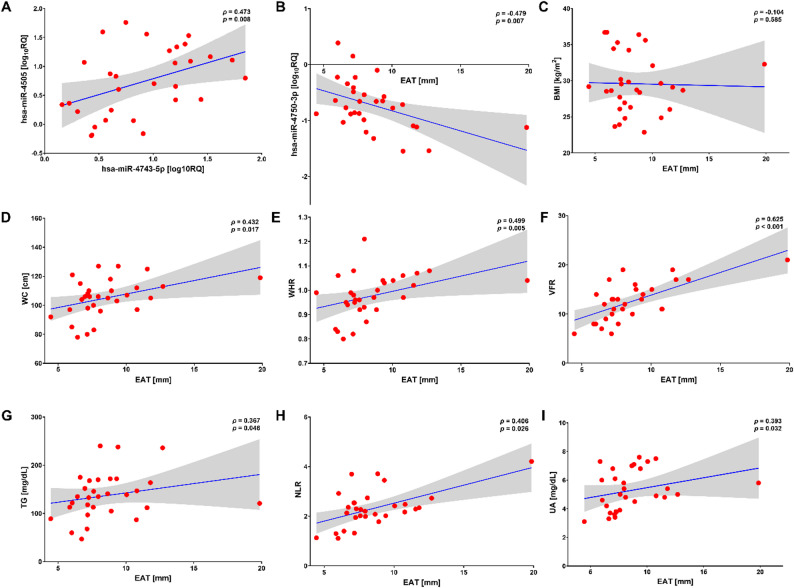 Figure 4
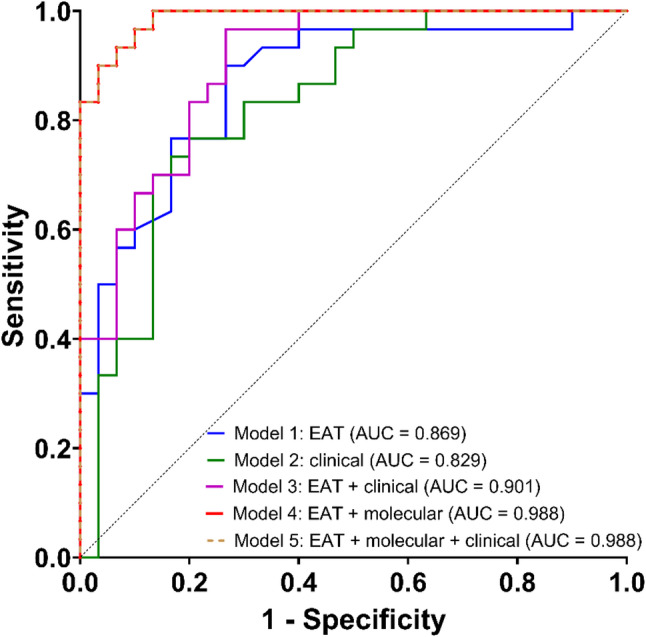 Figure 5
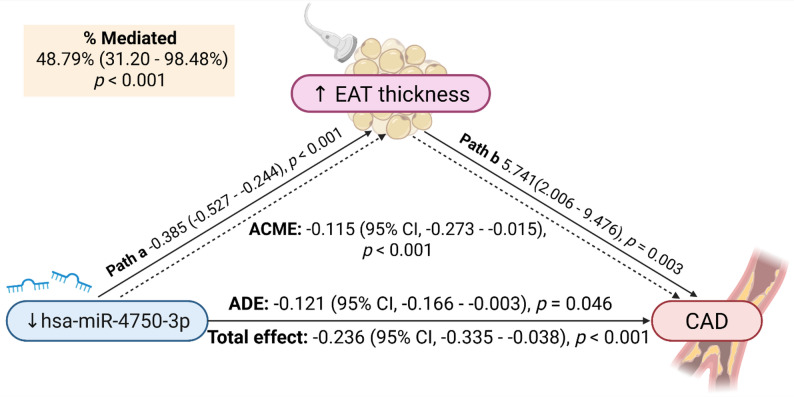 Figure 6
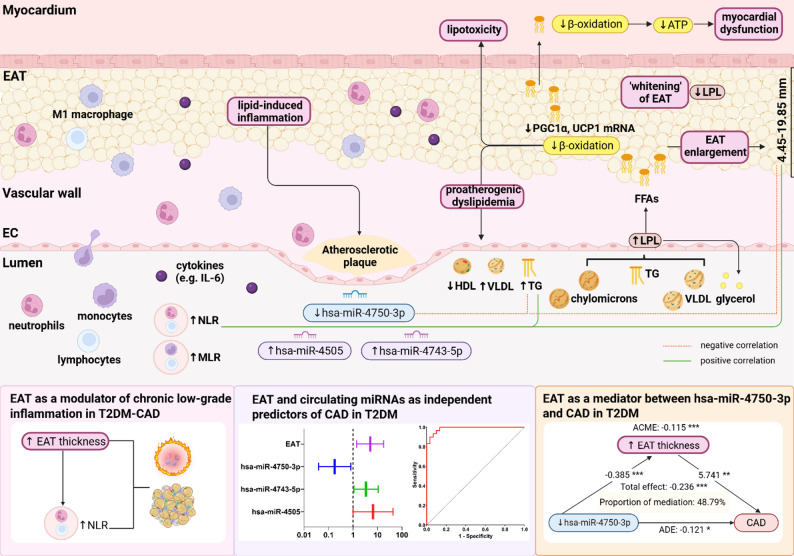 Figure 7
Peer Reviews
No public reviews on file for this paper yet. If you reviewed it on a platform where reviews are public (OpenReview, ICLR, NeurIPS, ICML), you can paste yours below so the community can read it here.
Videos
No videos yet. Explain this paper in a talk, walkthrough, or lecture? Add one.
Taxonomy
TopicsCardiovascular Disease and Adiposity · Adipokines, Inflammation, and Metabolic Diseases · Cardiovascular Function and Risk Factors