The impact of B‐cell reconstitution on mRNA vaccine responses in allogeneic stem cell transplant recipients
Fredrika Hellgren, Rodrigo Arcoverde Cerveira, Gustaf Lindgren, Puran Chen, Klara Lenart, Sebastian Ols, Alberto Cagigi, Davide Valentini, Mireia Rocavert Barranco, Evangelin Shaloom Vitus, Martin Corcoran, Yong‐Dae Gwon, Mattias NE Forsell, Magnus Evander, Peter Bergman

TL;DR
This study examines how B-cell recovery after stem cell transplants affects responses to mRNA vaccines, finding that timing and immature B-cell levels influence vaccine effectiveness.
Contribution
The study provides new insights into B-cell reconstitution and vaccine responses in alloHCT recipients using BCR repertoire sequencing and immunophenotyping.
Findings
AlloHCT patients vaccinated within 12 months post-transplant had lower antibody levels and memory B-cell frequencies than healthy controls.
Vaccine-specific B-cell clonotypes in responders showed similar expansion and SHM as in controls, despite reduced overall SHM in alloHCT patients.
Pre-vaccination immature B-cell levels were negatively correlated with vaccine response and could predict antibody titers.
Abstract
Vaccine responses in haematopoietic stem cell transplant (alloHCT) recipients vary, with different degrees of B‐cell reconstitution likely playing a key role. However, mechanistic understanding of the B‐cell receptor (BCR) repertoire and its functional impact post‐alloHCT remain limited. Within the scope of a mRNA SARS‐CoV‐2 vaccine phase IV clinical trial in alloHCT recipients (n = 77), we have measured antibody titers and avidity, and performed B‐cell immunophenotyping and B‐cell receptor repertoire sequencing in sub‐populations. AlloHCT patients receiving prime‐boost mRNA vaccination within 12 months post‐transplant exhibited lower vaccine‐specific antibody levels and memory B‐cell frequencies than vaccinated healthy controls. Responses were comparable to healthy controls in patients vaccinated later than 12 months post transplant. BCR repertoire sequencing showed reduced somatic…
Genes, proteins, chemicals, diseases, species, mutations and cell lines named across the full text — each resolved to its canonical identifier and authoritative record.
Click any figure to enlarge with its caption.
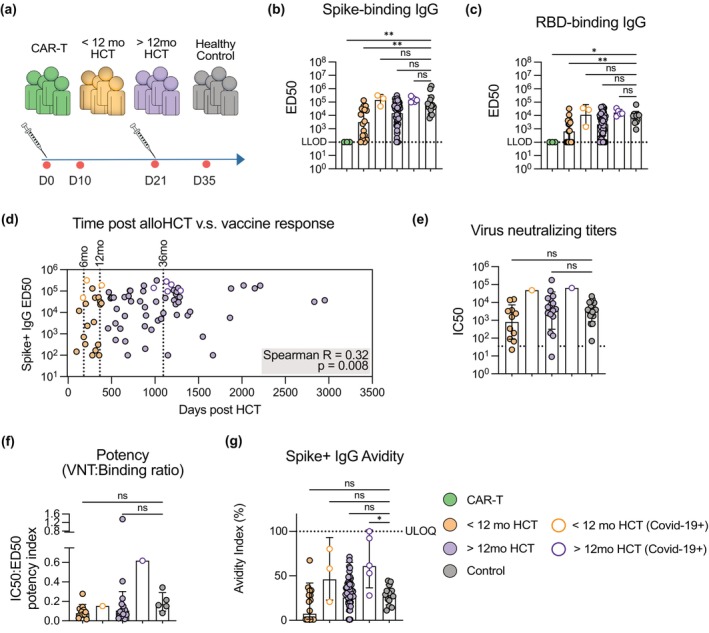 Figure 1
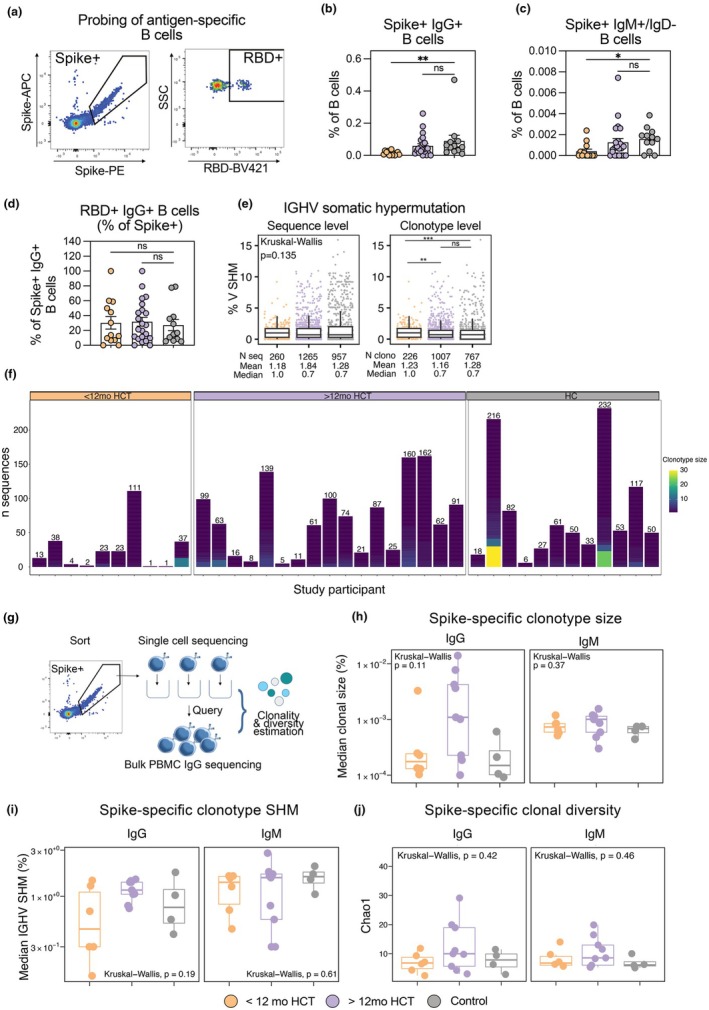 Figure 2
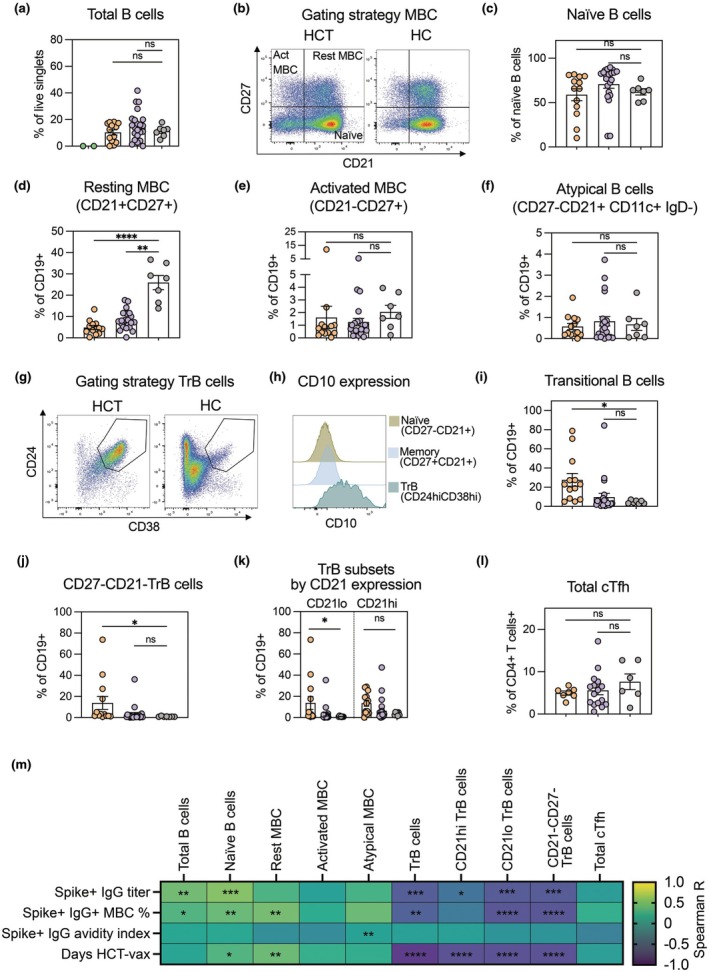 Figure 3
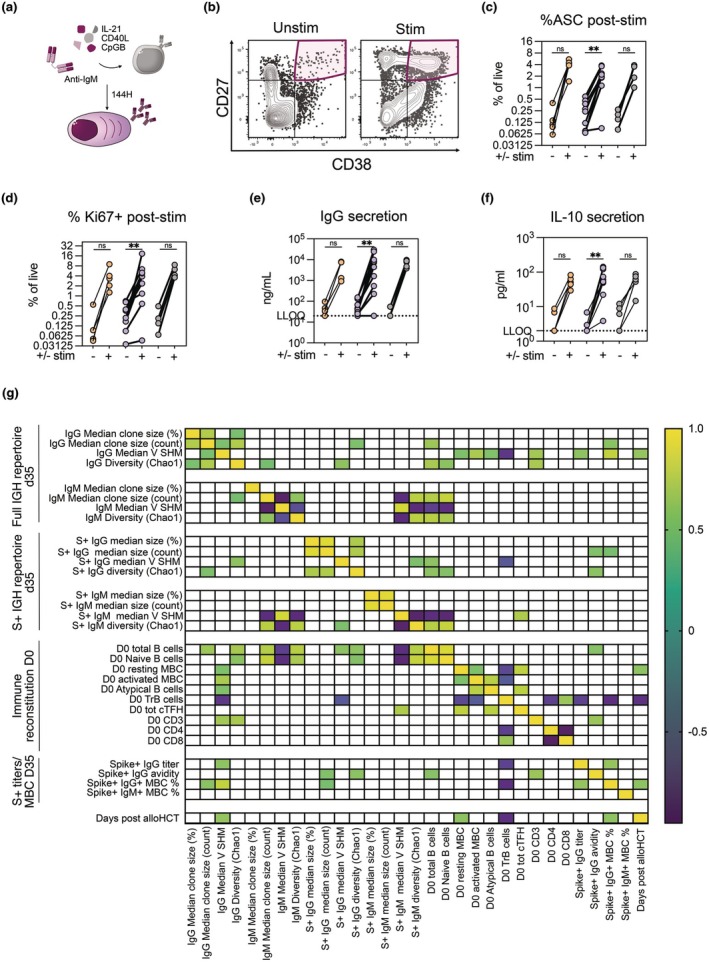 Figure 4
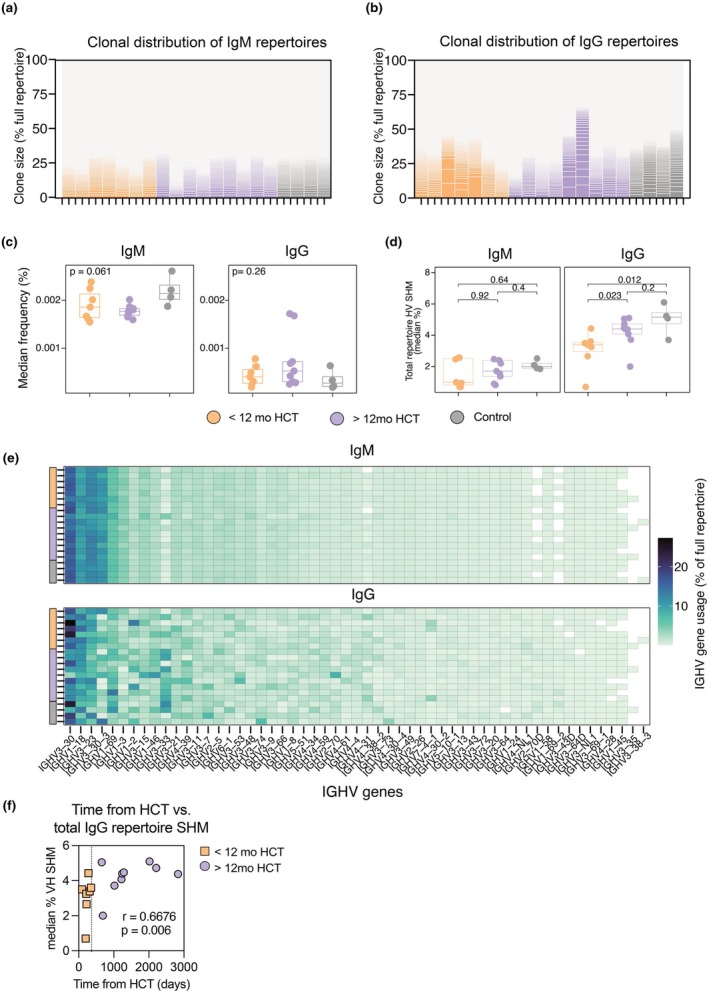 Figure 5
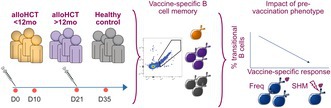 Figure 6
Peer Reviews
No public reviews on file for this paper yet. If you reviewed it on a platform where reviews are public (OpenReview, ICLR, NeurIPS, ICML), you can paste yours below so the community can read it here.
Videos
No videos yet. Explain this paper in a talk, walkthrough, or lecture? Add one.
Taxonomy
TopicsSARS-CoV-2 and COVID-19 Research · T-cell and B-cell Immunology · Immunotherapy and Immune Responses