Multi-Modal Fusion Frameworks of Subgraph-Optimized Graph Autoencoder for Molecular Property Prediction
Kaiyuan Zhang, Congyu Han, Fenghua Zhang, Cheng Lin, Quanlong Li, Tianyi Zang, Yanli Zhao

TL;DR
This paper introduces a new framework for predicting molecular properties using subgraph-optimized graph autoencoders and multimodal fusion strategies.
Contribution
The novel contribution is the development of TurboGAE, a subgraph-optimized graph autoencoder, and effective multimodal fusion strategies for molecular property prediction.
Findings
TurboGAE effectively captures substructure features impacting molecular properties.
Multimodal fusion strategies align intermodal features during pretraining, leveraging each modality's strengths.
The proposed methods show excellent performance on downstream molecular property prediction tasks.
Abstract
Molecular property prediction refers to predicting the properties of a given molecular representation. This task is of great significance in fields such as drug design and has garnered widespread attention from researchers. For molecular property prediction, the quality of feature learning plays a decisive role in model performance. Although existing molecular graph models can extract effective feature representations from graph structures, how to better utilize these features across different learning tasks remains an important challenge. This paper proposes a subgraph-optimized Graph Autoencoder (TurboGAE) and several multimodal fusion strategies. By introducing a subgraph-level graph tokenizer, TurboGAE more effectively captures the impact of substructure features (within molecular structures) on molecular properties. For cross-modal molecular features, a rational and effective…
Genes, proteins, chemicals, diseases, species, mutations and cell lines named across the full text — each resolved to its canonical identifier and authoritative record.
Click any figure to enlarge with its caption.
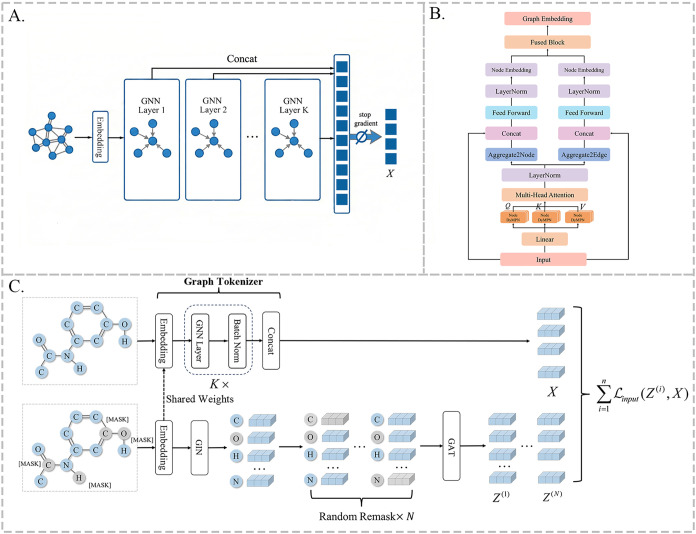 Figure 1
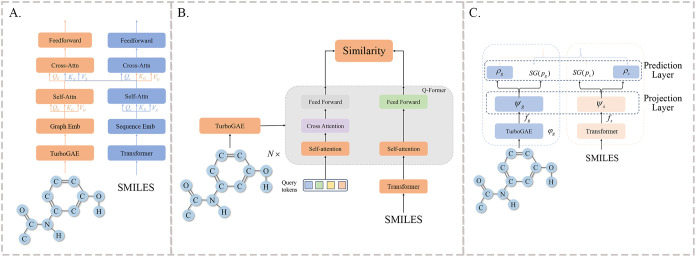 Figure 2
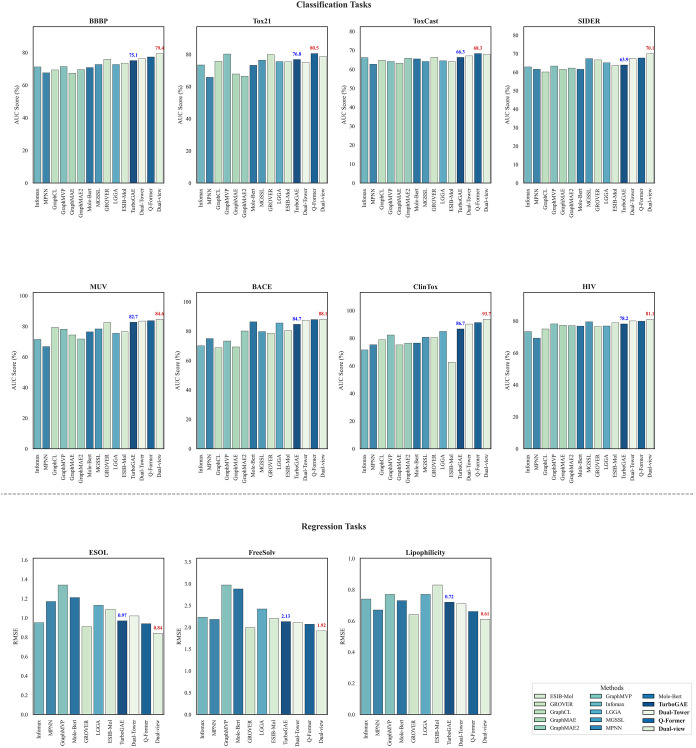 Figure 3
 Figure 4
 Figure 5
 Figure 6
 Figure 7
 Figure 8
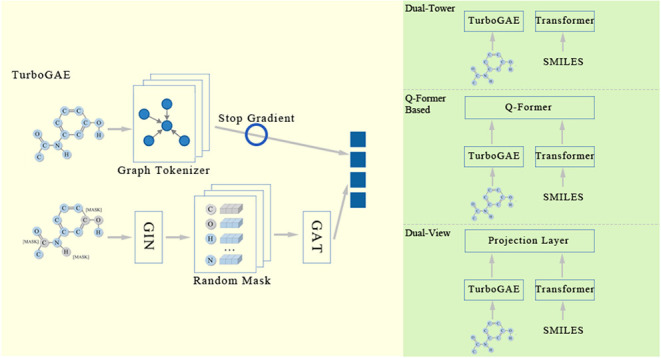 Figure 9
 Figure 10
 Figure 11
 Figure 12
 Figure 13
 Figure 14
 Figure 15
 Figure 16
 Figure 17
 Figure 18
 Figure 19
 Figure 20
 Figure 21
 Figure 22
 Figure 23
 Figure 24
 Figure 25
 Figure 26
 Figure 27
Peer Reviews
No public reviews on file for this paper yet. If you reviewed it on a platform where reviews are public (OpenReview, ICLR, NeurIPS, ICML), you can paste yours below so the community can read it here.
Videos
No videos yet. Explain this paper in a talk, walkthrough, or lecture? Add one.
Taxonomy
TopicsComputational Drug Discovery Methods · Advanced Graph Neural Networks · Machine Learning in Materials Science