Isolation of Potassium Bis(amido)diazadipnictogenide Salts
Reece Lister-Roberts, Meera Mehta

TL;DR
This paper reports the synthesis and characterization of new potassium salts containing substituted diazadipnictogen rings derived from Zintl phases and 1-azido-4-bromobenzene.
Contribution
The study introduces new potassium bis(amido)diazadipnictogenide salts and their unique monomer-dimer behavior in different states.
Findings
Arsenic derivatives show monomer-dimer interconversion between solid and solution states.
Phosphorus derivatives form a stable dimeric structure in both solid and solution phases.
Amido-(imino)-arsenide reacts with CO2 and CS2 to form carbonate and thiourea derivatives.
Abstract
The reaction of Zintl phases K3As7 and K3P7 were investigated with 1-azido-4-bromobenzene (4-BrC6H4N3) and found to yield potassium salts of substituted diazadipnictogen rings (general molecular fragment {(RN)2Pn2}; Pn = P, As). In the case of the arsenic derivatives, amido(imino)arsenide persists in solution and bis(amido)diazadiarsenide persists in the solid state. These two species can be considered to share a monomer–dimer relationship, accessible by alteration between the solid and solution states, whereas in the case of K3P7, our crystallographic and spectroscopic studies are consistent with the formation of a bisamido(bisimino)diazadiphosphenide, the “dimeric” form, persisting in both the solid and solution phase. Subsequent reactivity studies with amido(imino)arsenide show that it can act as a source of amide anion, giving a carbonate and a thiourea derivative when…
Genes, proteins, chemicals, diseases, species, mutations and cell lines named across the full text — each resolved to its canonical identifier and authoritative record.
Click any figure to enlarge with its caption.
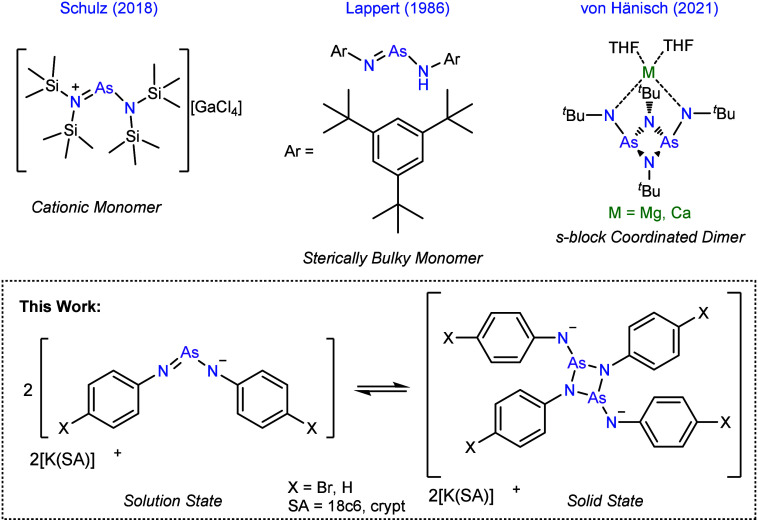 Figure 1
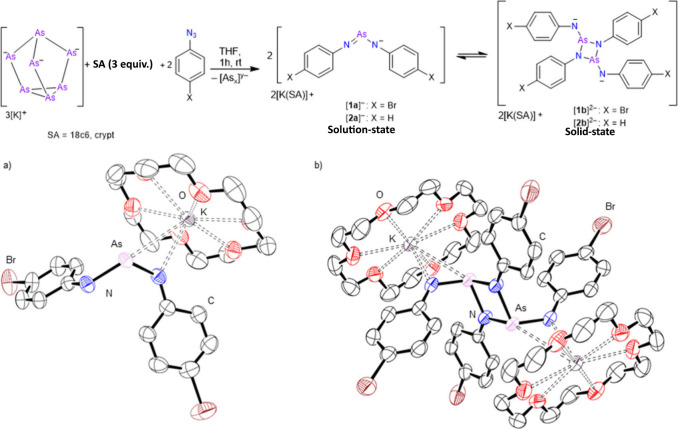 Figure 2
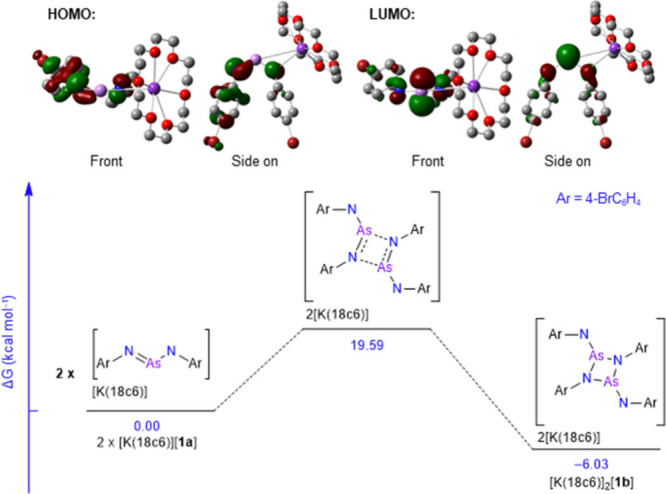 Figure 3
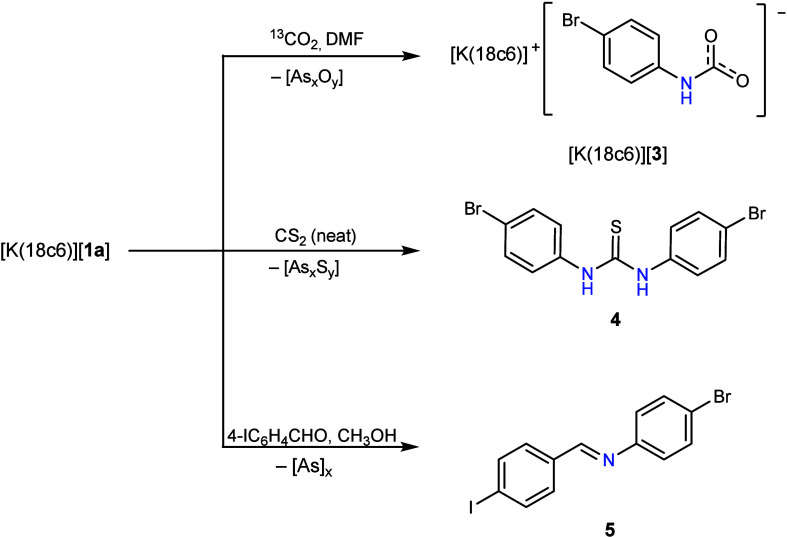 Figure 4
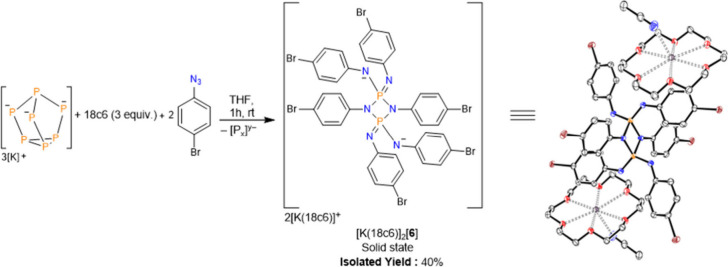 Figure 5
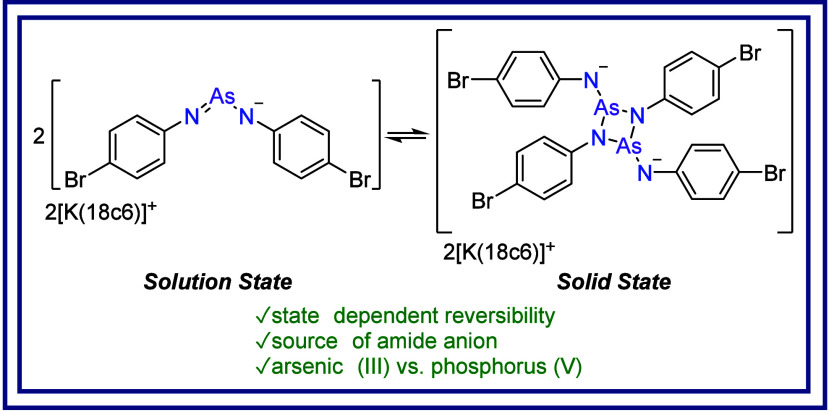 Figure 6
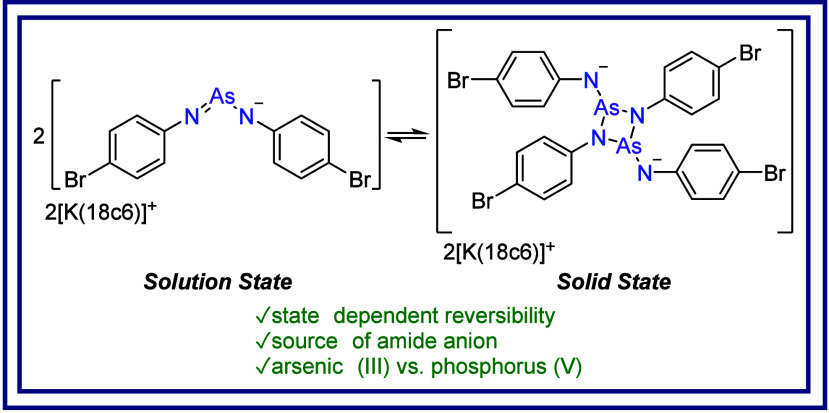 Figure 7
Peer Reviews
No public reviews on file for this paper yet. If you reviewed it on a platform where reviews are public (OpenReview, ICLR, NeurIPS, ICML), you can paste yours below so the community can read it here.
Videos
No videos yet. Explain this paper in a talk, walkthrough, or lecture? Add one.
Taxonomy
TopicsSynthesis and characterization of novel inorganic/organometallic compounds · Inorganic Chemistry and Materials · Organometallic Complex Synthesis and Catalysis