Coordination-Induced Weakening of N–H Bonds Driven by Bimetallic Cooperativity in Zr/Co Compounds
Julia Feresin, Megan. C. Ford, Matthew K. Vascura, Curtis E. Moore, Seth M. Barrett, Christine M. Thomas

TL;DR
This paper explores how bimetallic coordination in Zr/Co compounds weakens N–H bonds, enabling insights into proton-coupled electron transfer reactions.
Contribution
The study introduces a bimetallic system with spatially separated redox and substrate binding sites to investigate N–H bond weakening.
Findings
The BDFEN–H of the aniline adduct was measured at 37 kcal/mol.
Amido complex BDFEN–H was found to be 55 kcal/mol.
Redox potentials of the Co center were determined via cyclic voltammetry.
Abstract
The bond dissociation free energy (BDFE) of the element-hydrogen bonds of protic substrates have been found to decrease upon metal coordination. Herein, an early/late heterobimetallic complex is used to examine the impact on the BDFEN–H when the substrate binding site and the redox-active site are two different metals that are spatially separated. A tris(phosphinoamide) framework is used to link a d0 ZrIV center with an accessible substrate binding site to a coordinatively saturated redox-active Co center, which serves as an appended electron reservoir. A series of aniline, amido, and imido Zr/Co model compounds were synthesized starting from the ZrIV/Co–I aniline adduct PhH2N–Zr(MesNP i Pr2)3CoCN t Bu (2). 2,4,6-tris-tert-butylphenoxyl radical ( t Bu3ArO•) was used to abstract one or two H atoms and produce the amido and imido complexes PhHN-Zr(MesNP i Pr2)3CoCN t Bu (3) and…
Genes, proteins, chemicals, diseases, species, mutations and cell lines named across the full text — each resolved to its canonical identifier and authoritative record.
Click any figure to enlarge with its caption.
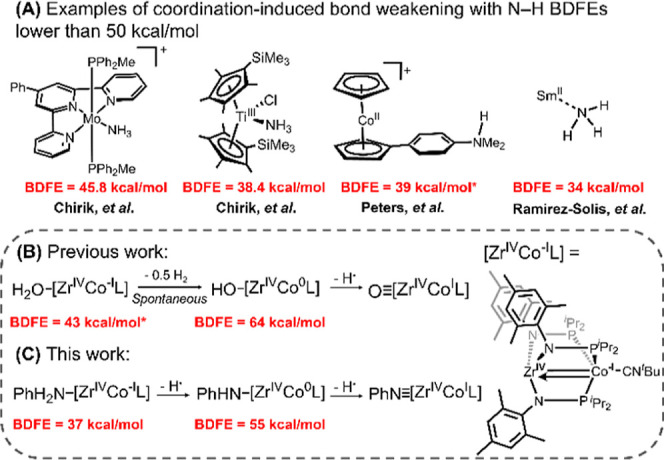 Figure 1
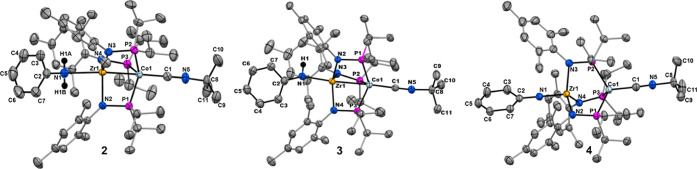 Figure 2
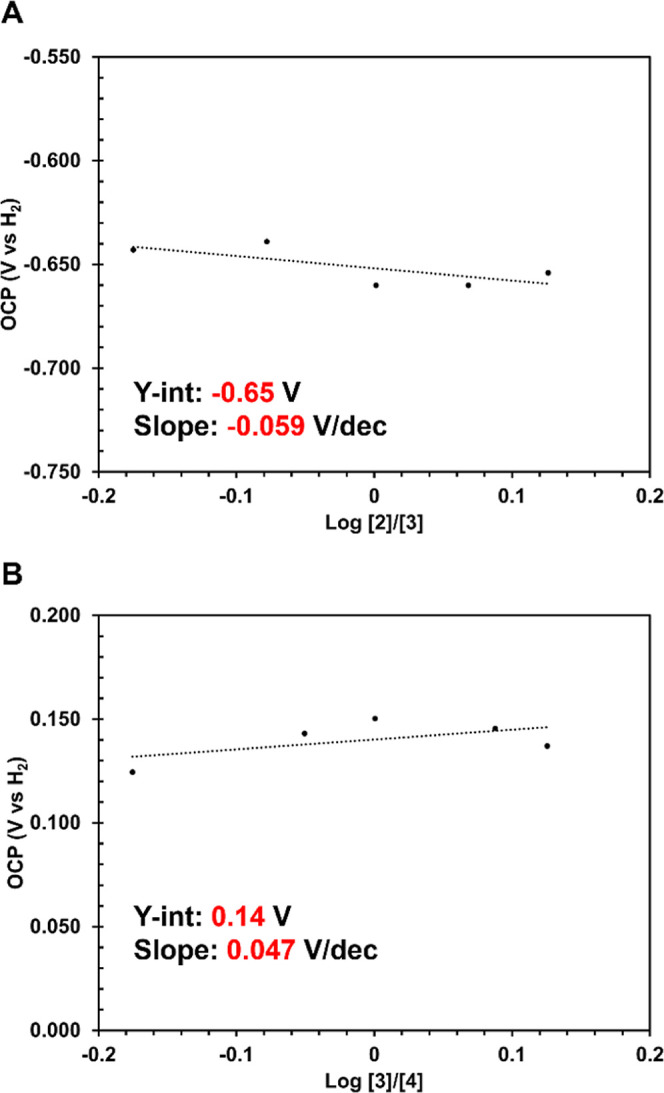 Figure 3
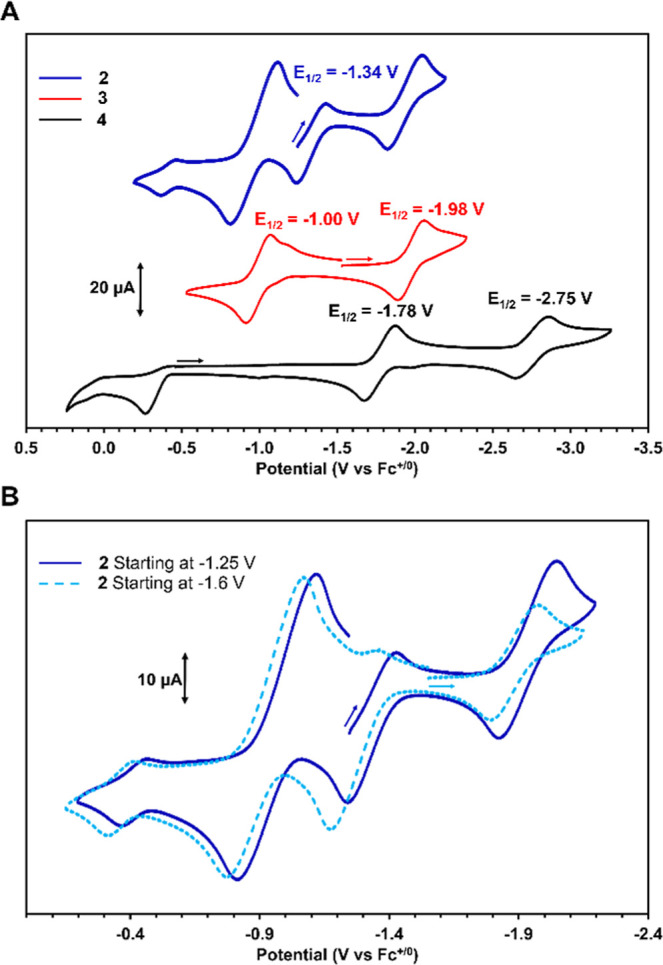 Figure 4
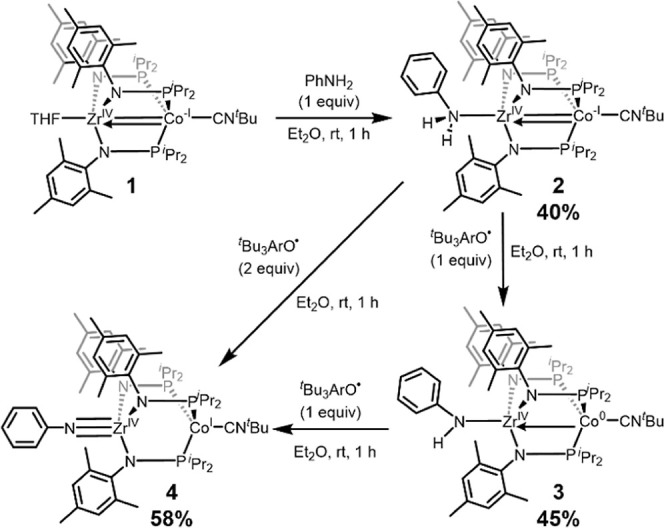 Figure 5
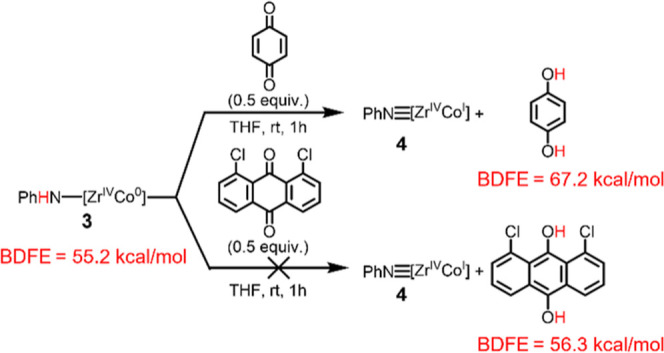 Figure 6
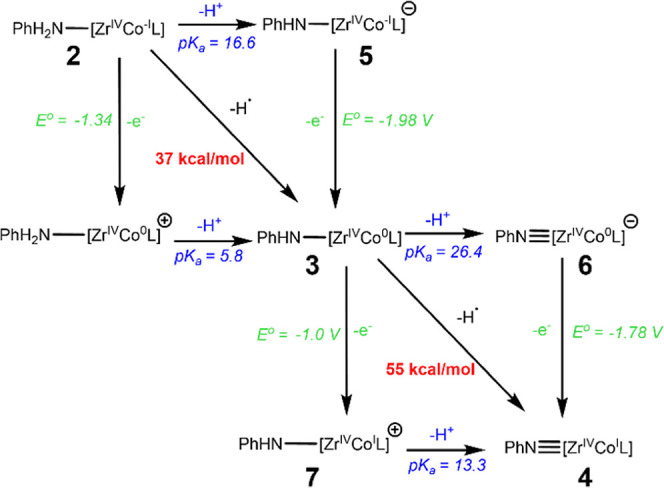 Figure 7
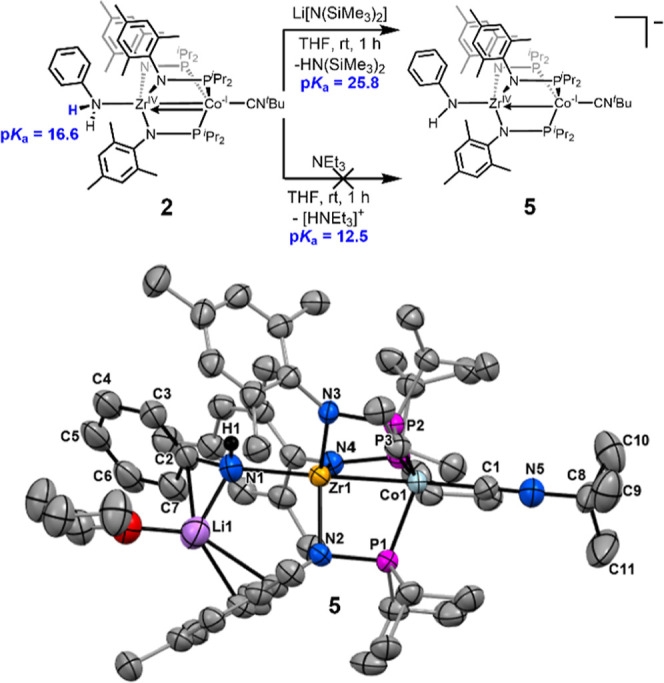 Figure 8
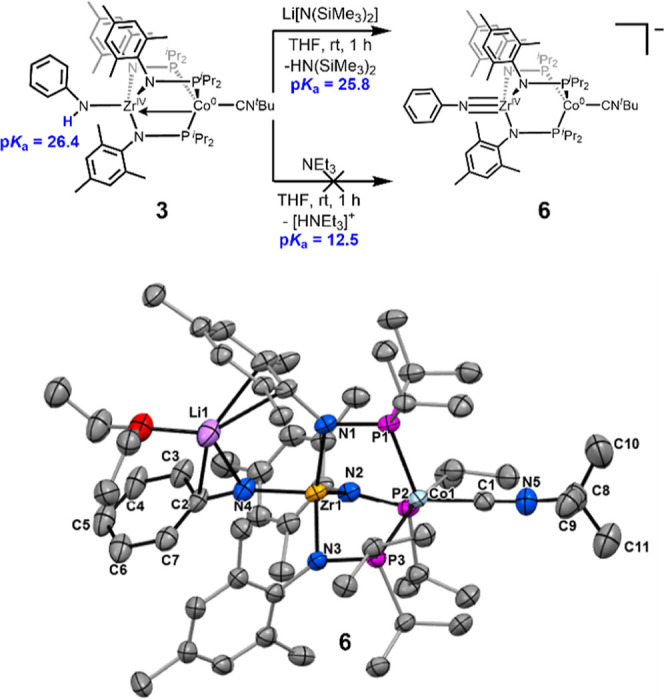 Figure 9
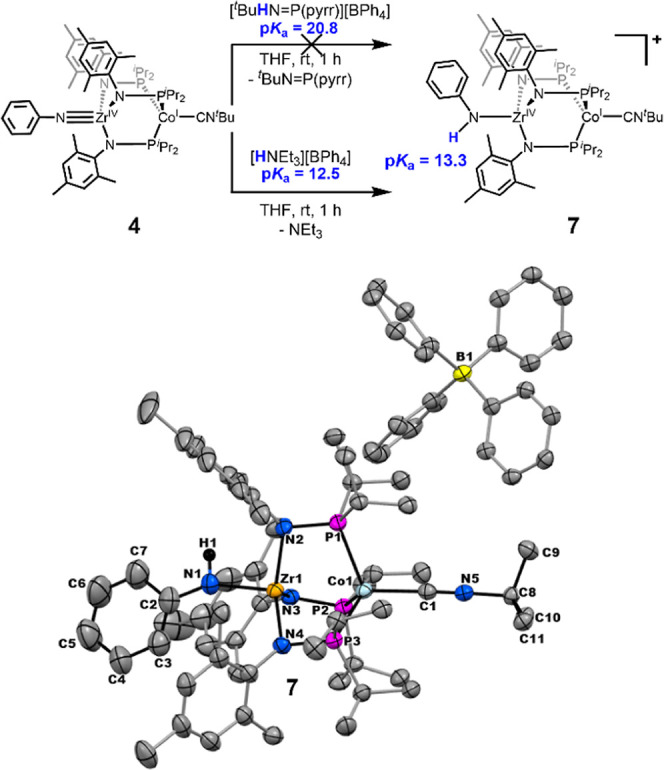 Figure 10
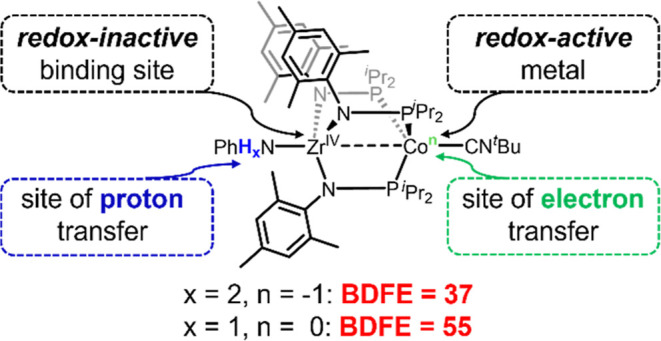 Figure 11
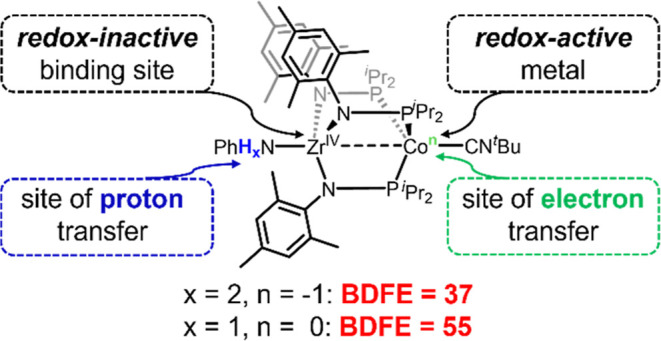 Figure 12
 Figure 13
 Figure 14
Peer Reviews
No public reviews on file for this paper yet. If you reviewed it on a platform where reviews are public (OpenReview, ICLR, NeurIPS, ICML), you can paste yours below so the community can read it here.
Videos
No videos yet. Explain this paper in a talk, walkthrough, or lecture? Add one.
Taxonomy
TopicsOrganometallic Complex Synthesis and Catalysis · Synthesis and characterization of novel inorganic/organometallic compounds · N-Heterocyclic Carbenes in Organic and Inorganic Chemistry