An Experimental Study on 3D-Printed Gyroid-Shaped TC4 Porous Scaffolds Guiding Angiogenesis and Osteogenesis in Bone Defect Areas
Lei Wang, Yu Wang, Rui Liu, Yanfeng Liang, Yang Liu, Mingqi Xu, Jia Yu, Yucheng Su, Zekui Han, Xinyu Wang

TL;DR
This study shows that 3D-printed Gyroid-shaped titanium scaffolds better support blood vessel growth and new bone formation in rabbit jaw defects compared to cube-shaped scaffolds.
Contribution
The novelty lies in demonstrating the superior angiogenic and osteogenic potential of Gyroid-shaped TC4 scaffolds over conventional cube-shaped ones.
Findings
Gyroid-shaped scaffolds induced greater angiogenesis and new bone formation compared to cube-shaped scaffolds.
Higher expression of CD31, EMCN, HIF-1α, and VEGFA was observed in Gyroid-shaped scaffolds during early implantation.
Imaging confirmed higher new bone formation in Gyroid-shaped scaffolds.
Abstract
To investigate the ability of novel Gyroid-shaped titanium alloy (TC4) porous bioscaffolds to induce angiogenesis and osteogenesis in bone defect areas. This study employed selective laser melting (SLM) technology to fabricate Gyroid shaped and Cube-shaped TC4 porous bioscaffolds, using the commonly used cube shape as a control. The unit cell size was 4 mm, with a wall thickness or rod diameter of 300 μm and a porosity of approximately 80%. These scaffolds were implanted into rabbit mandibular defect sites (10 mm × 7 mm × 5 mm) to evaluate the angiogenic and osteogenic potential of the Gyroid-shaped scaffold. Material characterization revealed that sandblasted and acid-etched (SLA) TC4 scaffolds met design specifications, exhibiting uniformly distributed micrometer-scale pores and enhanced surface hydrophilicity. Histological staining revealed that compared to the Cube-shaped scaffold,…
Genes, proteins, chemicals, diseases, species, mutations and cell lines named across the full text — each resolved to its canonical identifier and authoritative record.
Click any figure to enlarge with its caption.
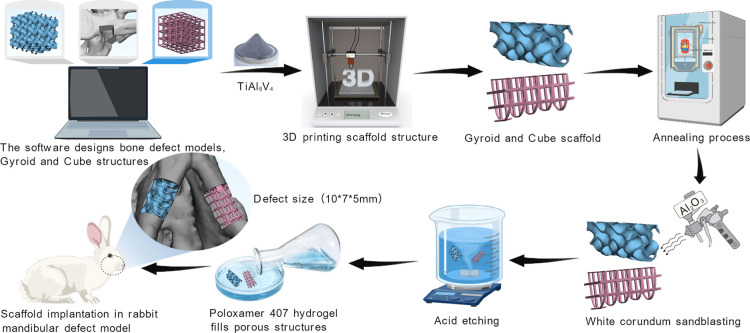 Figure 1
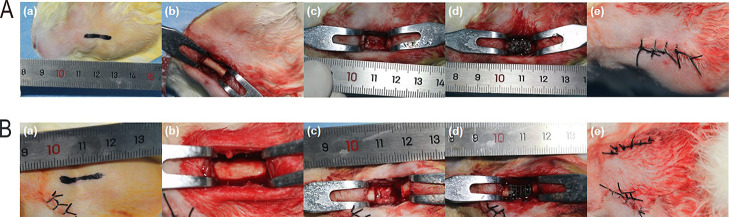 Figure 2
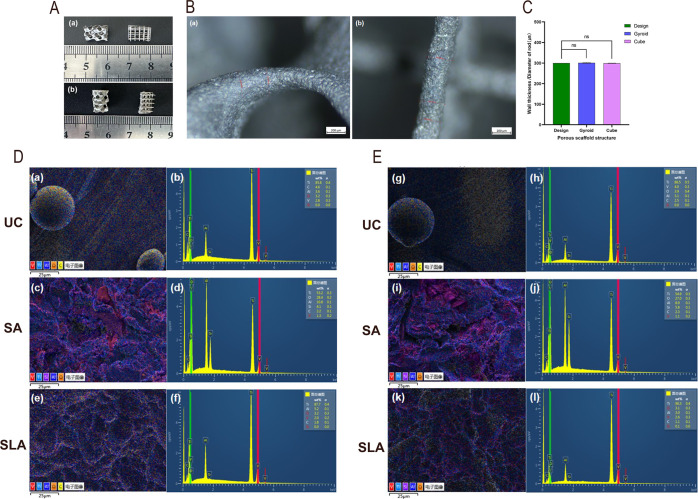 Figure 3
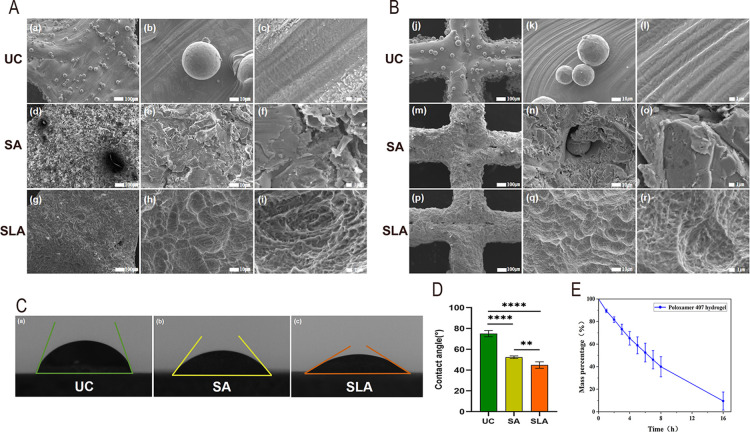 Figure 4
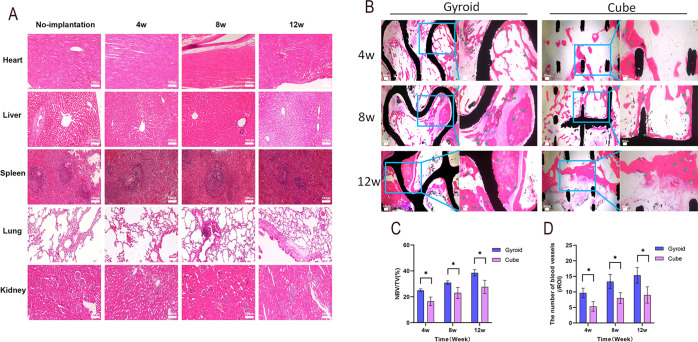 Figure 5
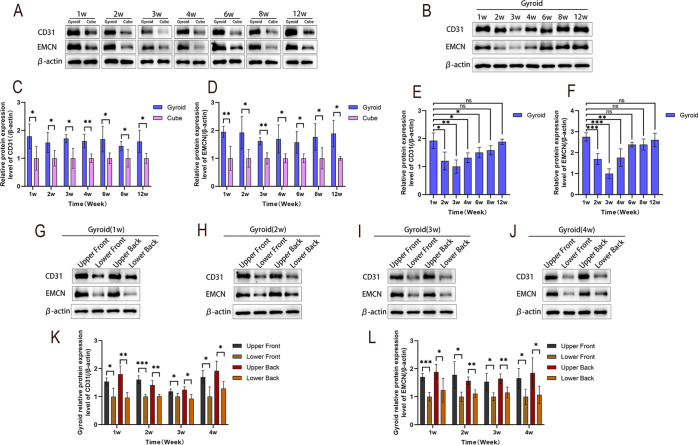 Figure 6
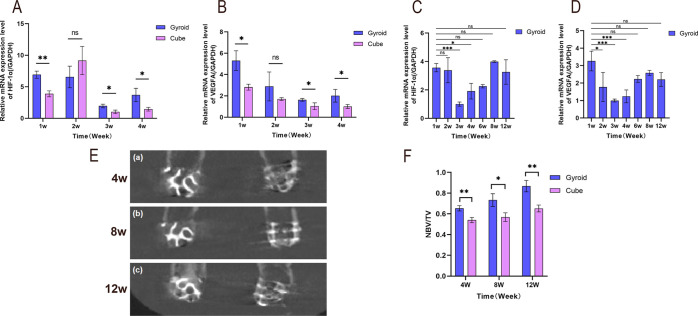 Figure 7
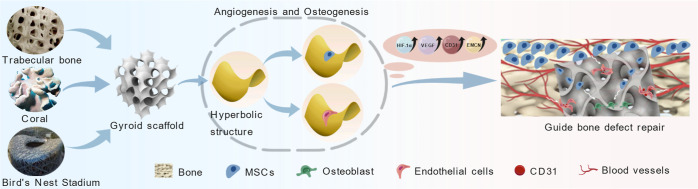 Figure 8
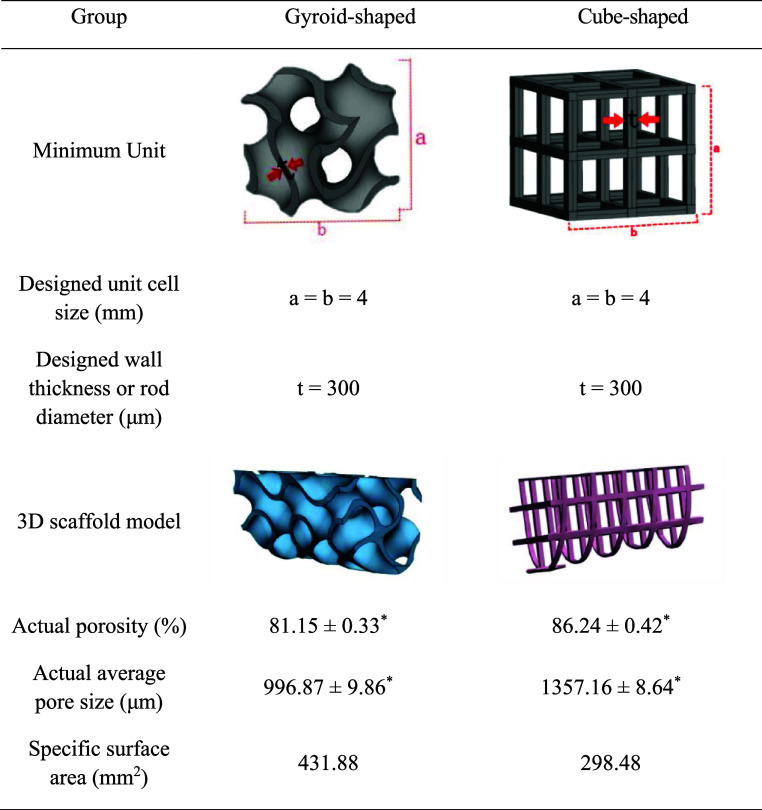 Figure 9
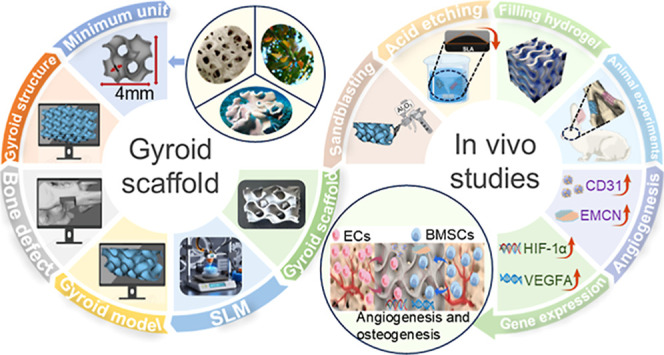 Figure 10
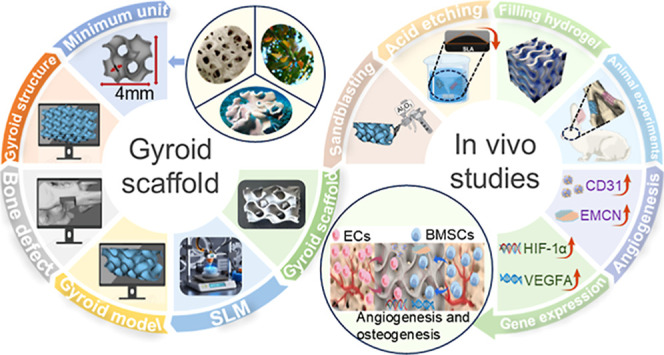 Figure 11
 Figure 12
 Figure 13
 Figure 14
Peer Reviews
No public reviews on file for this paper yet. If you reviewed it on a platform where reviews are public (OpenReview, ICLR, NeurIPS, ICML), you can paste yours below so the community can read it here.
Videos
No videos yet. Explain this paper in a talk, walkthrough, or lecture? Add one.
Taxonomy
TopicsBone Tissue Engineering Materials · Additive Manufacturing Materials and Processes · Cellular and Composite Structures