Computational Investigation of the Thermoelectric Performance of Environmentally Friendly and Earth-Abundant SrZn2S2O
Shipeng Bi, Katarina Brlec, Alexander G. Squires, David O. Scanlon

TL;DR
This paper explores SrZn2S2O as a promising, eco-friendly thermoelectric material that could help recover waste heat and improve energy efficiency.
Contribution
The study introduces SrZn2S2O as a new environmentally friendly thermoelectric candidate with superior performance compared to existing materials.
Findings
SrZn2S2O has a higher p-type power factor than BiCuSeO at 900 K.
Nanostructuring reduces SrZn2S2O's thermal conductivity by over 40%.
SrZn2S2O achieves maximum n-type and p-type ZT values of 0.65 and 0.77, respectively.
Abstract
Thermoelectric (TE) materials enable direct conversion between heat and electricity, allowing efficient recovery of waste heat, which accounts for nearly 50% of global energy consumption. Therefore, TE materials hold great potential for applications in waste heat recovery and sustainable energy technologies. Owing to the composition of earth-abundant and low-toxicity elements, as well as the presence of relatively heavy elements and mixed-anion characteristics, SrZn2S2O is considered a promising, environmentally friendly TE material. In this study, the TE performance of SrZn2S2O was investigated based on density functional theory (DFT) and compared with that of the prototypical mixed-anion oxide BiCuSeO. The calculated results show that SrZn2S2O exhibits a higher optimal average p-type power factor than that of BiCuSeO at 900 K, reaching 1150 μW m–1 K–2 compared with 770 μW m–1 K–2 for…
Genes, proteins, chemicals, diseases, species, mutations and cell lines named across the full text — each resolved to its canonical identifier and authoritative record.
Click any figure to enlarge with its caption.
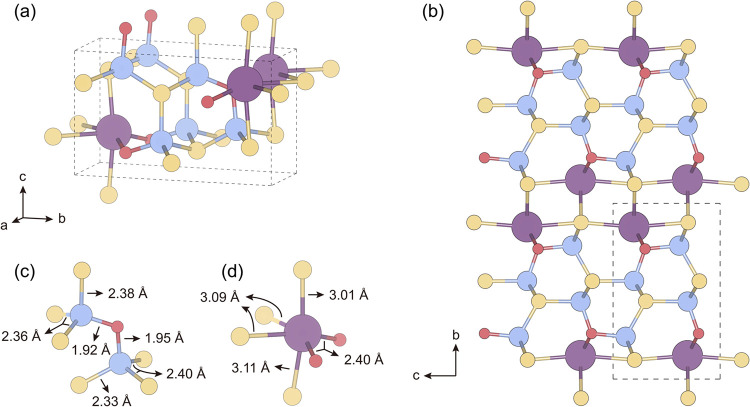 Figure 1
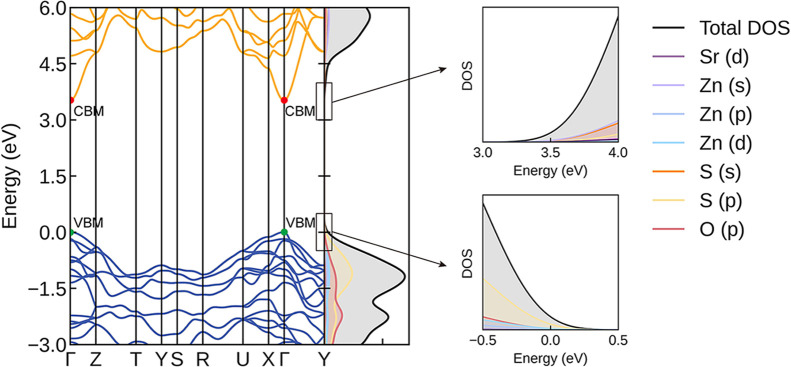 Figure 2
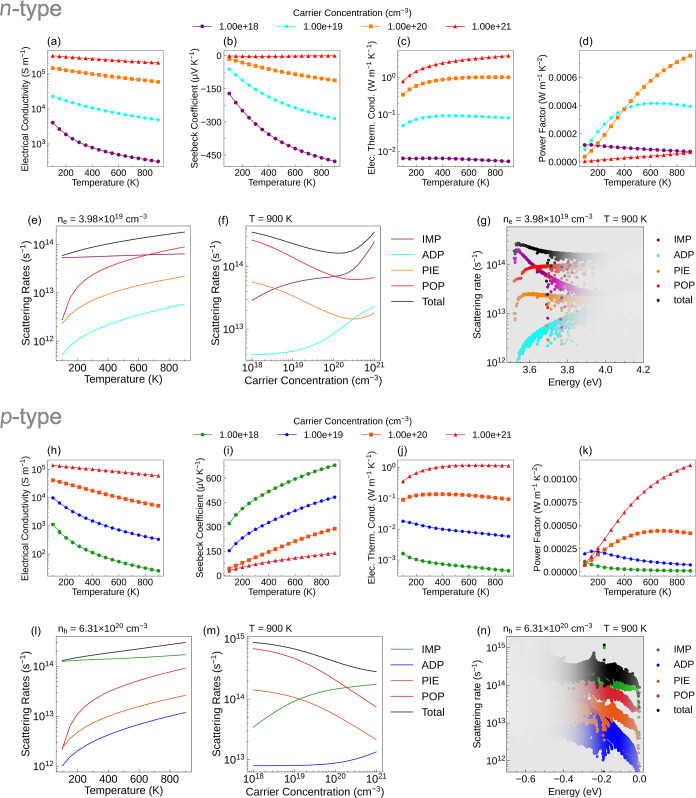 Figure 3
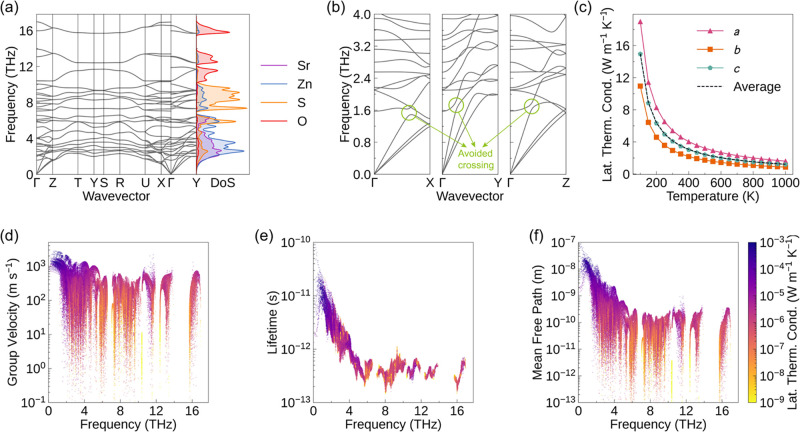 Figure 4
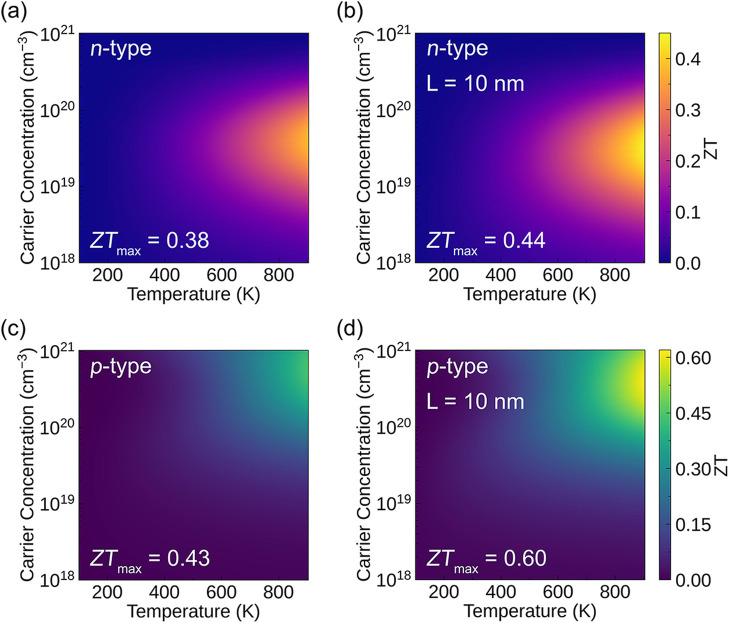 Figure 5
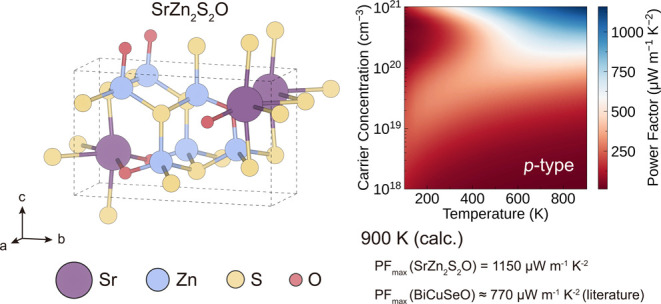 Figure 6
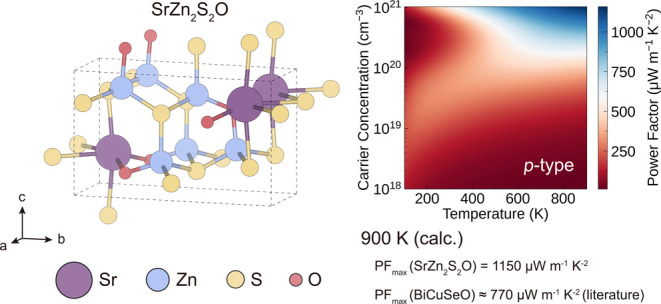 Figure 7
 Figure 8
 Figure 9
Peer Reviews
No public reviews on file for this paper yet. If you reviewed it on a platform where reviews are public (OpenReview, ICLR, NeurIPS, ICML), you can paste yours below so the community can read it here.
Videos
No videos yet. Explain this paper in a talk, walkthrough, or lecture? Add one.
Taxonomy
TopicsAdvanced Thermoelectric Materials and Devices · Phase Change Materials Research · Copper-based nanomaterials and applications