MiRNAs in Interstitial Skin Fluid Sampled with Swellable Hydrogel Microneedles Are Locally Deregulated Near Malignant Skin Lesions in Early Stages of Cutaneous Squamous Cell Carcinoma
Ahmad Kenaan, Oliver Teenan, Connor Daniels, Christina Malaktou, Mo Akhavani, Nikolaos Sideris, Leandro Castellano, Jessica Strid, Claire A. Higgins, Sylvain Ladame

TL;DR
Researchers found that miRNAs in skin fluid near early-stage skin cancer are deregulated, suggesting a new way to detect skin cancer early.
Contribution
The study introduces a minimally invasive method using hydrogel microneedles to sample miRNAs in skin fluid for early skin cancer detection.
Findings
miRNAs in perilesional skin fluid show greater deregulation compared to blood in mouse models of skin cancer.
Hydrogel microneedles effectively capture and recover miRNAs from human skin.
Extracellular skin fluid offers a new opportunity for early diagnosis of skin cancers.
Abstract
Interrogating molecular biomarkers in bodily fluids has emerged as a clinically useful strategy for the early diagnosis of many cancer types. Interstitial skin fluid is currently being explored as a possible alternative to blood, containing the same types of biomarkers but lacking cells and debris that hold little or no clinical value. The discovery and validation of molecular biomarkers with diagnostic or prognostic value and the development of clinical tests based on their detection require minimally invasive technologies capable of sampling this fluid in a pain-free manner. Biomarkers must also be easily recoverable for follow-on analysis. Herein, we combine standard genomic approaches with innovative bioengineering technologies to demonstrate that short noncoding miRNAs are significantly deregulated in extracellular skin fluid surrounding malignant skin lesions, providing a yet…
Genes, proteins, chemicals, diseases, species, mutations and cell lines named across the full text — each resolved to its canonical identifier and authoritative record.
Click any figure to enlarge with its caption.
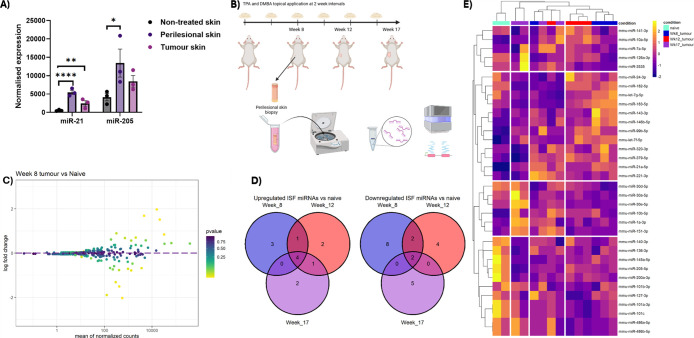 Figure 1
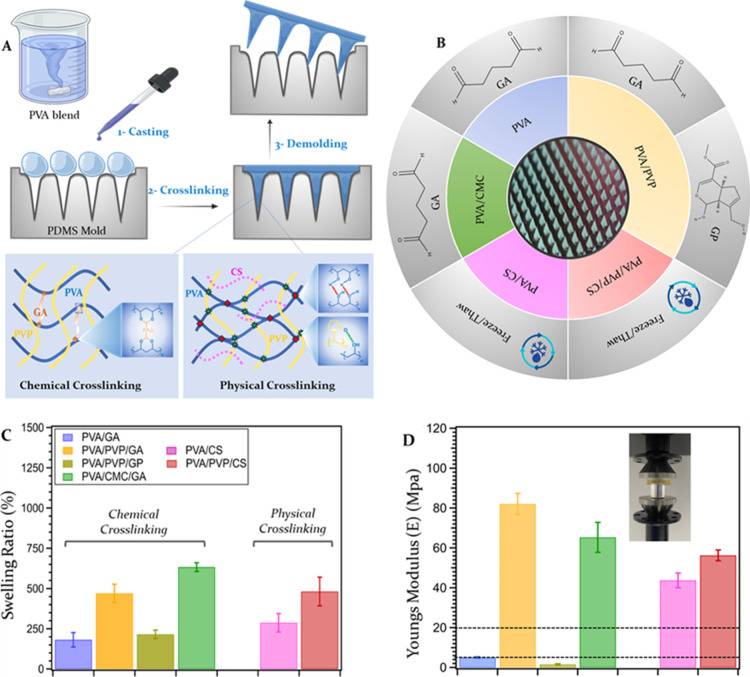 Figure 2
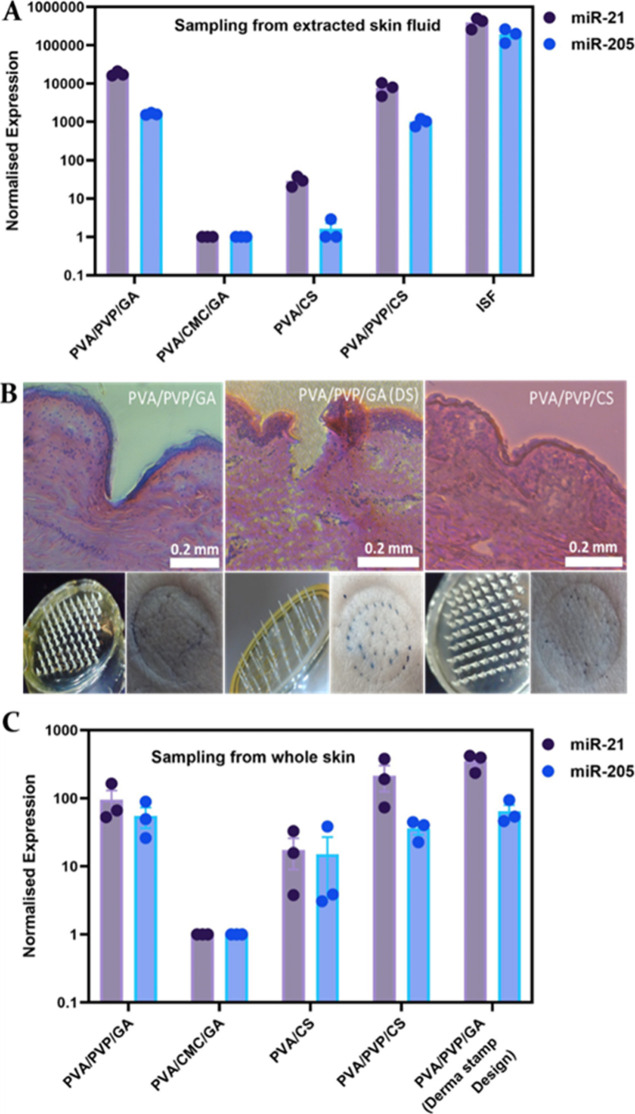 Figure 3
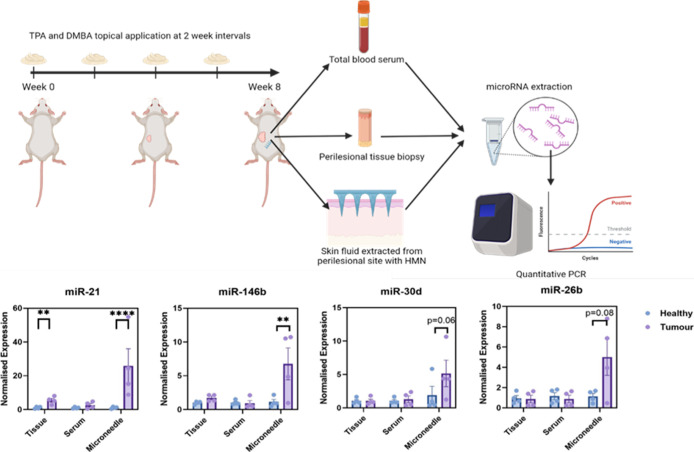 Figure 4
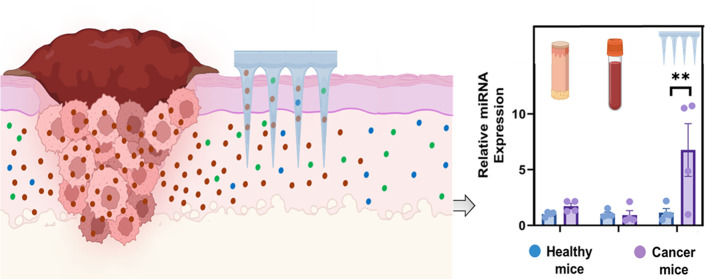 Figure 5
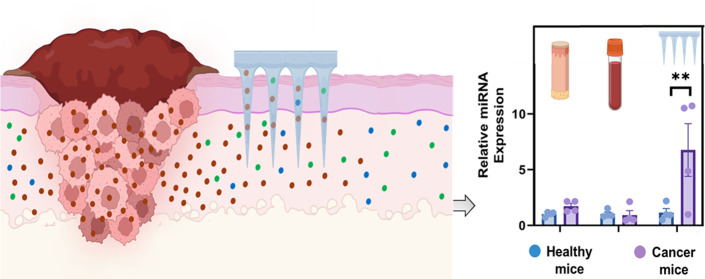 Figure 6
 Figure 7
 Figure 8
Peer Reviews
No public reviews on file for this paper yet. If you reviewed it on a platform where reviews are public (OpenReview, ICLR, NeurIPS, ICML), you can paste yours below so the community can read it here.
Videos
No videos yet. Explain this paper in a talk, walkthrough, or lecture? Add one.
Taxonomy
TopicsAdvancements in Transdermal Drug Delivery · Skin Protection and Aging · Dermatology and Skin Diseases