Management of Pathological Dental Attrition in Prader–Willi Syndrome: A Case Report Using the Personalized Radboud Strategy
Hoda Tayebi‐Hillali, Pablo Fernández Alonso, Berta Rivas‐Mundiña, Mercedes Outumuro Rial, Márcio Diniz‐Freitas, Javier Fernández Feijoo

TL;DR
This case report describes a successful dental treatment plan for a Prader–Willi syndrome patient using general anesthesia and reinforced dentures.
Contribution
A personalized dental strategy using general anesthesia and reinforced acrylic dentures for managing severe dental attrition in Prader–Willi syndrome.
Findings
General anesthesia enabled comprehensive dental treatment in a single patient with limited cooperation.
Reinforced acrylic dentures provided functional and aesthetic benefits while acting as protective splints.
The treatment plan remained effective for six years despite progressive dental wear and bone loss.
Abstract
Prader–Willi syndrome (PWS) is a rare genetic disorder characterized by obesity, hypotonia, intellectual disability, and behavioral disturbances that complicate dental management. Parafunctional habits such as bruxism often lead to severe tooth wear, while cooperation and anesthesia represent additional challenges. A 34‐year‐old woman with genetically confirmed PWS presented with generalized dental wear, poor oral hygiene, and multiple carious lesions. Preventive and splint therapies were initially proposed but not feasible. Two years later, she returned with pain due to pulp exposure. Because of limited cooperation and comorbidities, dental treatment under general anesthesia was planned in two sessions, including molar extractions and multiple root canal treatments. Complete acrylic dentures with metal reinforcement were fabricated, restoring vertical dimension, improving esthetics,…
Genes, proteins, chemicals, diseases, species, mutations and cell lines named across the full text — each resolved to its canonical identifier and authoritative record.
Click any figure to enlarge with its caption.
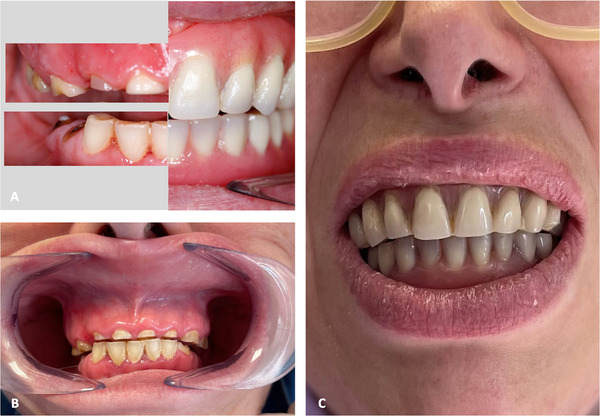 Figure 1
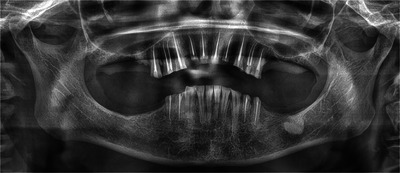 Figure 2
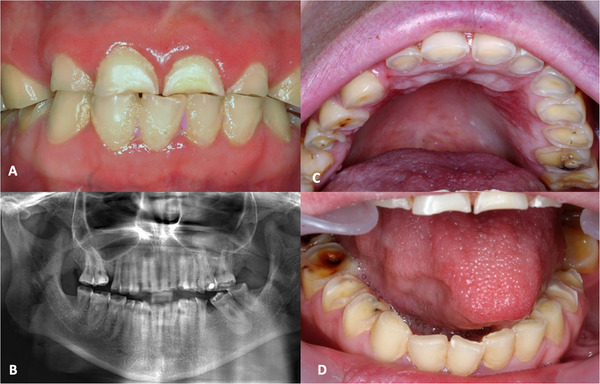 Figure 3
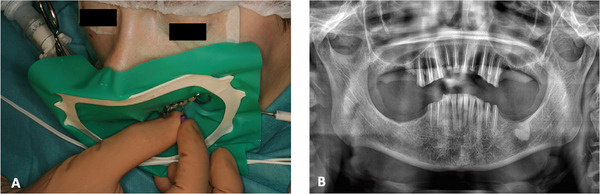 Figure 4
Peer Reviews
No public reviews on file for this paper yet. If you reviewed it on a platform where reviews are public (OpenReview, ICLR, NeurIPS, ICML), you can paste yours below so the community can read it here.
Videos
No videos yet. Explain this paper in a talk, walkthrough, or lecture? Add one.
Taxonomy
TopicsGenetic Syndromes and Imprinting · Heterotopic Ossification and Related Conditions · Temporomandibular Joint Disorders