Reactive Carbonyl Species Mediate Isothiocyanate Signaling Pathway in Arabidopsis thaliana Guard Cells
Sumaiya Farzana, Md. Moshiul Islam, Toshiyuki Nakamura, Yoshimasa Nakamura, Shintaro Munemasa, Jun'ichi Mano, Yoshiyuki Murata

TL;DR
This study shows that reactive carbonyl species, not ROS, mediate stomatal closure in Arabidopsis guard cells when exposed to isothiocyanates.
Contribution
Identifies reactive carbonyl species as key signaling molecules in ITC-induced stomatal closure, distinct from ROS pathways.
Findings
Reactive carbonyl species like acrolein and 4-hydroxy-(E)-2-nonenal mediate stomatal closure in response to isothiocyanates.
RCS scavengers inhibit ITC-induced stomatal closure and GSH depletion but not ROS elevation.
RCS levels are more strongly correlated with stomatal closure and GSH depletion than with ROS levels.
Abstract
Our previous results demonstrated that depletion of glutathione (GSH) rather than elevation of levels of reactive oxygen species (ROS) is highly correlated with the decrease in stomatal aperture induced by isothiocyanates (ITCs), although ROS is considered a key second messenger in stomatal closure, suggesting that another signal component regulates stomatal apertures along with GSH depletion. This study, using Arabidopsis, clarified that reactive carbonyl species (RCS), especially acrolein and 4‐hydroxy‐(E)‐2‐nonenal, are determinants of stomatal aperture responses to ITCs. All tested ITCs, allyl isothiocyanate (AITC), sulforaphane (SFN), benzyl isothiocyanate (BITC), and phenethyl isothiocyanate (PEITC), significantly induced stomatal closure, which was inhibited by the RCS scavengers, carnosine and pyridoxamine. The RCS scavengers suppressed ITC‐induced depletion of GSH but not…
Genes, proteins, chemicals, diseases, species, mutations and cell lines named across the full text — each resolved to its canonical identifier and authoritative record.
Click any figure to enlarge with its caption.
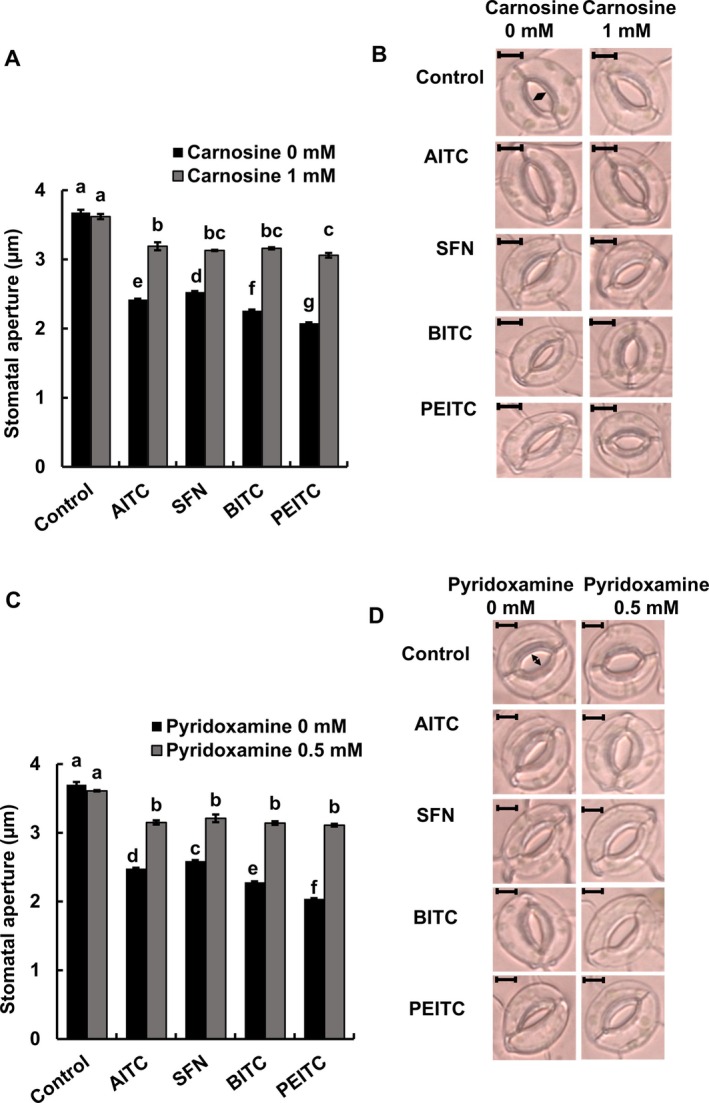 Figure 1
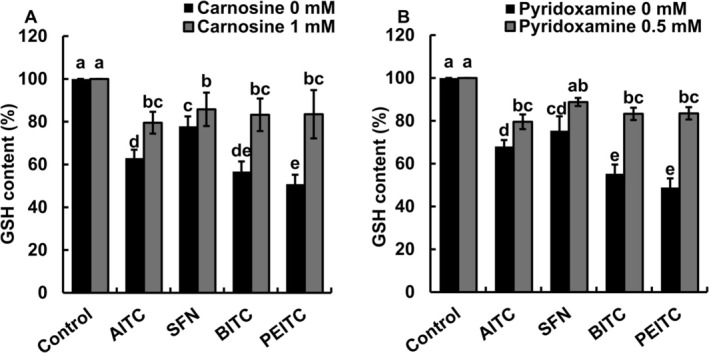 Figure 2
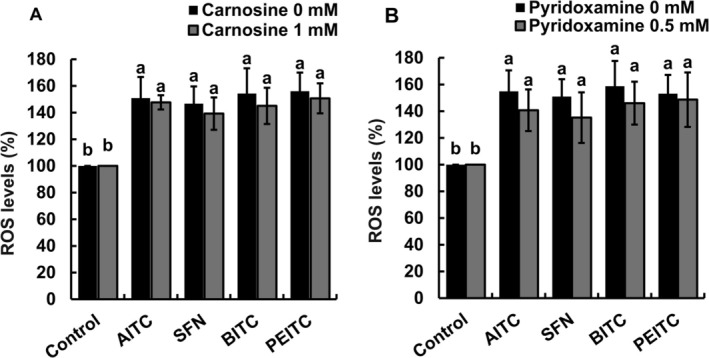 Figure 3
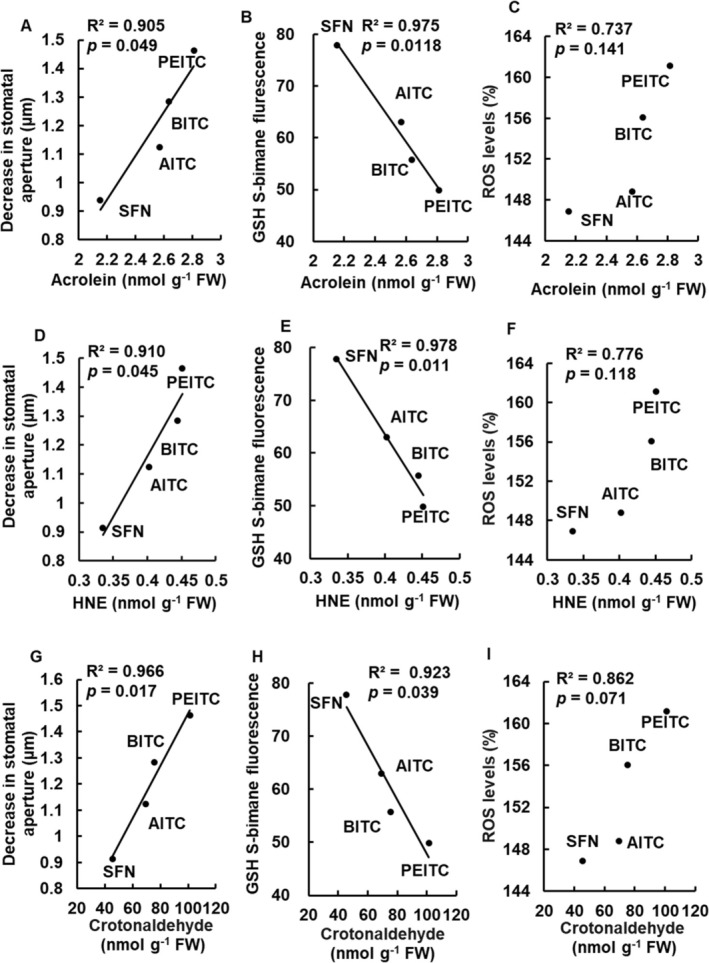 Figure 4
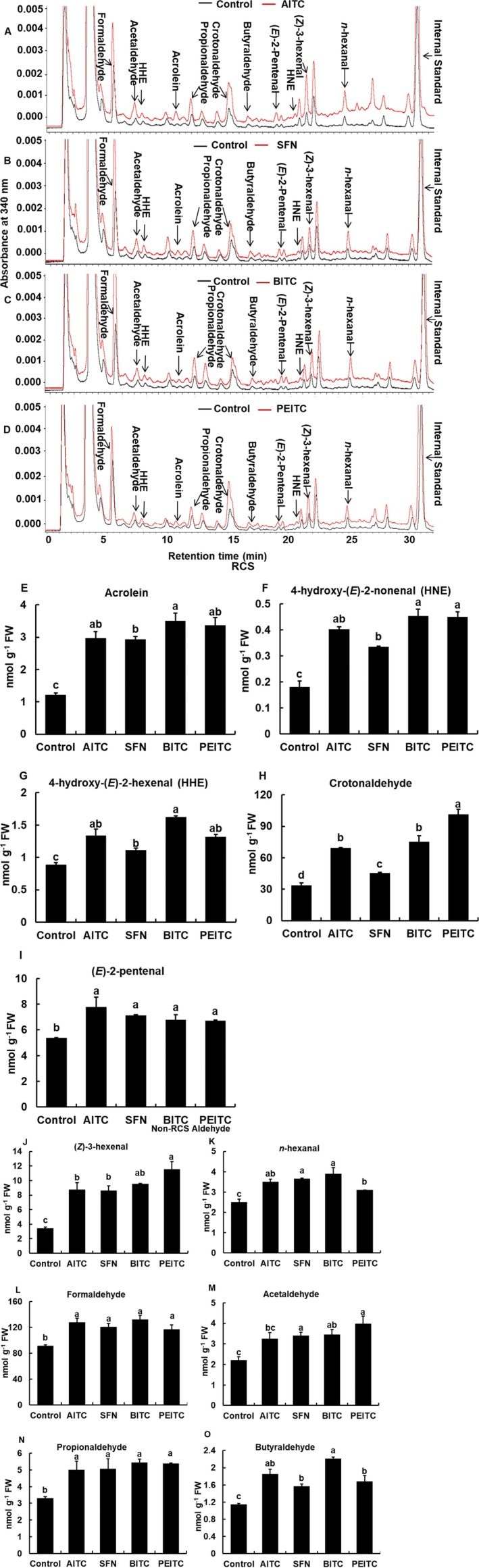 Figure 5
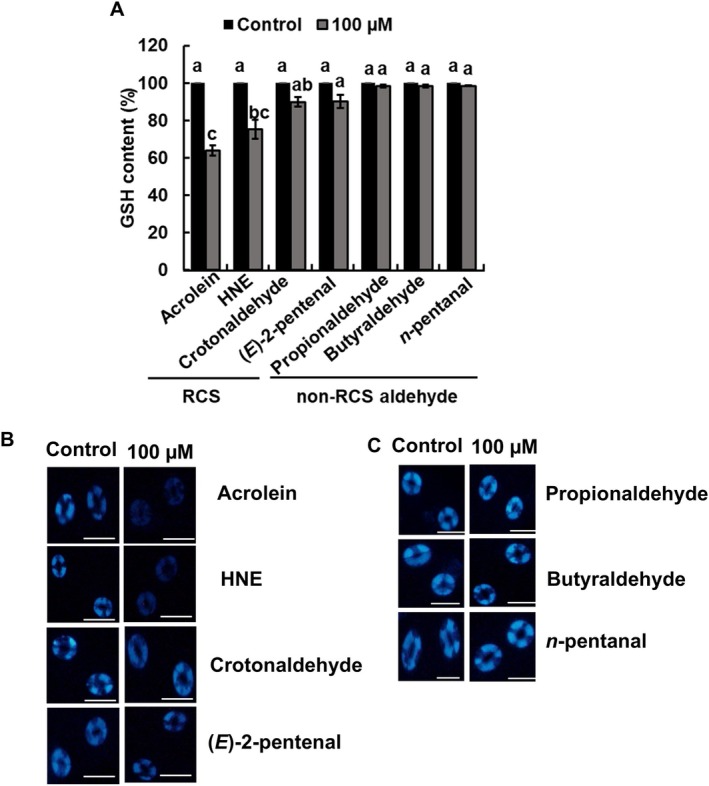 Figure 6
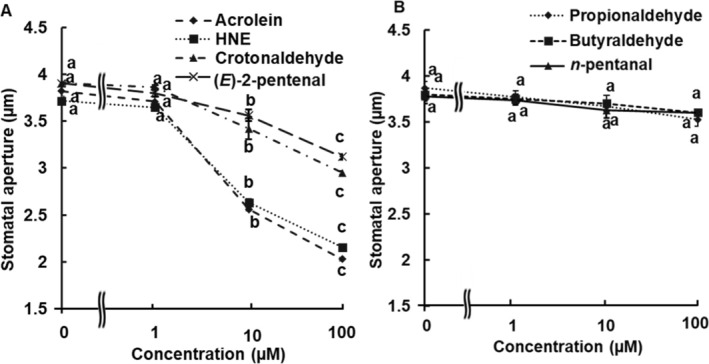 Figure 7
Peer Reviews
No public reviews on file for this paper yet. If you reviewed it on a platform where reviews are public (OpenReview, ICLR, NeurIPS, ICML), you can paste yours below so the community can read it here.
Videos
No videos yet. Explain this paper in a talk, walkthrough, or lecture? Add one.
Taxonomy
TopicsGenomics, phytochemicals, and oxidative stress · Plant Stress Responses and Tolerance · Sulfur Compounds in Biology