Blood-Based Analysis of Different Tau Variants in Patients With Multiple Traumatic Injuries
Rebecca Halbgebauer, Fernando Gonzalez-Ortiz, Benjamin Mayer, Claudius Berger, Christian Bergmann, Helen Rinderknecht, Eberhard Barth, Lisa Wohlgemuth, Marco Mannes, Markus Otto, Hayrettin Tumani, Borna Relja, Florian Gebhard, Markus Huber-Lang, Henrik Zetterberg

TL;DR
This study shows that blood levels of tau proteins can indicate neurological injury severity in trauma patients, with some tau variants remaining elevated for days after injury.
Contribution
The study demonstrates that blood-based tau biomarkers can reflect both direct and indirect neurological injury in trauma patients.
Findings
Blood levels of tau variants were significantly higher in trauma patients compared to healthy controls.
BD-tau levels remained elevated for up to 10 days post-injury, indicating persistent neurological impact.
Higher tau levels correlated with worse clinical outcomes like lower GCS scores and shock.
Abstract
Are blood-based tau biomarkers clinically useful to monitor neurological injuries in patients with multiple traumatic injuries? In this cohort study with 69 participants, total, phosphorylated, and brain-derived tau blood levels were significantly elevated in patients with multiple traumatic injuries, with and without head injury. Tau concentrations were associated with injury severity, shock, and clinical outcome. These findings suggest that further research may inform on the usefulness of blood-based tau biomarkers for monitoring neurological damage and their association with clinical outcomes. This cohort study evaluates whether there are differences in blood-based phosphorylated and nonphosphorylated tau variant levels in patients with multiple traumatic injuries and healthy controls. With blood-based phosphorylated tau biomarkers soon to be used for diagnosis of Alzheimer…
Genes, proteins, chemicals, diseases, species, mutations and cell lines named across the full text — each resolved to its canonical identifier and authoritative record.
Click any figure to enlarge with its caption.
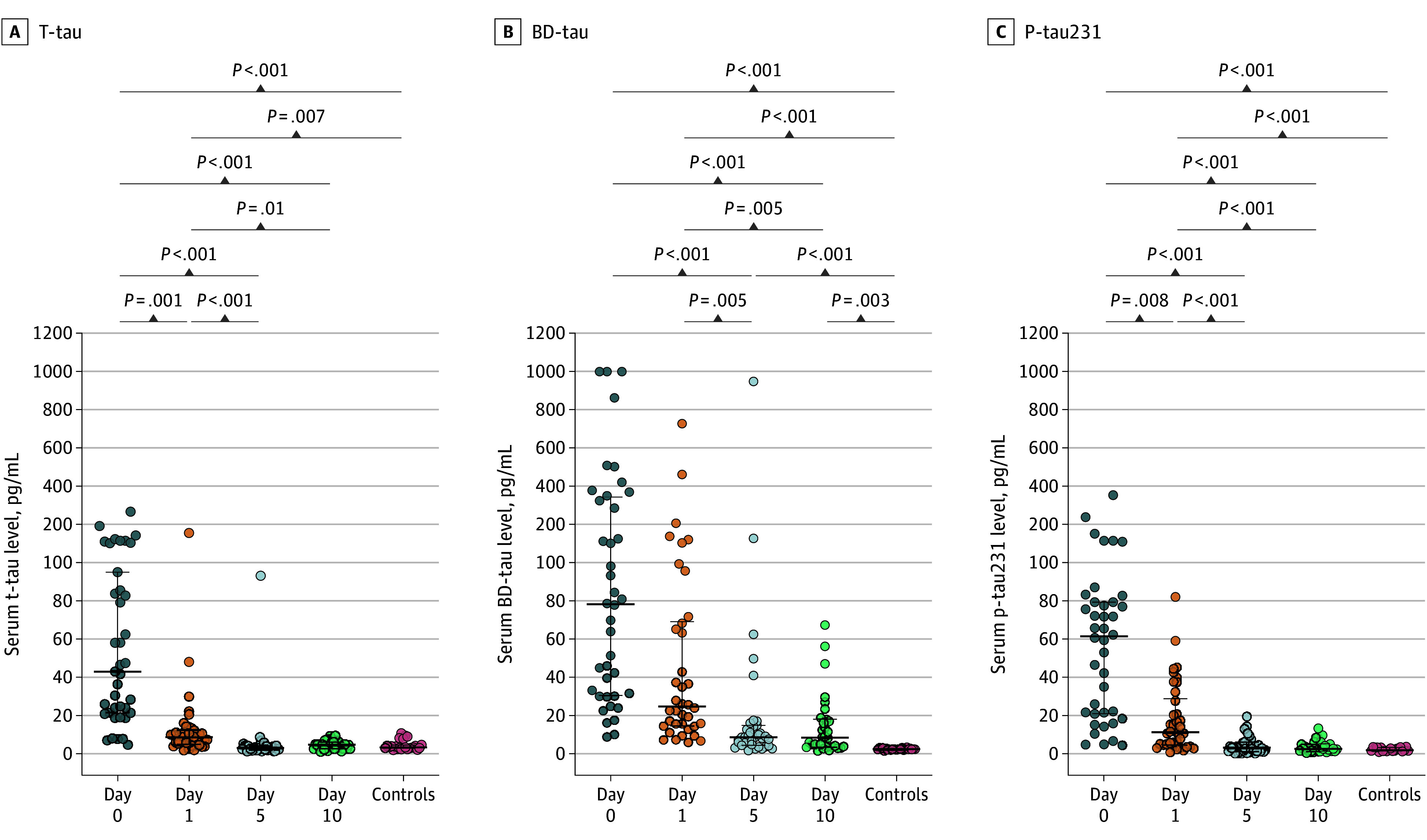 Figure 1
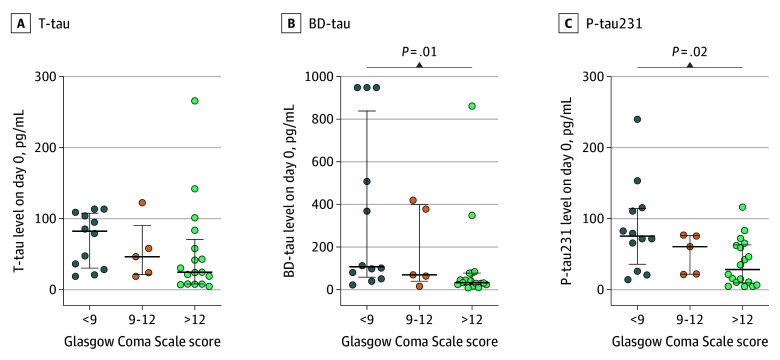 Figure 2
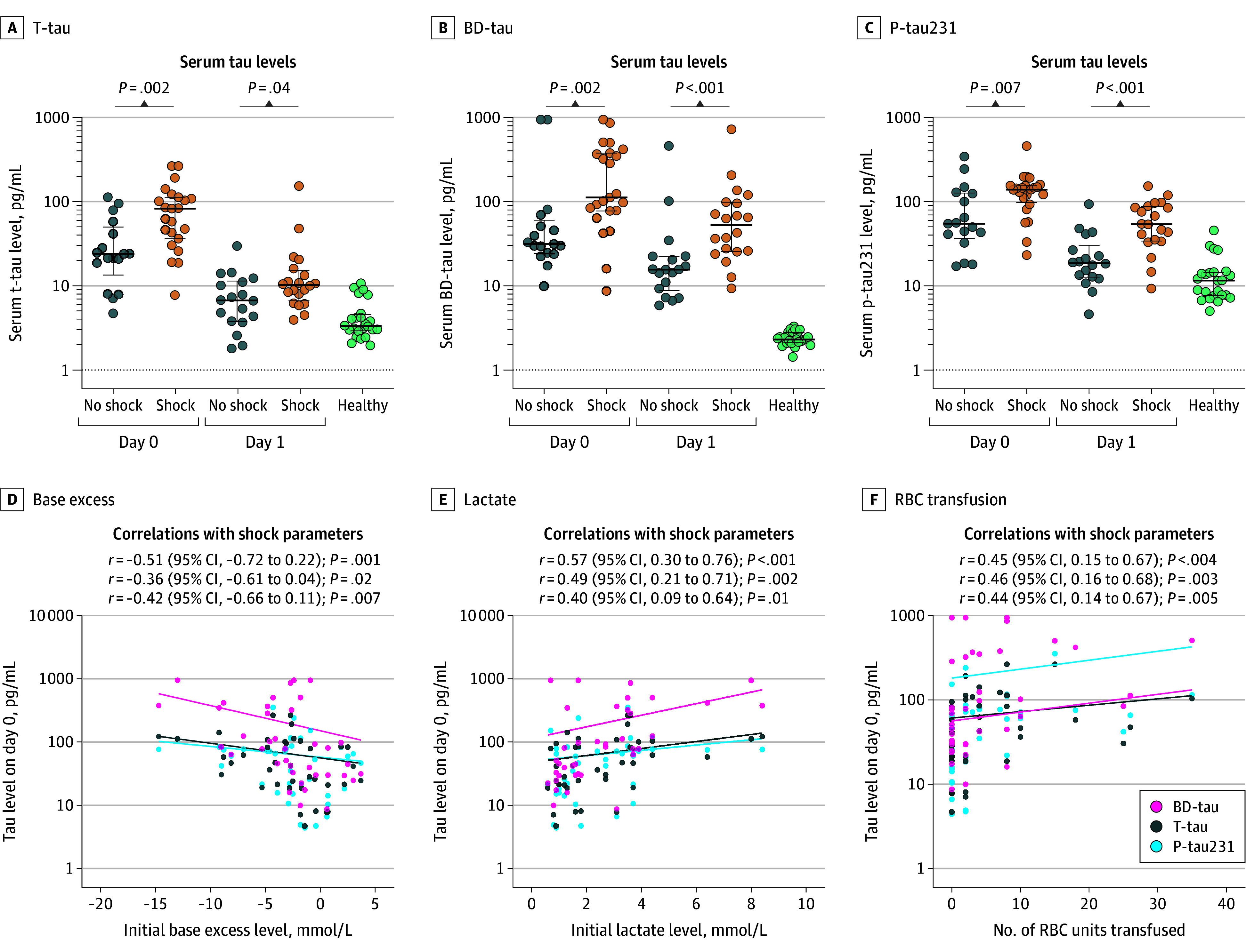 Figure 3
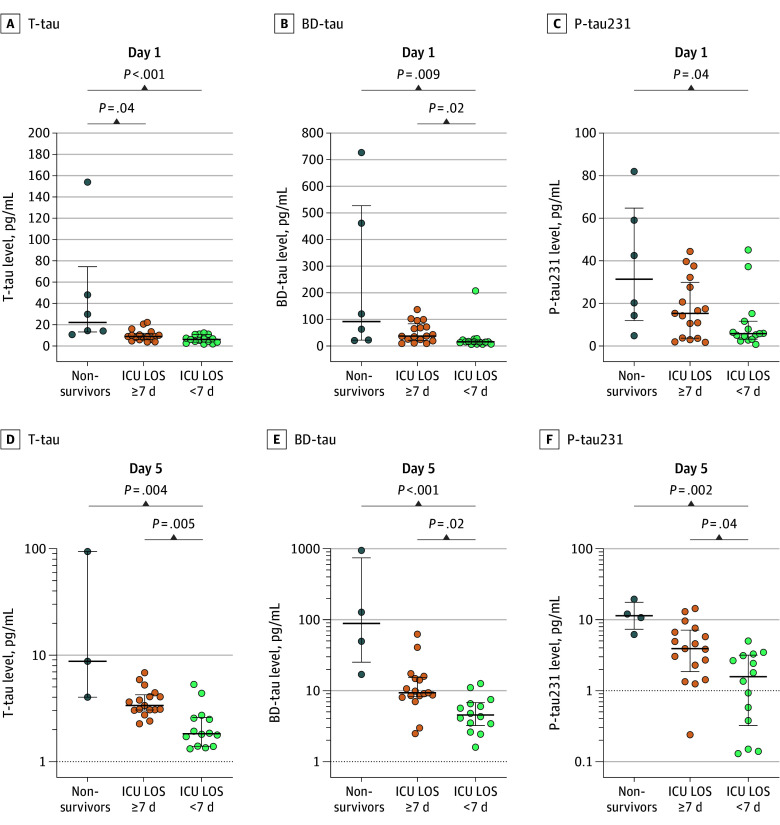 Figure 4
Peer Reviews
No public reviews on file for this paper yet. If you reviewed it on a platform where reviews are public (OpenReview, ICLR, NeurIPS, ICML), you can paste yours below so the community can read it here.
Videos
No videos yet. Explain this paper in a talk, walkthrough, or lecture? Add one.
Taxonomy
TopicsTraumatic Brain Injury Research · Traumatic Brain Injury and Neurovascular Disturbances · Trauma and Emergency Care Studies