Combined Flexion, Torsion and Compression Drive Distinct Intervertebral Disc Failure Mechanisms Under Asymmetric, High‐Cycle Loading
Amra Šećerović, Aapo Ristaniemi, Francesco Crivelli, Sarah Heub, Mauro Alini, Gilles Weder, Diane Ledroit, Stephen J. Ferguson, Sibylle Grad

TL;DR
This study shows how different spinal movements cause specific types of disc damage, suggesting new ways to treat disc degeneration.
Contribution
The study identifies distinct failure mechanisms in intervertebral discs under asymmetric, high-cycle loading using a novel bioreactor system.
Findings
Symmetrical loading preserved disc structure and cell viability, while asymmetrical loading caused fissures and delamination in the outer annulus fibrosus.
Asymmetrical and frequent loading promoted cell death in the nucleus pulposus and structural damage in the annulus fibrosus.
Region-specific responses suggest independent failure mechanisms contributing to disc degeneration.
Abstract
Recent advancements in next‐generation bioreactors have substantially improved the simulation of complex, detrimental spinal mechanics in ex vivo intervertebral disc models. This study investigated intervertebral disc responses to combined flexion, torsion, and static compression. A range of loading frequencies, magnitudes, and patterns was applied to identify conditions that contribute to disc degeneration under complex motion. Twelve bovine coccygeal intervertebral discs (mean age 9 months) were subjected to three distinct loading regimes, with four samples per condition. Static compression of 0.1 MPa was combined with: (1) symmetrical 3° flexion/extension and 2° torsion, (2) symmetrical 6° flexion/extension and 4° torsion, and (3) asymmetrical 6° flexion and 4° torsion. Loading frequencies and durations ranged from 0.2 Hz for 1 h in symmetrical loading to 1 Hz for 2 h in…
Genes, proteins, chemicals, diseases, species, mutations and cell lines named across the full text — each resolved to its canonical identifier and authoritative record.
Click any figure to enlarge with its caption.
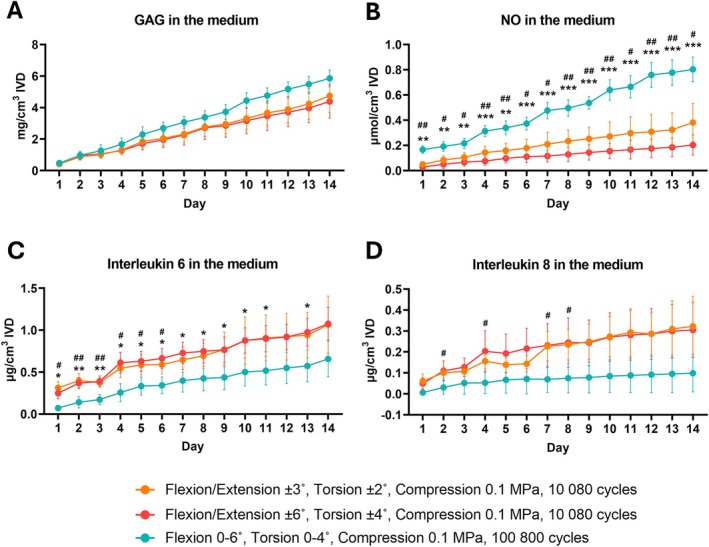 Figure 1
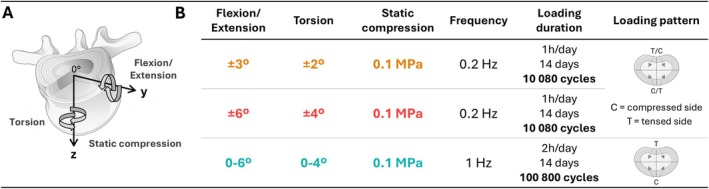 Figure 2
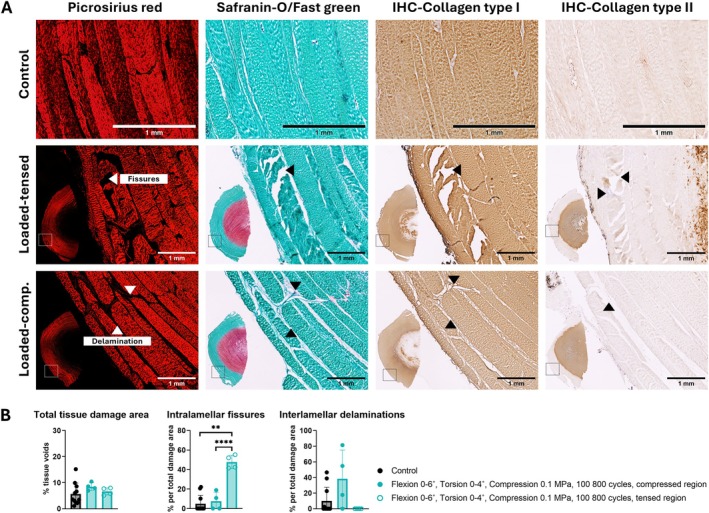 Figure 3
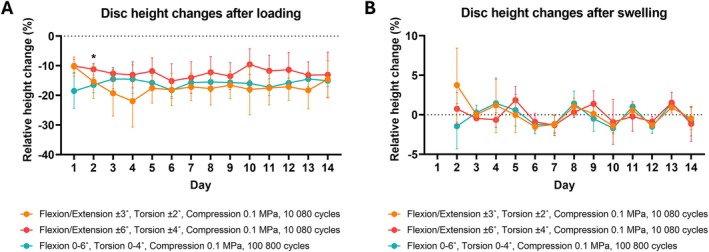 Figure 4
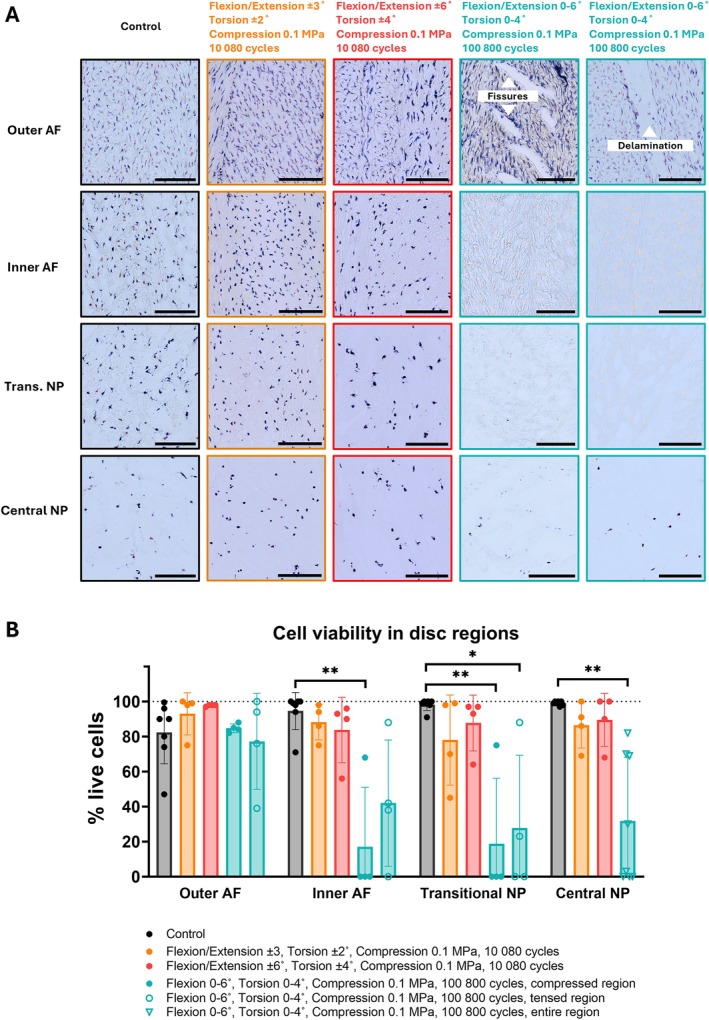 Figure 5
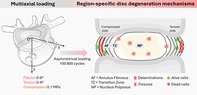 Figure 6
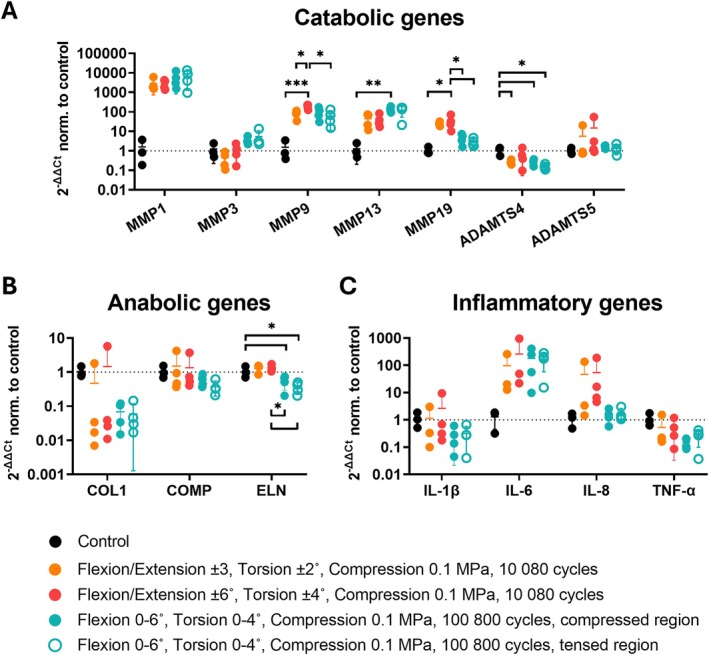 Figure 7
Peer Reviews
No public reviews on file for this paper yet. If you reviewed it on a platform where reviews are public (OpenReview, ICLR, NeurIPS, ICML), you can paste yours below so the community can read it here.
Videos
No videos yet. Explain this paper in a talk, walkthrough, or lecture? Add one.
Taxonomy
TopicsSpine and Intervertebral Disc Pathology · Cervical and Thoracic Myelopathy · Scoliosis diagnosis and treatment