Targetable Vulnerabilities in MYC‐Driven B Cell Lymphomas Resistant to BCR Extinction
Silvia Brambillasca, Nicara Chantal Parr, Adriana Palmeri, Adrian Andronache, Hiroshi Arima, Giovanni Faga’, Brian Leuzzi, Laura Perucho, Michela Robusto, Maurizio Pasi, Federica Mainoldi, Daniele Fancelli, Mario Varasi, Gabriele Varano, Ciro Mercurio, Stefano Casola

TL;DR
This study identifies new drug targets for B cell lymphomas that resist treatment by losing BCR expression, offering potential strategies to improve therapy outcomes.
Contribution
The study reveals mTORC1/2 and CDK4/6 inhibitors as effective treatments for BCR-negative MYC-driven B cell lymphomas.
Findings
mTORC1/2 and CDK4/6 inhibitors showed strong efficacy against BCR-negative lymphoma cells.
BCR loss reduced protein synthesis and sensitized cells to CDK4/6 inhibitors.
Human BCR-negative HGBCL responded well to mTORC1/2 and CDK4/6 inhibitors.
Abstract
Polatuzumab vedotin, an antibody‐drug conjugate (ADC) targeting the B cell receptor (BCR) signaling subunit CD79B, has recently entered frontline therapy for diffuse large B cell lymphoma (DLBCL) and high‐grade B cell lymphoma (HGBCL), achieving encouraging clinical results. However, MYC‐driven B cell lymphomas, particularly HGBCL with MYC and BCL2 rearrangements, frequently silence surface BCR/CD79B expression, limiting the therapeutic reach of CD79B‐directed ADCs and underscoring the need for complementary treatment strategies. To uncover drug vulnerabilities associated with BCR extinction in aggressive B cell lymphomas, we conditionally ablated surface BCR expression in the λ‐MYC mouse B cell lymphoma model and screened 1475 small‐molecule compounds, including clinically approved agents, on syngenic BCR‐positive and BCR‐negative tumor cells. This screening revealed compounds with…
Genes, proteins, chemicals, diseases, species, mutations and cell lines named across the full text — each resolved to its canonical identifier and authoritative record.
Click any figure to enlarge with its caption.
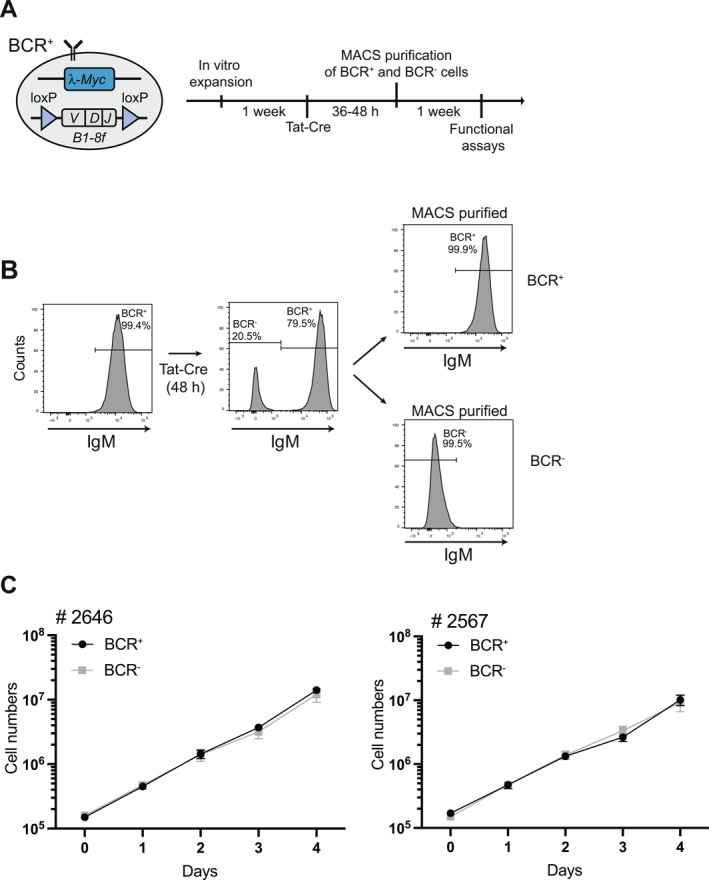 Figure 1
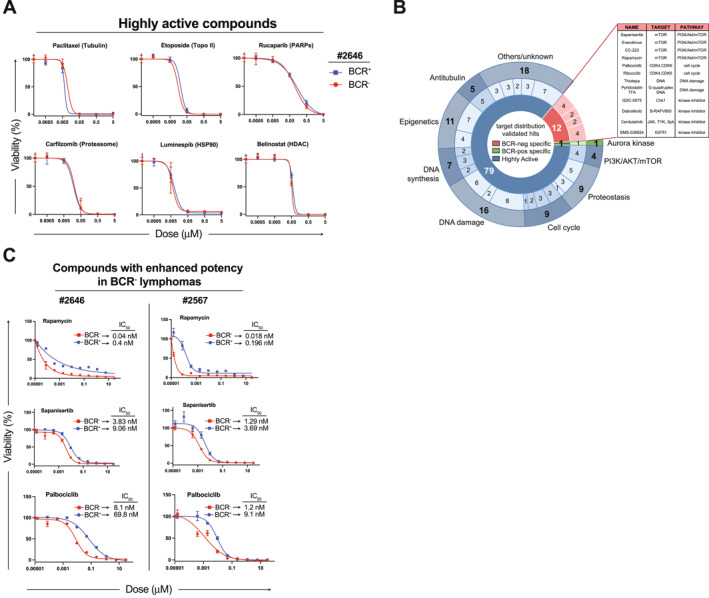 Figure 2
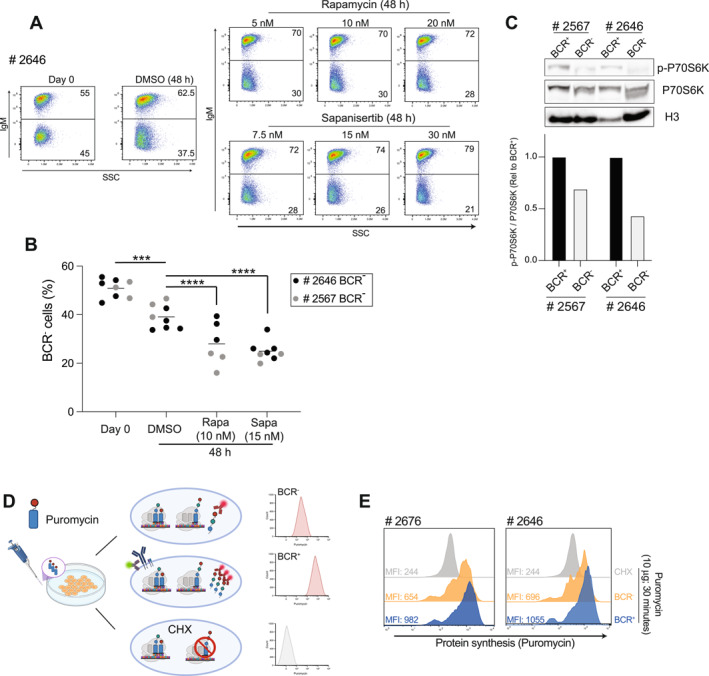 Figure 3
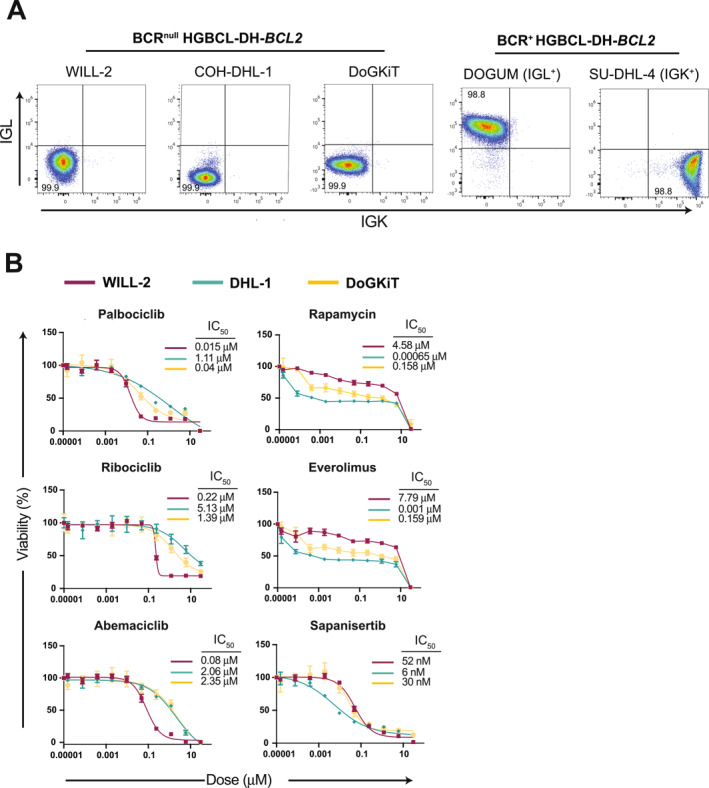 Figure 4
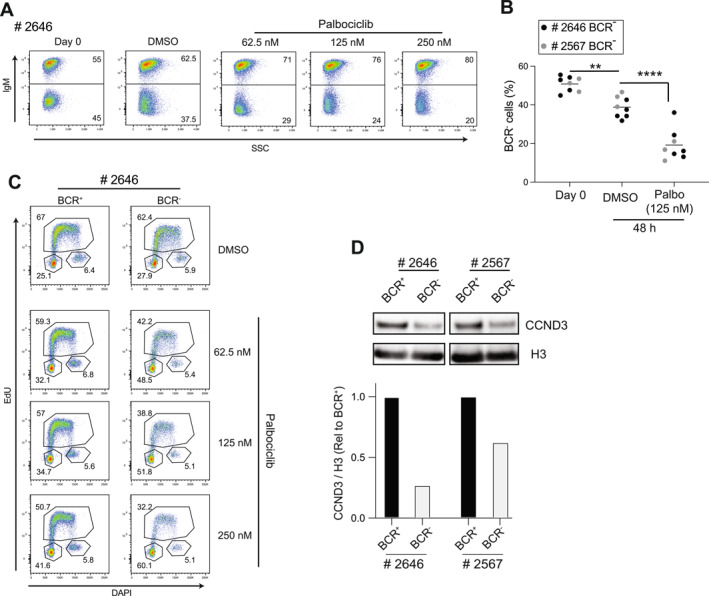 Figure 5
Peer Reviews
No public reviews on file for this paper yet. If you reviewed it on a platform where reviews are public (OpenReview, ICLR, NeurIPS, ICML), you can paste yours below so the community can read it here.
Videos
No videos yet. Explain this paper in a talk, walkthrough, or lecture? Add one.
Taxonomy
TopicsCAR-T cell therapy research · Protein Degradation and Inhibitors · HER2/EGFR in Cancer Research