Tocopherol Profile Variations of Soybean World Mini-Core Collection Accessions Grown in Hokkaido
Maria Stefanie Dwiyanti

TL;DR
This study examines tocopherol levels in soybean accessions grown in Hokkaido to identify genetic factors influencing vitamin E content.
Contribution
The study identifies specific soybean accessions with unique tocopherol profiles for breeding and genetic research.
Findings
Four accessions had a high α-tocopherol allele but did not match cultivar KAS due to cooler conditions.
Moshido Gong 502 and 503 showed consistently low total tocopherol content.
The study highlights genetic resources for investigating tocopherol biosynthesis.
Abstract
Tocopherols (vitamin E) are lipid-soluble antioxidants, with α-tocopherol having the highest vitamin E activity. Soybean seed is a major source of tocopherols. Therefore, improving seed tocopherol content is a key breeding objective. Thirty-eight accessions from the soybean world mini-core collection were evaluated in 2019 and 2022 growing seasons. Four accessions carried a high α-tocopherol associated allele at S09_44341929 but they did not reach the high α-tocopherol levels of cultivar KAS, likely due to cooler seed-filling conditions. Moshido Gong 502 and 503 showed low total tocopherol content in both seasons, making them promising resources for investigating genetic regulation of tocopherol biosynthesis.
Genes, proteins, chemicals, diseases, species, mutations and cell lines named across the full text — each resolved to its canonical identifier and authoritative record.
Click any figure to enlarge with its caption.
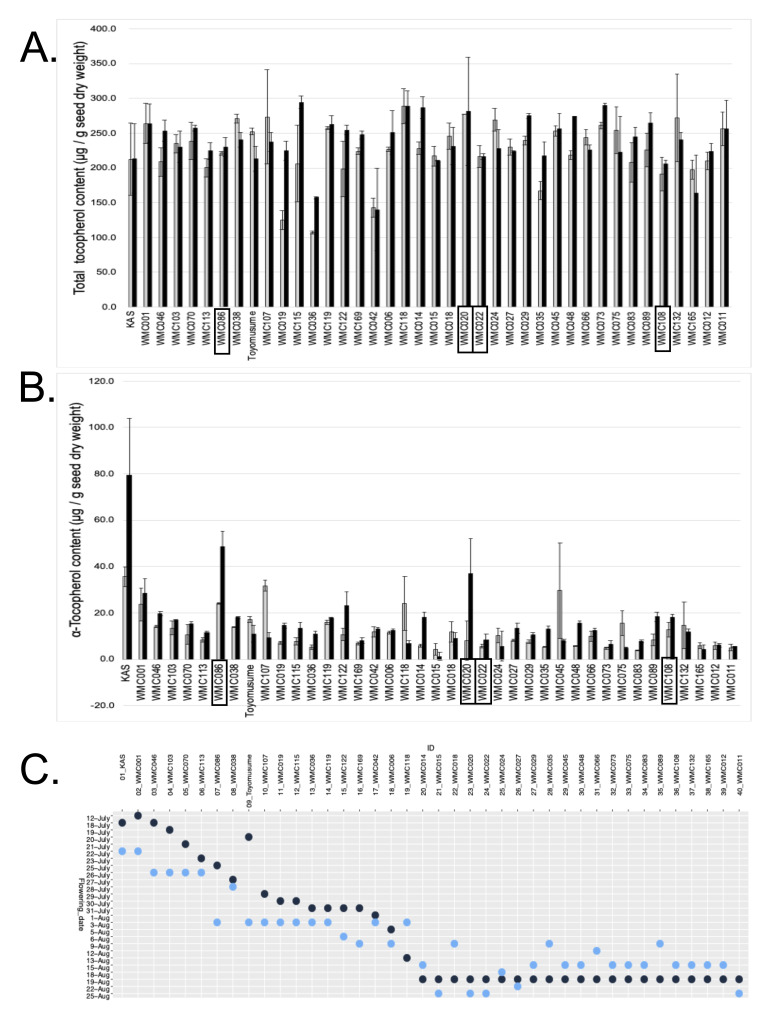 Figure 1
Peer Reviews
No public reviews on file for this paper yet. If you reviewed it on a platform where reviews are public (OpenReview, ICLR, NeurIPS, ICML), you can paste yours below so the community can read it here.
Videos
No videos yet. Explain this paper in a talk, walkthrough, or lecture? Add one.
Taxonomy
TopicsAntioxidant Activity and Oxidative Stress · Phytoestrogen effects and research · Nutrition, Genetics, and Disease