A Comprehensive Review of Artificial Intelligence Methods in Bone Age Assessment
Mohsen Borjalizadeh, Farshid Babapour Mofrad, Midya Yousefzamani

TL;DR
This paper reviews AI methods for assessing bone age in children, highlighting their potential and current limitations.
Contribution
The paper identifies gaps in current AI models and suggests improvements for future clinical applications.
Findings
Current AI models for bone age assessment lack diversity and expert validation.
Models like RCNN show potential based on mean absolute error evaluation.
Future models need diverse datasets and thorough health histories for better accuracy.
Abstract
Bone age reflects individual skeletal maturity and is an important factor in the follow‐up and monitoring of growth and development in children. Determination of bone age by paediatricians has remained one of the most typical indications that require the use of radiology, and the historical method by which radiologists determine bone age is from a bone age atlas. However, there are still some challenges. The limited case diversity related to race, geography, and age distribution; small sample sizes; and the lack of expert validation by multiple radiologists limit the generalisability of current models. Many underlying comorbidities or health histories are often overlooked in developed models. The models of the future, which provide greater accuracy and clinical usefulness, must encompass more diverse datasets, more thorough health histories, expert validation, and fast but reliable…
Click any figure to enlarge with its caption.
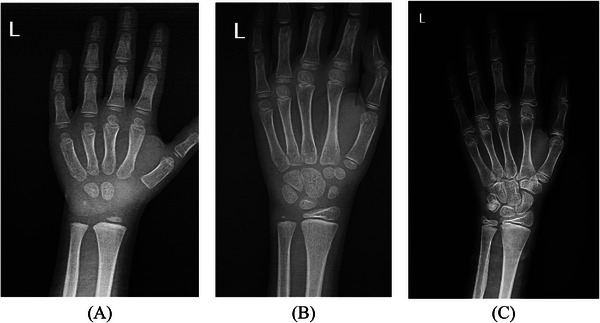 Figure 1
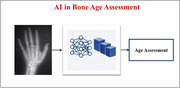 Figure 2
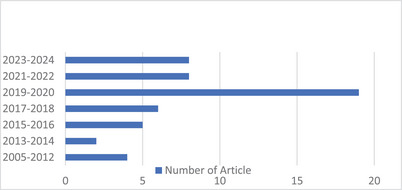 Figure 3
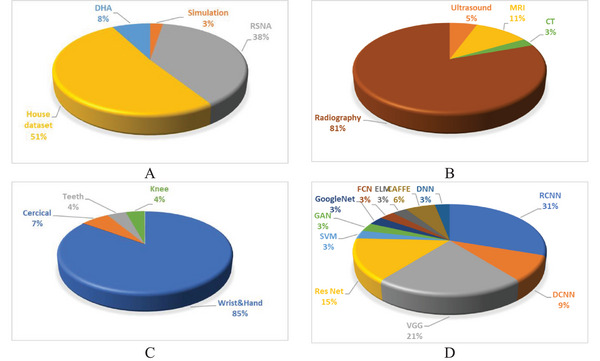 Figure 4
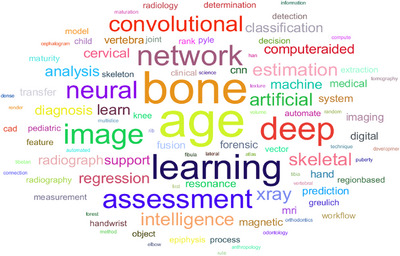 Figure 5
Peer Reviews
No public reviews on file for this paper yet. If you reviewed it on a platform where reviews are public (OpenReview, ICLR, NeurIPS, ICML), you can paste yours below so the community can read it here.
Videos
No videos yet. Explain this paper in a talk, walkthrough, or lecture? Add one.
Taxonomy
TopicsForensic Anthropology and Bioarchaeology Studies · Artificial Intelligence in Healthcare and Education · Bone health and osteoporosis research