Genetic and Clinical Characteristics of Patients With Tumor Mutation Burden‐High Unresectable Pancreatic Cancer and the Efficacy of Pembrolizumab Treatment
Yugo Kai, Kenji Ikezawa, Kazuhiro Kozumi, Makiko Urabe, Ryoji Takada, Takumi Kinomoto, Takanori Masumoto, Masaki Kawabata, Hiroki Kishimoto, Kana Hosokawa, Kaori Mukai, Tasuku Nakabori, Yuko Yamaguchi, Naotoshi Sugimoto, Kazuyoshi Ohkawa

TL;DR
This study examines the genetic and clinical features of rare high tumor mutation burden pancreatic cancer and evaluates pembrolizumab's effectiveness in treating it.
Contribution
The study provides new insights into the genetic profile and treatment response of TMB-high pancreatic cancer patients.
Findings
TMB-high was observed in 4.4% of patients, with a higher frequency of KRAS mutations.
Pembrolizumab showed a 33.3% response rate in TMB-high patients, with better outcomes in those with MSI-H plus TMB-high.
Median progression-free survival was 227 days for MSI-H plus TMB-high and 90 days for MSS plus TMB-high patients.
Abstract
Pembrolizumab is approved for treating patients with advanced solid tumors exhibiting high tumor mutation burden (TMB), including pancreatic cancer. However, owing to the rarity of TMB‐high pancreatic cancer, its genetic and clinical characteristics, alongside the therapeutic effectiveness of pembrolizumab, remain unclear. To investigate the characteristics and assess the effectiveness of pembrolizumab in this patient population. We retrospectively reviewed data of 293 patients with unresectable or recurrent pancreatic cancer who underwent comprehensive genomic profiling at our hospital between December 2019 and April 2023. TMB‐high was observed in 13 cases (4.4%), including four patients with microsatellite instability‐high (MSI‐H) (1.4%). Two patients exhibited germline BRCA2 mutations: one with adenocarcinoma and the other with acinar cell carcinoma. Germline mutations in MLH1 and…
Genes, proteins, chemicals, diseases, species, mutations and cell lines named across the full text — each resolved to its canonical identifier and authoritative record.
Click any figure to enlarge with its caption.
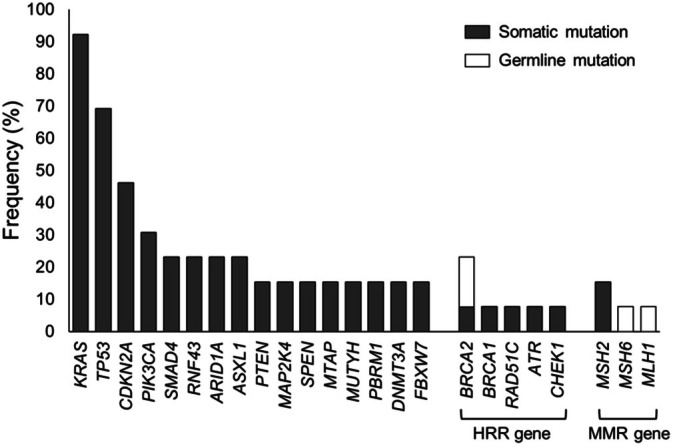 Figure 1
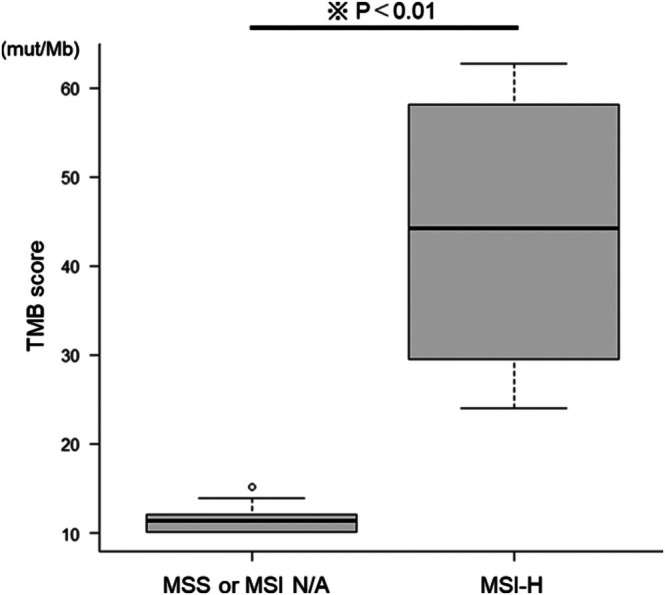 Figure 2
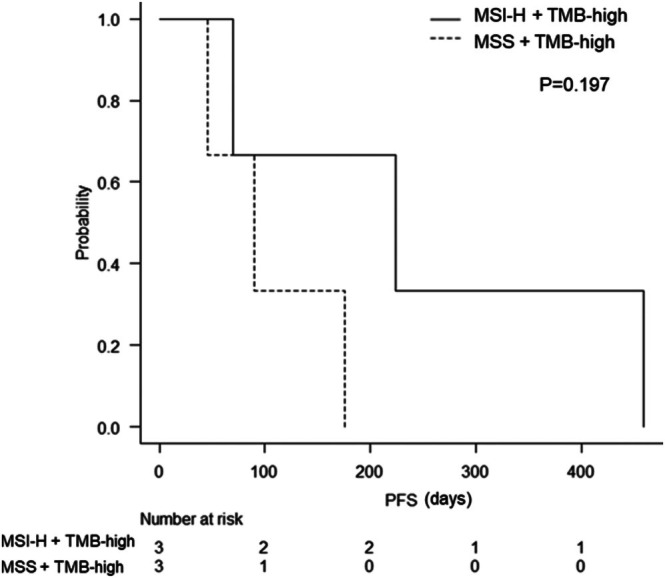 Figure 3
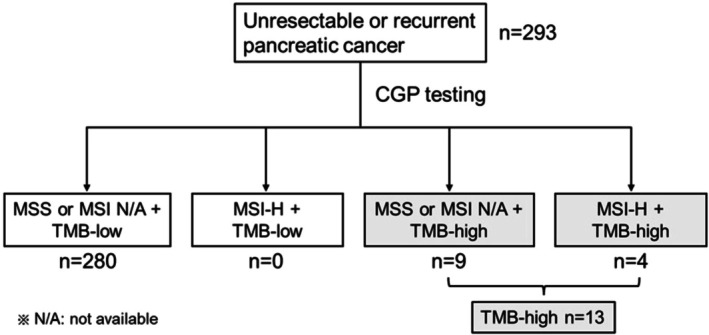 Figure 4
Peer Reviews
No public reviews on file for this paper yet. If you reviewed it on a platform where reviews are public (OpenReview, ICLR, NeurIPS, ICML), you can paste yours below so the community can read it here.
Videos
No videos yet. Explain this paper in a talk, walkthrough, or lecture? Add one.
Taxonomy
TopicsPancreatic and Hepatic Oncology Research · Cancer Immunotherapy and Biomarkers · CAR-T cell therapy research