A Smartphone-Based Psychological Intervention for Nonsuicidal Self-Injury (Kalmer App): Protocol for a Multicenter Double-Blind Randomized Controlled Trial
Anna Julià, Irene Jaén, Mónica Conesa Giménez, Azucena García-Palacios, Juan C Pascual, Anna Sintes Estévez, Anaís Lara, Iria Méndez, Soledad Romero, Joaquim Puntí, Joaquim Soler, Jordi Solé-Casals, Marina López-Solà, Daniel Vega

TL;DR
This study tests a smartphone app called Kalmer to help reduce nonsuicidal self-injury in young people through personalized digital interventions.
Contribution
The study introduces a novel app-based intervention tailored for nonsuicidal self-injury, combining real-time assessments and evidence-based psychological strategies.
Findings
The Kalmer app includes components like distress tolerance and emotion regulation, designed to reduce self-injury frequency.
Preliminary data show high app engagement and positive user feedback on usability and content.
The trial is assessing predictors of treatment outcomes to improve future digital mental health tools.
Abstract
Nonsuicidal self-injury (NSSI), defined as the deliberate, self-inflicted damage of body tissue without suicidal intent, is increasingly prevalent among adolescents and young adults and poses a major public health concern. Current treatments are often costly, difficult to access, and not tailored to the specific needs of young people. Mobile health (mHealth) interventions represent a promising avenue for scalable, accessible, and cost-effective support for NSSI, especially when combined with real-time assessments and personalized treatment strategies. This randomized controlled trial will evaluate the effectiveness of Kalmer, a brief app-based intervention for reducing NSSI and improving emotional well-being. The study has 2 aims: (1) to evaluate a newly developed app-based intervention for adolescents and young adults engaging in NSSI and (2) to assess predictors of treatment outcomes…
Genes, proteins, chemicals, diseases, species, mutations and cell lines named across the full text — each resolved to its canonical identifier and authoritative record.
Click any figure to enlarge with its caption.
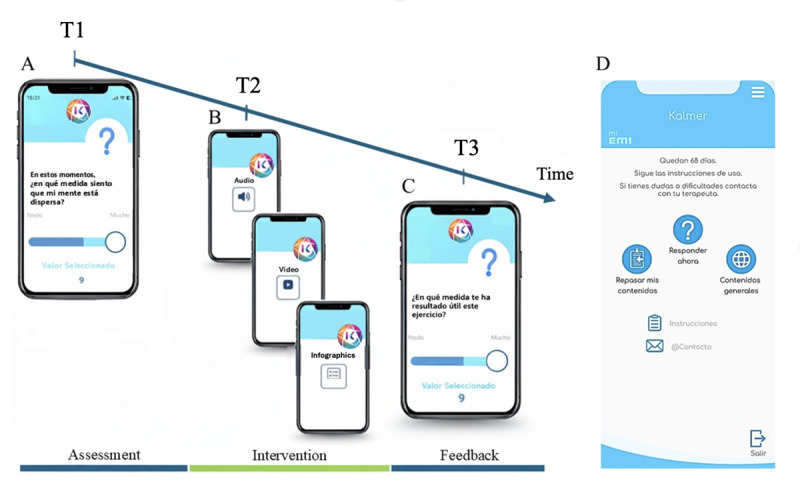 Figure 1
 Figure 2
 Figure 3
Peer Reviews
No public reviews on file for this paper yet. If you reviewed it on a platform where reviews are public (OpenReview, ICLR, NeurIPS, ICML), you can paste yours below so the community can read it here.
Videos
No videos yet. Explain this paper in a talk, walkthrough, or lecture? Add one.
Taxonomy
TopicsSuicide and Self-Harm Studies · Digital Mental Health Interventions · Mental Health via Writing