Harmine Derivatives as Anticancer Agents Endowed With Potent and Selective Antileukemia Activity: Synthesis, Biological Evaluation, Proapoptotic and Genotoxic Activity
Abdul Aziz Timbilla, Filip Pidany, Eliska Kohelova, Jana Kroustkova, Karel Kralovec, Jan Rataj, Martina Ceckova, Negar Maafi, Víctor Lopez, Cristina Moliner Langa, Stefan Kosturko, Jaroslav Jenco, Darina Muthna, Darja Koutova, Martina Rezacova, Lucie Cahlikova, Jakub Chlebek

TL;DR
A new harmine derivative, compound 6, shows strong anticancer effects by targeting leukemia cells while sparing healthy cells.
Contribution
The discovery of compound 6 as a potent and selective antileukemia agent with proapoptotic and genotoxic properties.
Findings
Compound 6 exhibited IC50 values below 10 µM in cancer cells but over 100 µM in non-cancerous cells.
Compound 6 induced apoptosis via both intrinsic and extrinsic pathways and caused DNA damage.
Compound 6 had minimal off-target effects, including low MAO-A inhibition and no ROS generation.
Abstract
β‐Carboline alkaloids, such as harmine (1), have demonstrated notable anticancer properties, making them attractive candidates for anticancer drug development. This study evaluated the antiproliferative activity of compound 1 and thirty‐three N 9‐substituted derivatives across a panel of cancer cell lines representing various histotypes. Among these, derivative 6, a harmine analog bearing a 3,5‐dimethylbenzyl substituent, was the most potent, showing enhanced cytotoxicity and selectivity toward cancer cells. Compound 6 exhibited IC50 values below 10 µM in all tested cancer cell lines, while its IC50 in non‐cancerous cells exceeded 100 µM. Viability assays and xCELLigence real‐time monitoring confirmed a concentration‐dependent inhibition of cancer cell growth with minimal effects on non‐malignant cells. Flow cytometry demonstrated G1 phase arrest in MOLT‐4 cells, supported by Western…
Genes, proteins, chemicals, diseases, species, mutations and cell lines named across the full text — each resolved to its canonical identifier and authoritative record.
Click any figure to enlarge with its caption.
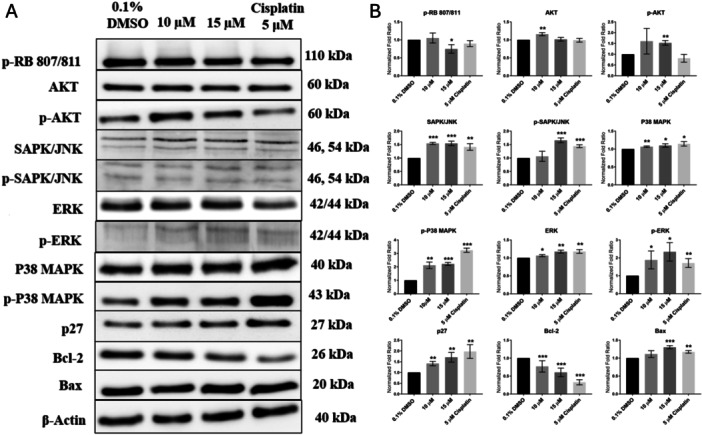 Figure 1
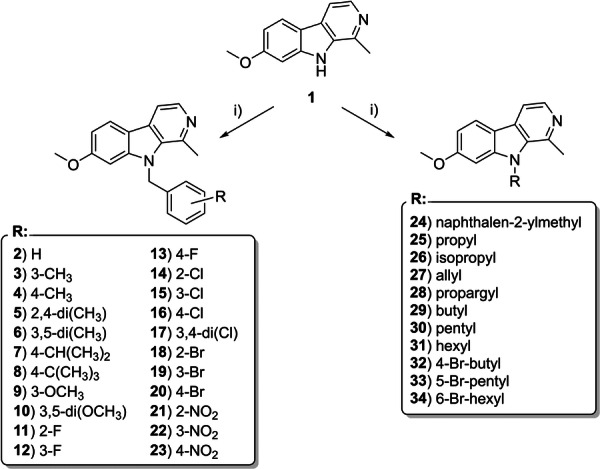 Figure 2
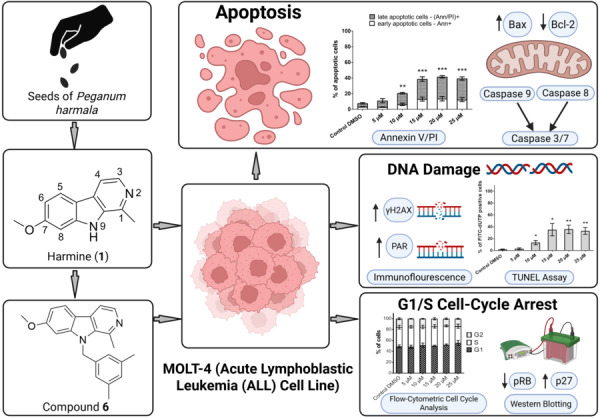 Figure 3
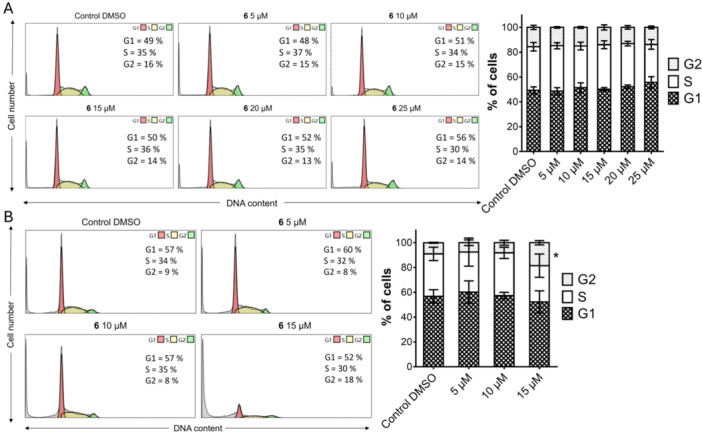 Figure 4
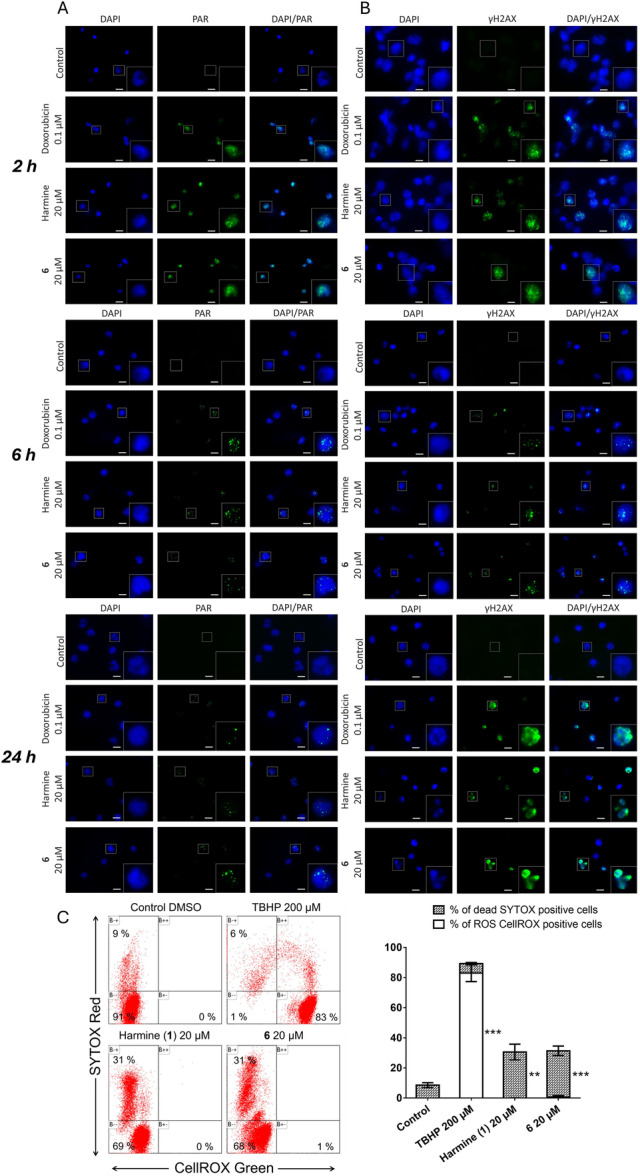 Figure 5
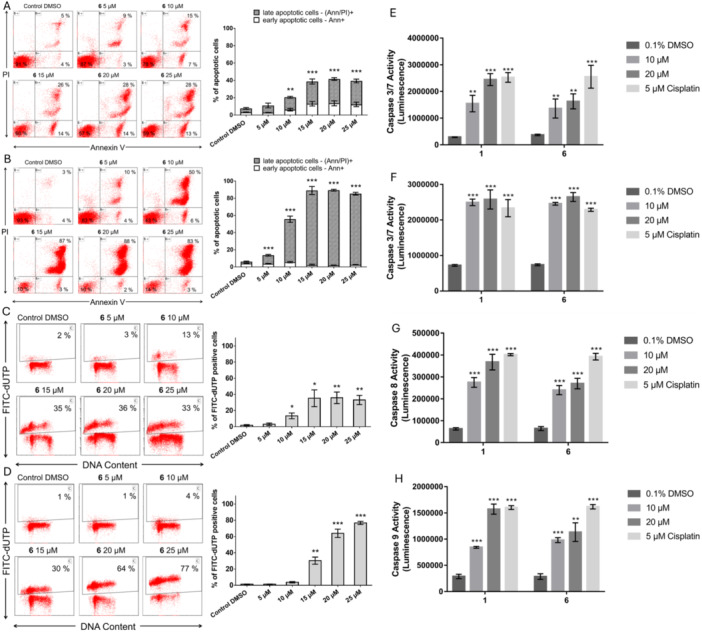 Figure 6
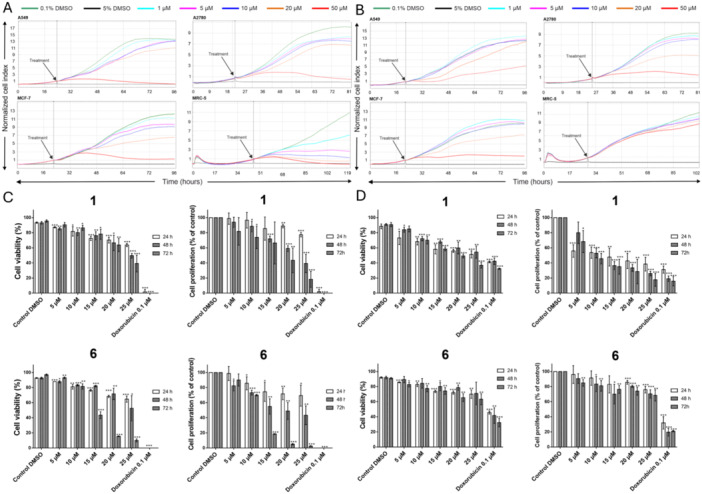 Figure 7
Peer Reviews
No public reviews on file for this paper yet. If you reviewed it on a platform where reviews are public (OpenReview, ICLR, NeurIPS, ICML), you can paste yours below so the community can read it here.
Videos
No videos yet. Explain this paper in a talk, walkthrough, or lecture? Add one.
Taxonomy
TopicsSynthesis and bioactivity of alkaloids · Berberine and alkaloids research · Phytochemical compounds biological activities