Comparison of pericapsular nerve group block versus supra-inguinal fascia iliaca block on postoperative pain management, quadriceps muscle strength, and early functional outcomes after arthroscopic treatment of femoroacetabular impingement: a prospective, randomized clinical study
Mohamed Abd El-Radi, Hatem G Said, Essam S Abdallah, Mahmoud M Kamel, Saeid M Elsawy, Ayman F AbdelKawi, Mohamed Abd El-Tawab, Safaa S Noaman

TL;DR
This study found that pericapsular nerve group blocks improved postoperative pain, muscle strength, and recovery after hip surgery compared to another nerve block method.
Contribution
The study introduces evidence that PENG blocks are superior to FICB for postoperative outcomes in hip arthroscopy patients.
Findings
PENG group patients had better quadriceps strength and fewer postoperative falls compared to FICB group.
PENG group had significantly lower pain scores and opioid consumption in the first 24 hours post-surgery.
PENG group showed better functional outcomes at 6 and 12 months postoperatively.
Abstract
This study compared the effects of pericapsular nerve group (PENG) block and supra-inguinal fascia iliaca compartment block (FICB) on quadriceps strength, postoperative analgesia, and functional scores following hip arthroscopy (HA) for patient complaining of femoroacetabular impingement (FAI) under general anaesthesia. A prospective, randomized, and controlled trial recruited a total of 48 patients who had either PENG group or supra-inguinal FICB as a pain management modality. The primary outcomes were the postoperative quadriceps muscle power, and the secondary outcomes included pain scores, opioid consumption, and functional scores; the modified Harris hip score (mHHS) and international hip outcome tool-12 (iHOT-12) score. All patients in PENG group were capable of performing a straight leg raise with hip flexion of >15°. In contrast, two patients in FICB group had postoperative…
Genes, proteins, chemicals, diseases, species, mutations and cell lines named across the full text — each resolved to its canonical identifier and authoritative record.
Click any figure to enlarge with its caption.
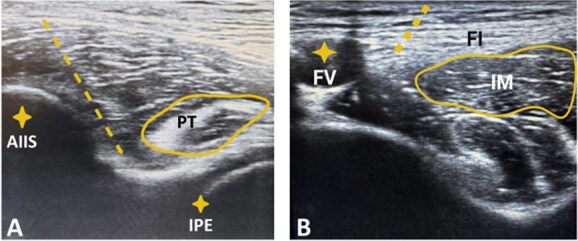 Figure 1
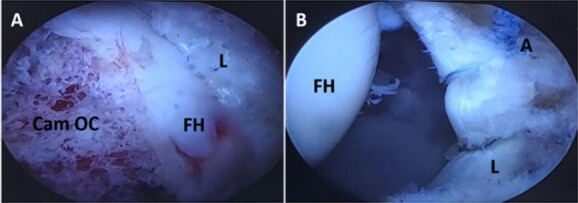 Figure 2
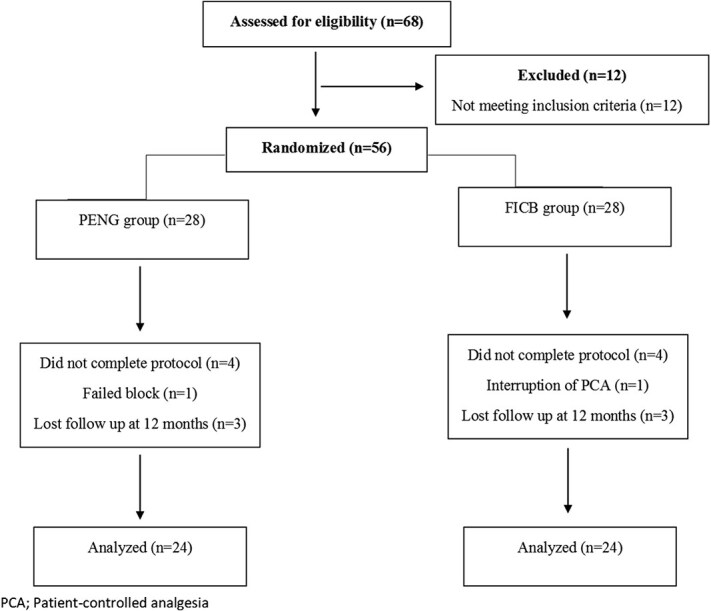 Figure 3
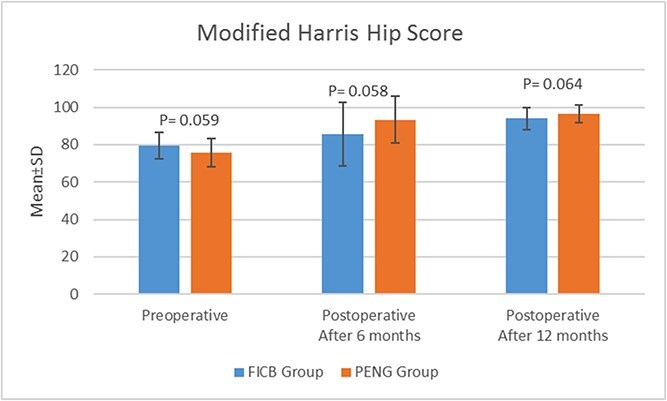 Figure 4
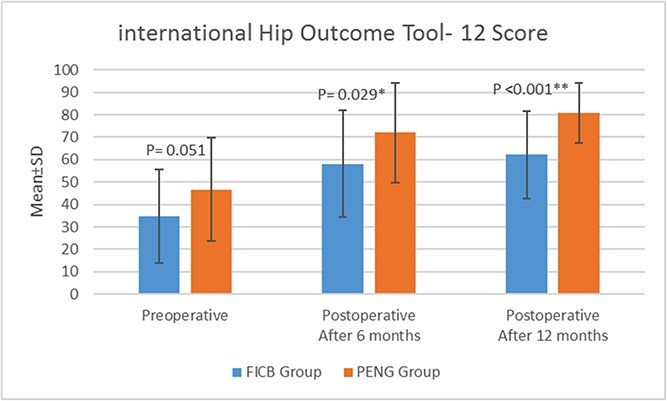 Figure 5
Peer Reviews
No public reviews on file for this paper yet. If you reviewed it on a platform where reviews are public (OpenReview, ICLR, NeurIPS, ICML), you can paste yours below so the community can read it here.
Videos
No videos yet. Explain this paper in a talk, walkthrough, or lecture? Add one.
Taxonomy
TopicsHip disorders and treatments · Anesthesia and Pain Management · Shoulder Injury and Treatment