Noise-induced collective memory in schooling fish
Alyssa Chan, Eva Kanso

TL;DR
This paper explains how fish schools remember past behaviors through mathematical modeling and bifurcation theory.
Contribution
The study reveals collective memory in fish schooling arises from a noisy bifurcation, not structural bistability.
Findings
Collective memory in fish schooling is driven by a noisy transcritical bifurcation.
Phenomenological models capture key dynamics like polarization and transient milling.
The findings resolve ambiguity about the origins of collective memory in fish schools.
Abstract
Schooling fish often self-organize into a variety of collective patterns, from polarized schooling to rotational milling. Mathematical models support the emergence of these large-scale patterns from local decentralized interactions, in the absence of individual memory and group leadership. In a popular model where individual fish interact locally following rules of avoidance, alignment, and attraction, the group exhibits collective memory: changes in individual behavior lead to emergent patterns that depend on the group’s past configurations. However, the mechanisms driving this collective memory remain obscure. Here, we combine numerical simulations with tools from bifurcation theory to uncover that the transition from milling to schooling in this model is driven by a noisy transcritical bifurcation where the two collective states intersect and exchange stability. We further show that…
Genes, proteins, chemicals, diseases, species, mutations and cell lines named across the full text — each resolved to its canonical identifier and authoritative record.
Click any figure to enlarge with its caption.
 Figure 1
 Figure 2
 Figure 3
 Figure 4
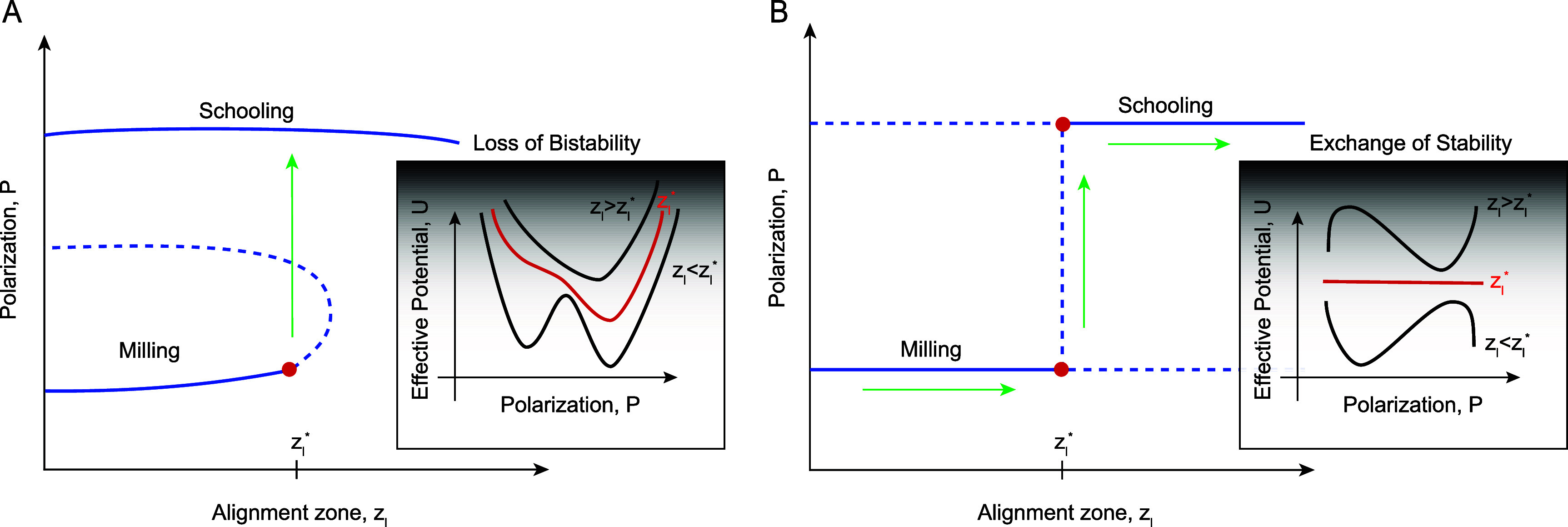 Figure 5
 Figure 6
 Figure 7
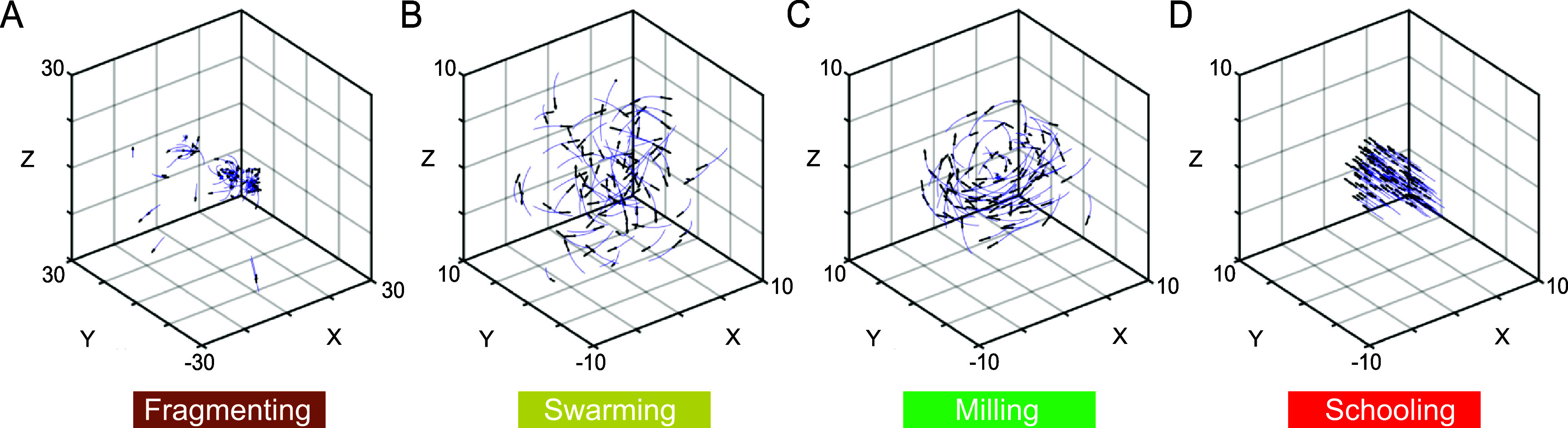 Figure 8
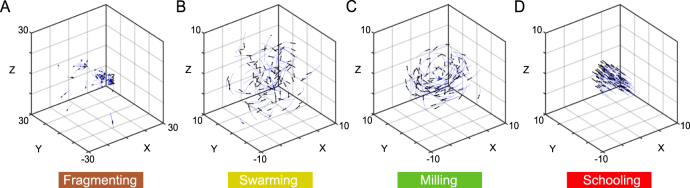 Figure 9
 Figure 10
 Figure 11
 Figure 12
 Figure 13
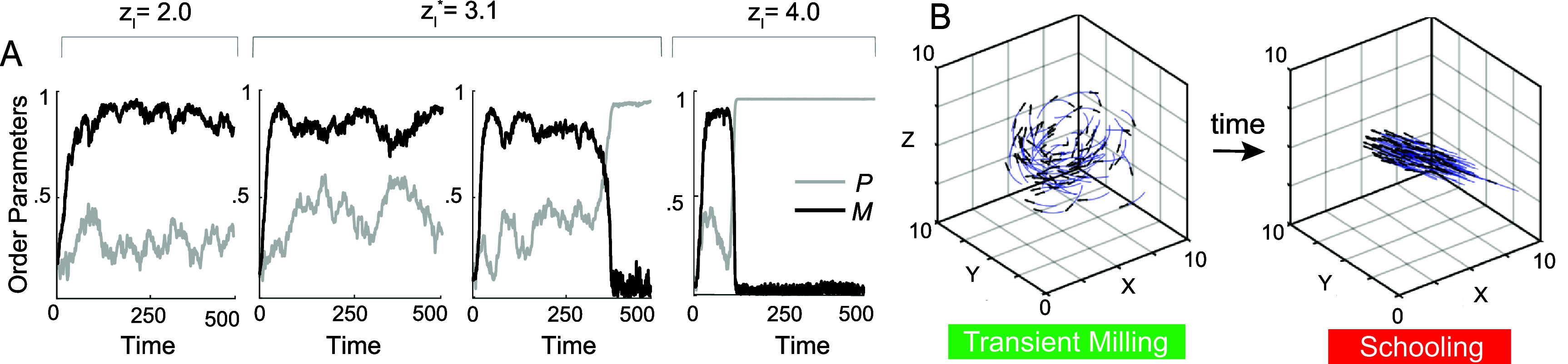 Figure 14
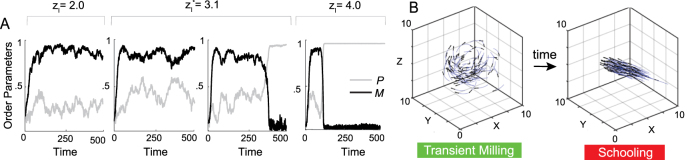 Figure 15
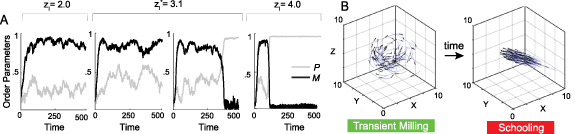 Figure 16
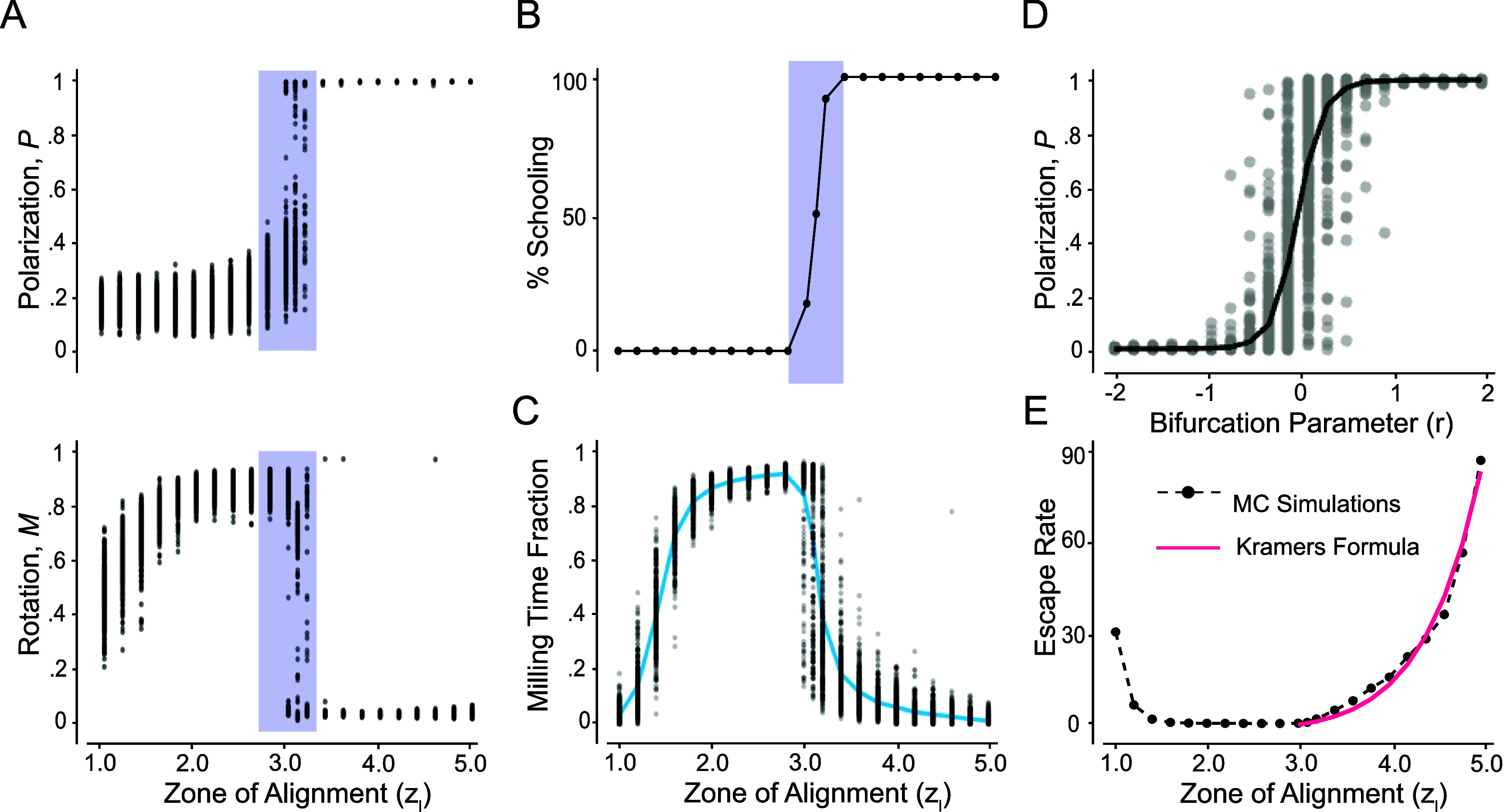 Figure 17
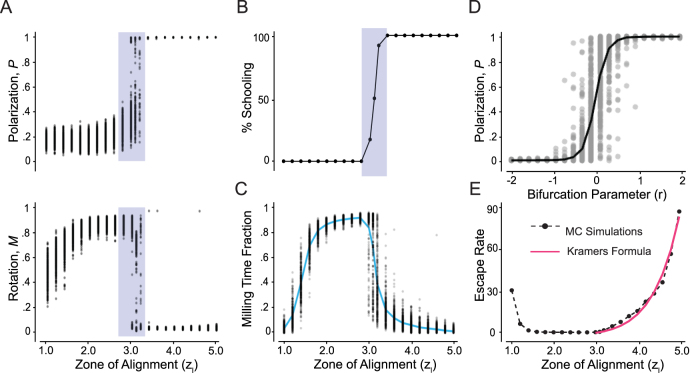 Figure 18
 Figure 19
 Figure 20
 Figure 21
 Figure 22
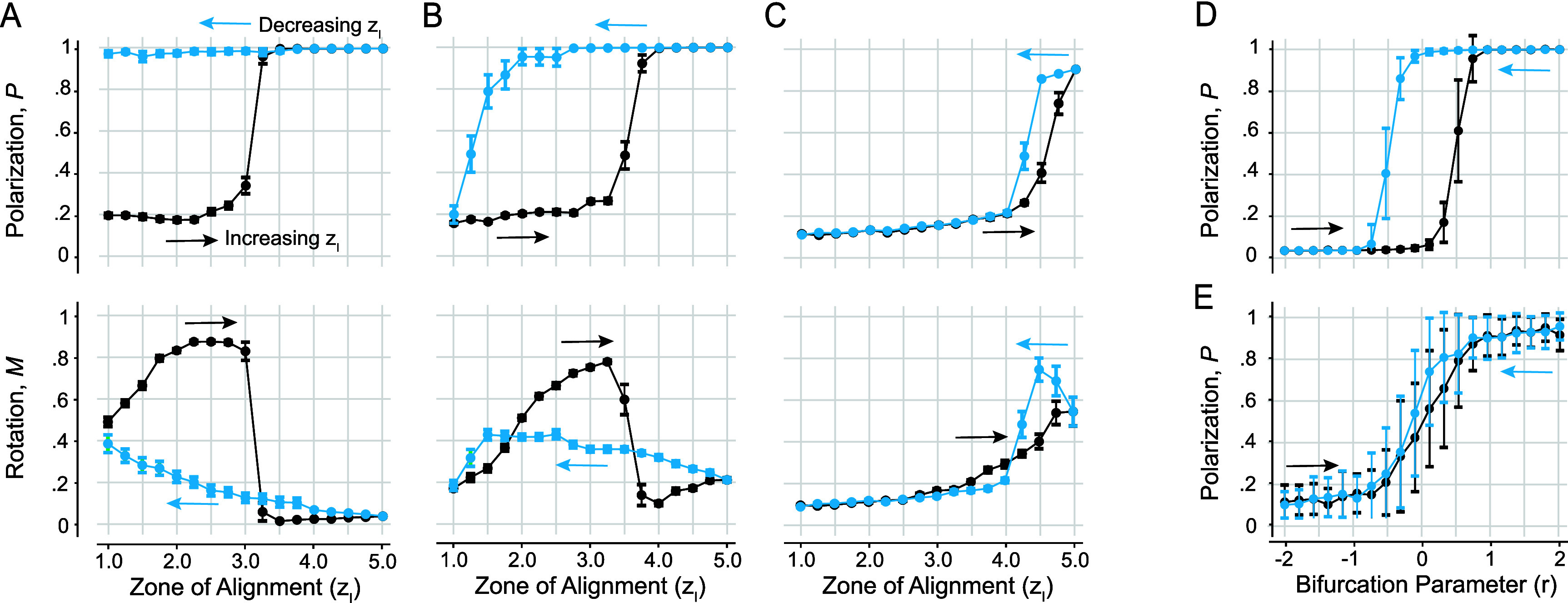 Figure 23
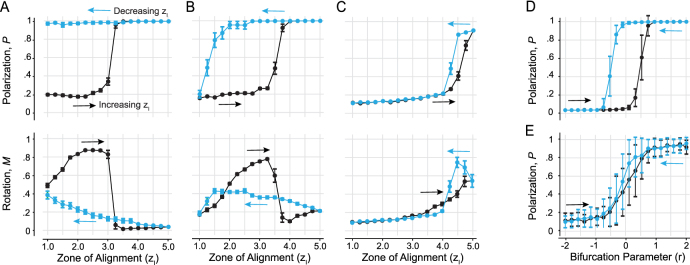 Figure 24
 Figure 25
 Figure 26
 Figure 27
 Figure 28
 Figure 29
 Figure 30
 Figure 31
 Figure 32
 Figure 33
 Figure 34
 Figure 35
 Figure 36
 Figure 37
 Figure 38
 Figure 39
 Figure 40
 Figure 41
 Figure 42
 Figure 43
 Figure 44
 Figure 45
 Figure 46
 Figure 47
 Figure 48
 Figure 49
 Figure 50
Peer Reviews
No public reviews on file for this paper yet. If you reviewed it on a platform where reviews are public (OpenReview, ICLR, NeurIPS, ICML), you can paste yours below so the community can read it here.
Videos
No videos yet. Explain this paper in a talk, walkthrough, or lecture? Add one.
Taxonomy
TopicsMicro and Nano Robotics · Distributed Control Multi-Agent Systems · Ecosystem dynamics and resilience