The RRM domains of PARP14 mediate replication fork degradation in BRCA2-deficient cells
Anastasia Hale, Katie A Lynch, Ashna Dhoonmoon, Claudia M Nicolae, George-Lucian Moldovan

TL;DR
This study shows how PARP14's RRM domains help degrade DNA at stalled replication forks in cells lacking BRCA2, leading to genomic instability.
Contribution
The study identifies the role of PARP14's RRM domains in recruiting MRE11 to reversed replication forks in BRCA2-deficient cells.
Findings
PARP14's RRM domains are necessary for MRE11 recruitment to reversed replication forks in BRCA2-deficient cells.
These domains are essential for nascent strand degradation and double-strand break formation under replication stress.
The findings enhance understanding of nuclease engagement at stalled replication forks.
Abstract
Degradation of reversed replication forks by nucleases has emerged as a major mechanism of chemosensitivity in BRCA-deficient cells. We previously showed that the mono-ADP-ribosyltransferase PARP14 regulates MRE11 recruitment to reversed replication forks to promote their degradation. This results in genomic instability in BRCA-deficient cells. While it has been shown that PARP14-mediated recruitment of MRE11 to reversed forks promotes their degradation and collapse, how PARP14 binds to nascent DNA is unknown. Here, we show that, in BRCA-deficient cells, PARP14 is recruited to nascent DNA at reversed replication forks via its RRM (RNA Recognition Motifs) domains. We reveal that the RRM domains are necessary for the recruitment of MRE11 to reversed forks to promote nascent strand degradation at stalled replication forks in BRCA2-deficient cells. We also show that these domains are…
Genes, proteins, chemicals, diseases, species, mutations and cell lines named across the full text — each resolved to its canonical identifier and authoritative record.
Click any figure to enlarge with its caption.
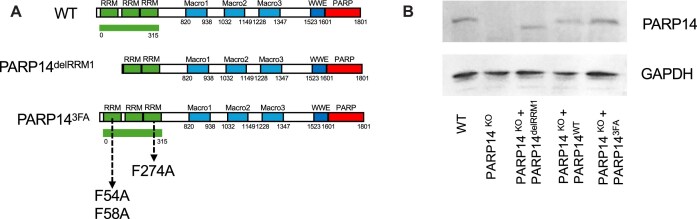 Figure 1
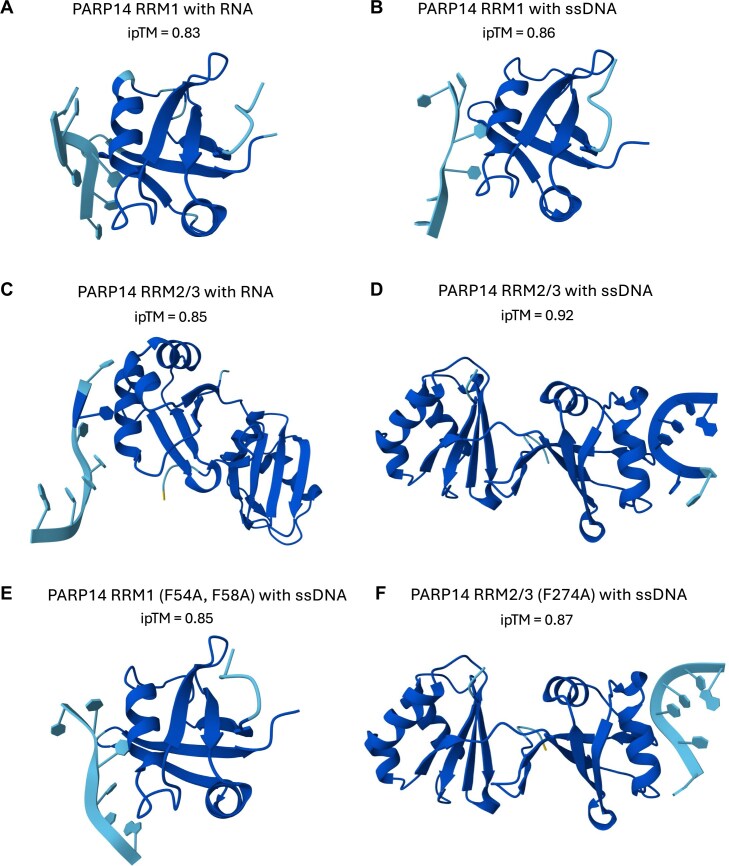 Figure 2
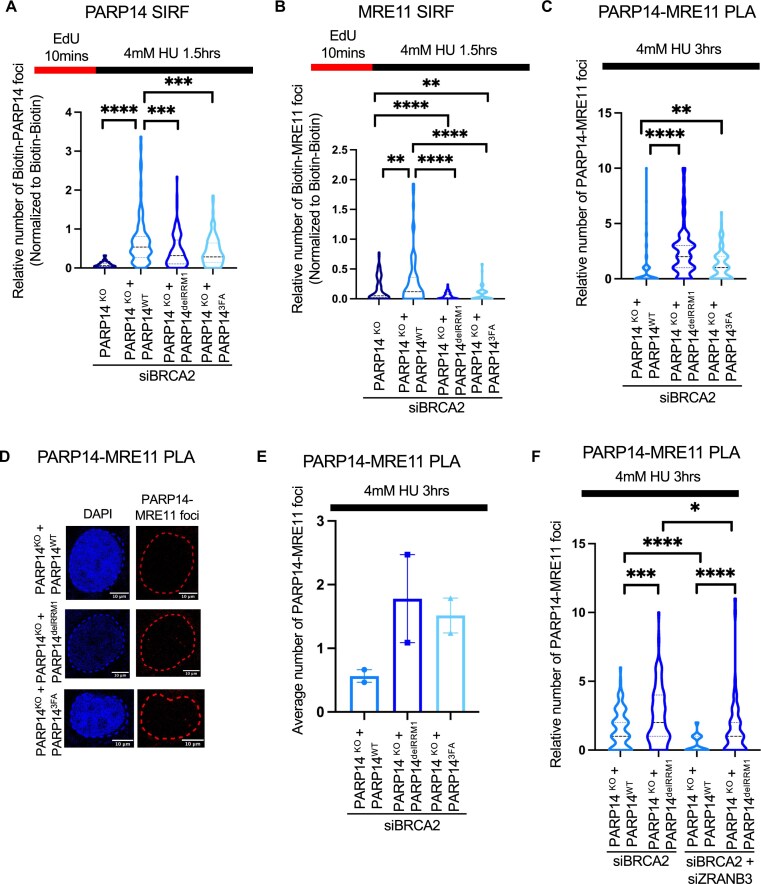 Figure 3
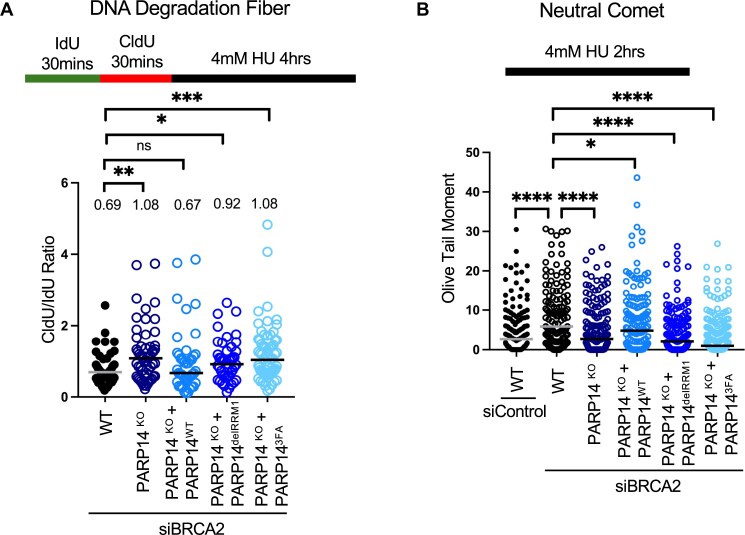 Figure 4
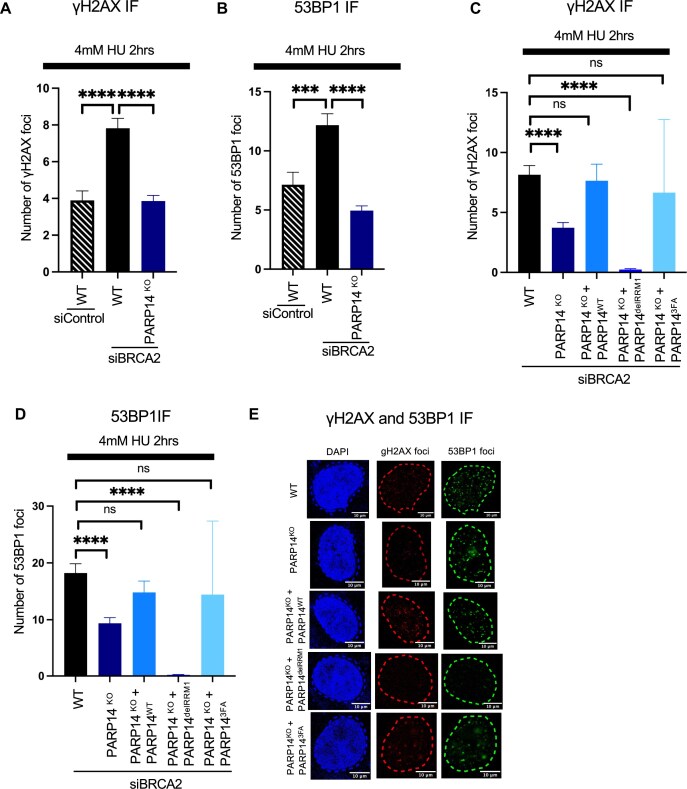 Figure 5
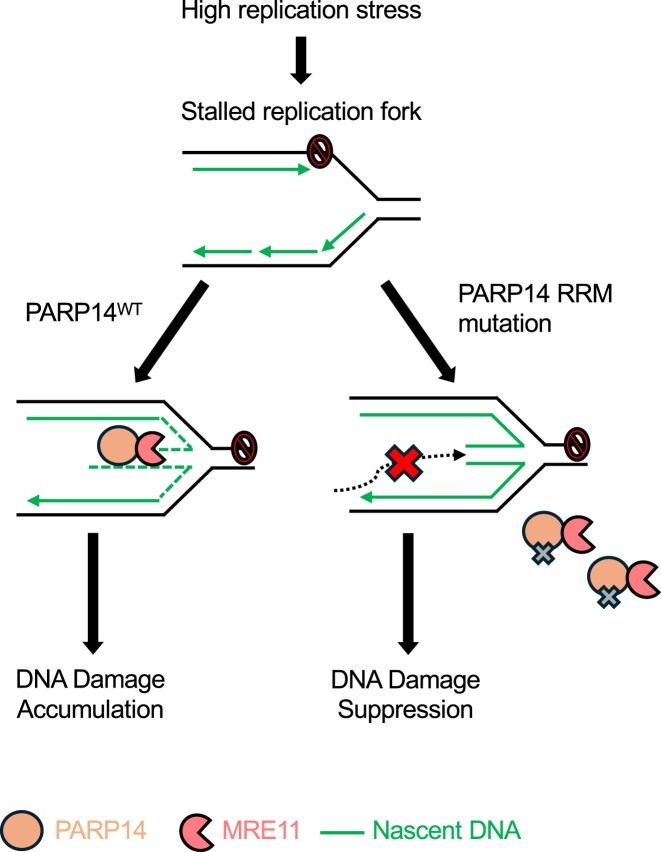 Figure 6
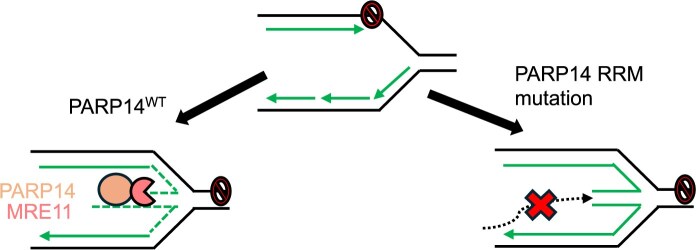 Figure 7
Peer Reviews
No public reviews on file for this paper yet. If you reviewed it on a platform where reviews are public (OpenReview, ICLR, NeurIPS, ICML), you can paste yours below so the community can read it here.
Videos
No videos yet. Explain this paper in a talk, walkthrough, or lecture? Add one.
Taxonomy
TopicsPARP inhibition in cancer therapy · DNA Repair Mechanisms · CRISPR and Genetic Engineering