Evolution and Climate Adaptation in Eurasian Gyrfalcon Populations
Xin Liu, Li Hu, Zhenzhen Lin, Shengkai Pan, Siying Huang, Vasiliy Sokolov, Aleksandr Sokolov, Ivan Fufachev, Sergey Ganusevich, Andrew Dixon, Xiangjiang Zhan

TL;DR
This study explores how past and future climate changes have shaped the evolution of Eurasian gyrfalcons, revealing that their current genetic makeup may not be sufficient to adapt to ongoing Arctic warming.
Contribution
The study combines genome sequencing, demographic inference, and species distribution modeling to reveal the eco-evolutionary responses of gyrfalcons to climate change.
Findings
Genetic differentiation of gyrfalcon populations from west to east arose during the late Pleistocene and persisted until late Holocene gene flow.
Current gyrfalcon populations show low genetic diversity and high inbreeding, likely due to a population bottleneck 1,000 years ago.
Future climate models predict a significant reduction in suitable habitats for Kola gyrfalcons under global warming scenarios.
Abstract
Climate change is considered a key driver for shaping ecological and evolutionary processes of Arctic animals. Historical glaciation has profoundly influenced the distribution and genetic differentiation of Arctic vertebrates, and recently Arctic species are facing new and intensifying threats from rapid global warming. Understanding how past, recent and future climate change has, and will influence the evolution of Arctic animals is, therefore, crucial for effective conservation planning. Here we combine whole‐genome sequencing, demographic inference, and species distribution modeling (SDM) to assess the eco‐evolutionary responses of the gyrfalcon ( Falco rusticolus ), a resident Arctic apex predator, to climate change. Assembling a genome reference and using samples from three breeding regions across the Eurasian Arctic (Kola, Yamal, and Chukotka peninsulas), we found genetic…
Genes, proteins, chemicals, diseases, species, mutations and cell lines named across the full text — each resolved to its canonical identifier and authoritative record.
Click any figure to enlarge with its caption.
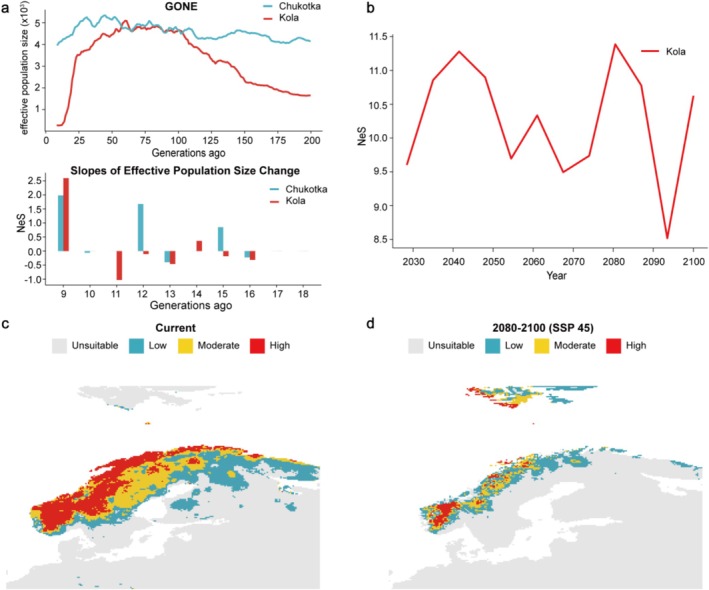 Figure 1
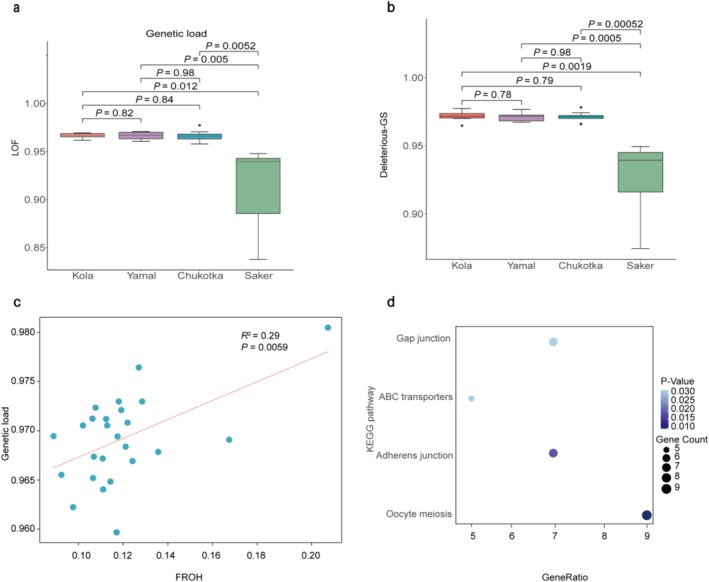 Figure 2
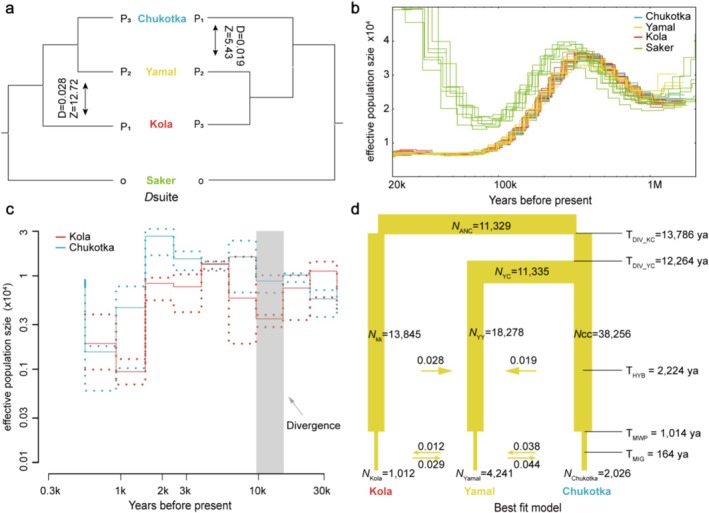 Figure 3
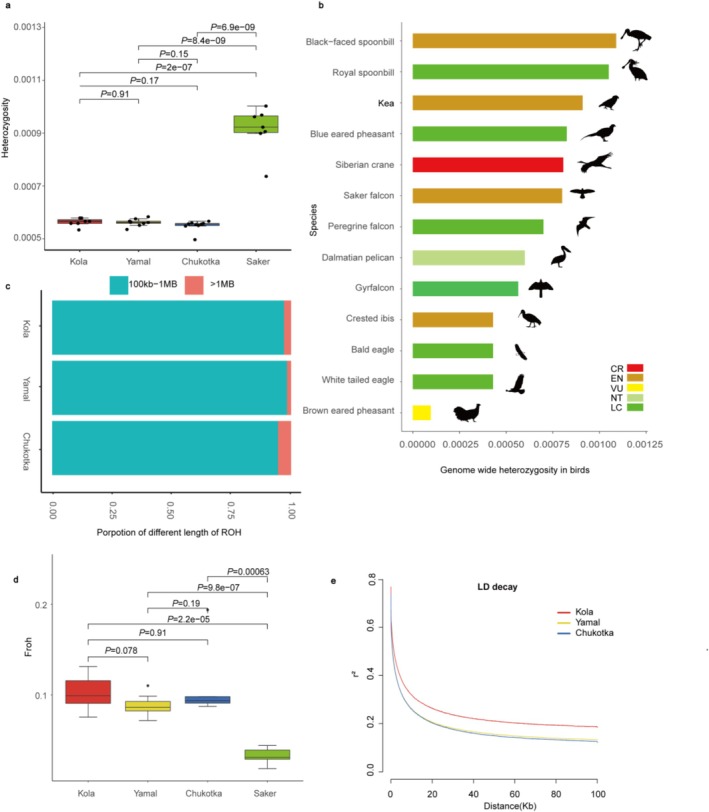 Figure 4
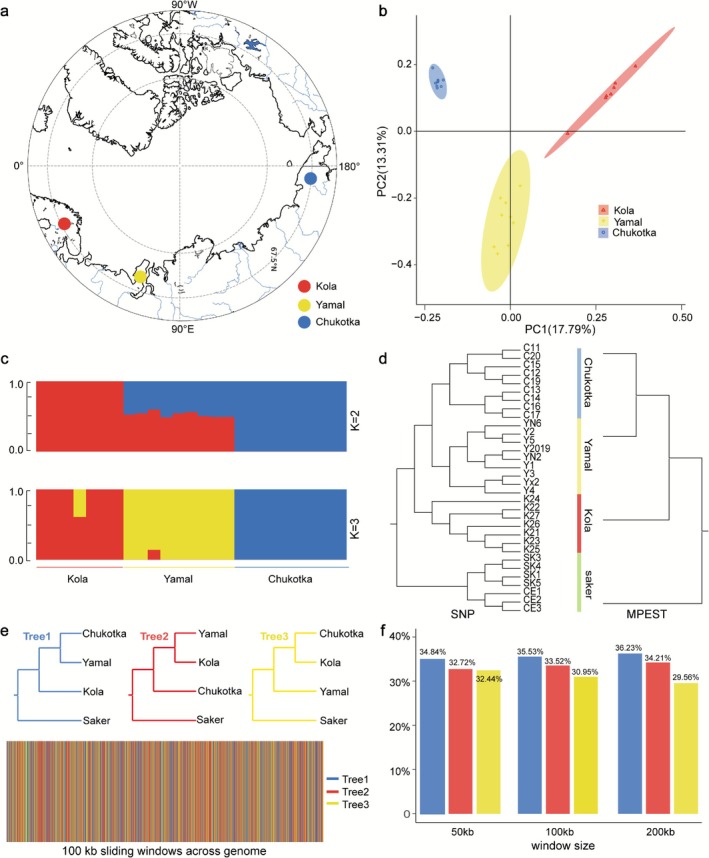 Figure 5
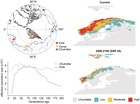 Figure 6
Peer Reviews
No public reviews on file for this paper yet. If you reviewed it on a platform where reviews are public (OpenReview, ICLR, NeurIPS, ICML), you can paste yours below so the community can read it here.
Videos
No videos yet. Explain this paper in a talk, walkthrough, or lecture? Add one.
Taxonomy
TopicsBird parasitology and diseases · Species Distribution and Climate Change · Avian ecology and behavior