Coevolution and Functional Effects of Endosymbiotic Rickettsia in Leptocybe invasa Fisher & LaSalle (Hymenoptera: Eulophidae) Across China
Xiu Xu, Leming Zhou, Jinting Xie, Junjue Li, Chunhui Guo, Zhende Yang

TL;DR
This study explores how Rickettsia bacteria coevolve with the invasive wasp Leptocybe invasa in China and how they affect the wasp's biology and reproduction.
Contribution
The discovery of two distinct Rickettsia strains and their specific associations with host lineages, along with transcriptomic insights into symbiont effects.
Findings
Rickettsia infection is 100% prevalent in L. invasa populations across China.
Tetracycline treatment eliminates Rickettsia and alters L. invasa's sex ratio and lifespan.
Transcriptome analysis reveals 178 differentially expressed genes linked to Rickettsia presence.
Abstract
Rickettsia is an endosymbiotic bacterium that infects various arthropods, affecting the host's biology, ecology, and evolution. Leptocybe invasa is an invasive pest that severely damages eucalyptus plants. A comprehensive investigation of Rickettsia in 313 female L. invasa individuals from 17 Chinese populations revealed a 100% infection prevalence. Sequencing of three host molecular markers—mitochondrial COI, nuclear ITS, and 28S—led to the identification of a novel L. invasa haplotype, designated Haplotype 1 × 2, which exhibits mito‐nuclear discordance. Concurrently, sequencing of four Rickettsia genes (16S rRNA, gltA, atpA, rpmE) revealed two distinct strains, termed STRiA and STRiB. These strains demonstrated a specific association with the host lineages, where STRiA was exclusively associated with lineage A (comprising Haplotype 1 and Haplotype 1 × 2), and STRiB was linked to…
Genes, proteins, chemicals, diseases, species, mutations and cell lines named across the full text — each resolved to its canonical identifier and authoritative record.
Click any figure to enlarge with its caption.
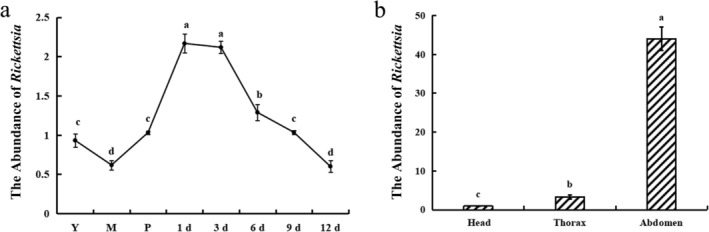 Figure 1
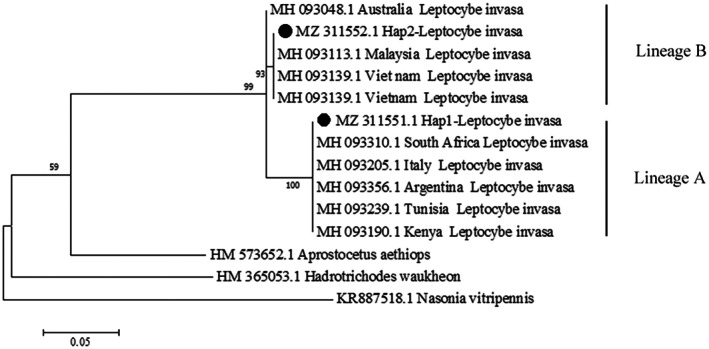 Figure 2
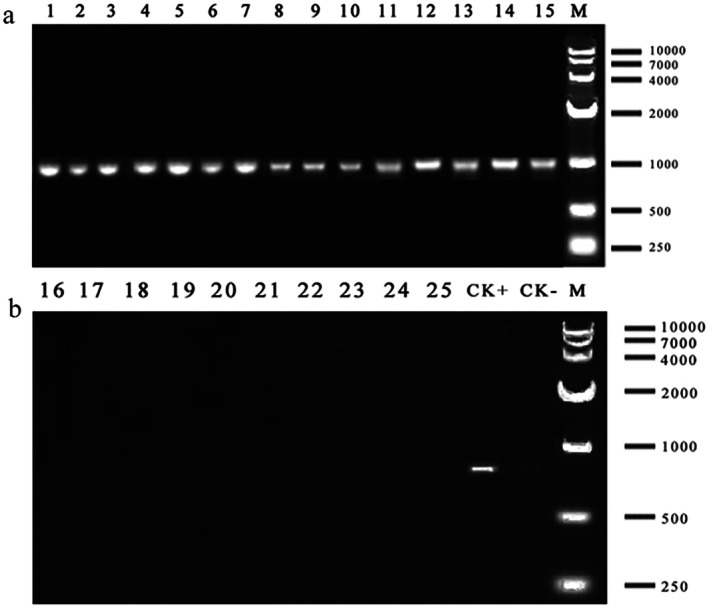 Figure 3
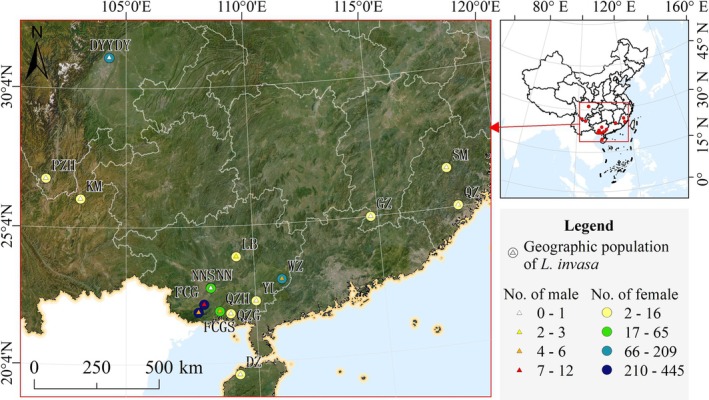 Figure 4
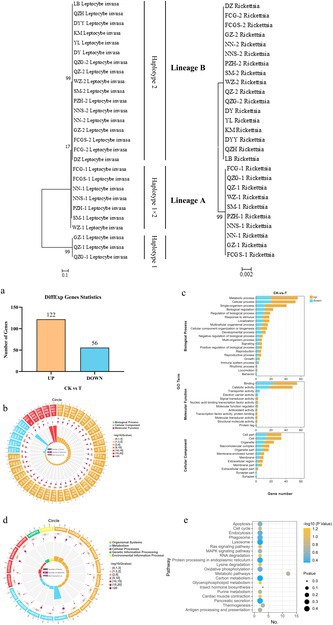 Figure 5
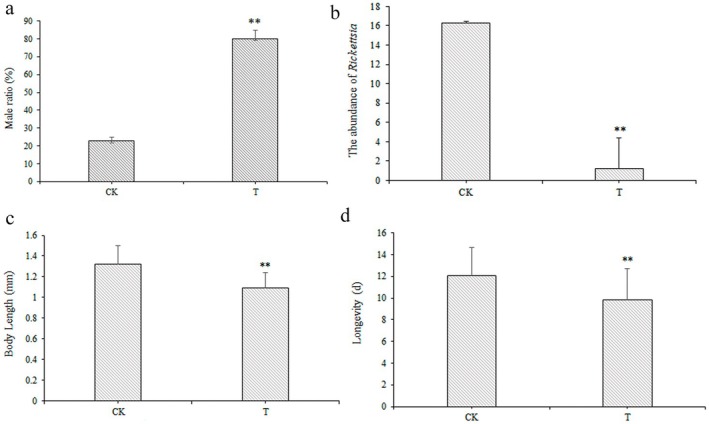 Figure 6
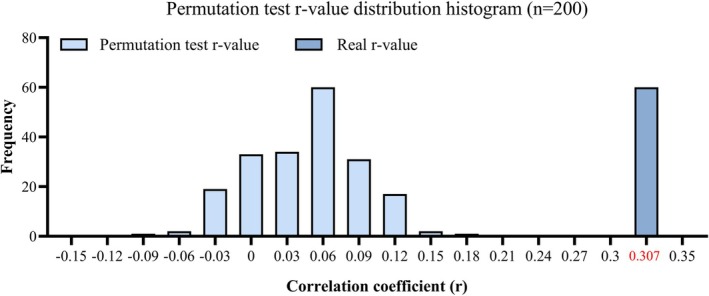 Figure 7
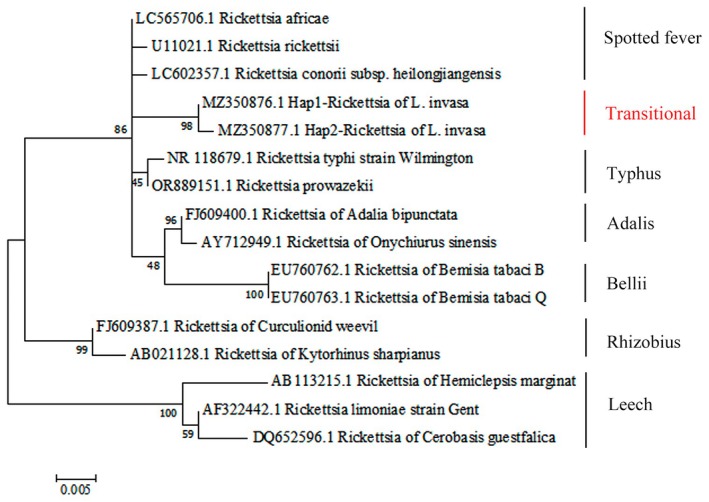 Figure 8
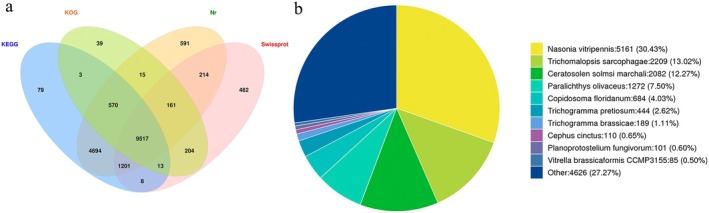 Figure 9
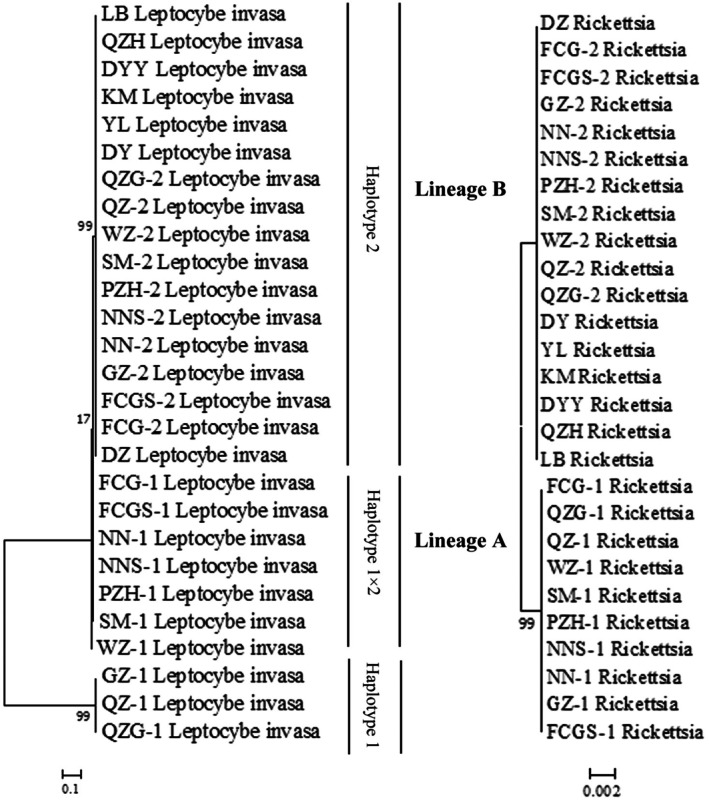 Figure 10
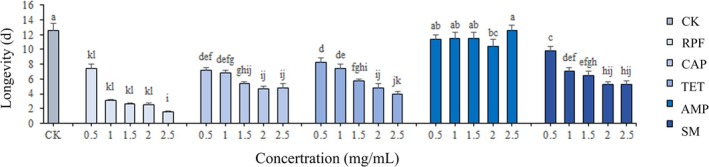 Figure 11
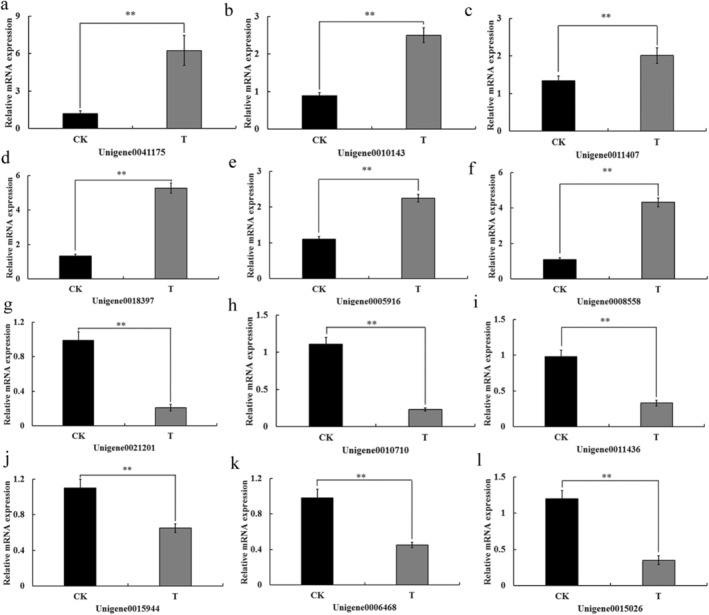 Figure 12
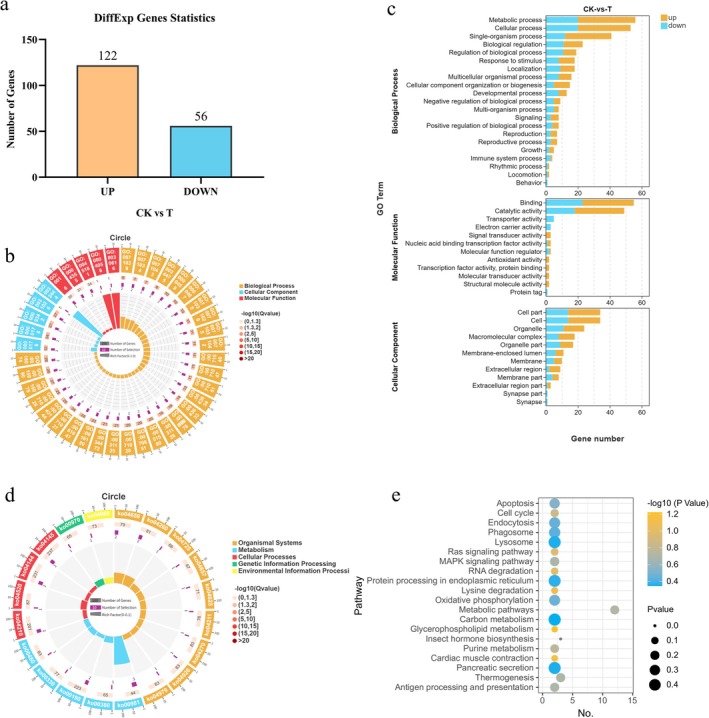 Figure 13
Peer Reviews
No public reviews on file for this paper yet. If you reviewed it on a platform where reviews are public (OpenReview, ICLR, NeurIPS, ICML), you can paste yours below so the community can read it here.
Videos
No videos yet. Explain this paper in a talk, walkthrough, or lecture? Add one.
Taxonomy
TopicsInsect symbiosis and bacterial influences · Phytoplasmas and Hemiptera pathogens · Entomopathogenic Microorganisms in Pest Control