Parelaphostrongylus tenuis is newly endemic in white-tailed deer (Odocoileus virginianus) in central Saskatchewan
Linnea McLellan, Trent K. Bollinger, Gabrielle Large, Phil McLoughlin, Erin Moffatt, Louwrens P. Snyman, Iga Stasiak, Maarten Voordouw, Emily Jenkins

TL;DR
A parasite previously found only east of Saskatchewan is now established in white-tailed deer there, posing a threat to other cervid species.
Contribution
The first evidence of Parelaphostrongylus tenuis becoming endemic in white-tailed deer in central Saskatchewan.
Findings
P. tenuis was found in 10.6% of white-tailed deer sampled across central and northeastern Saskatchewan.
DNA analysis confirmed the parasite's presence and similarity to existing Canadian strains.
The parasite's spread suggests a risk to moose and caribou populations in northern regions.
Abstract
Parelaphostrongylus tenuis, or meningeal worm, can be fatal and have detrimental effects at a population level in cervid species outside of the definitive host, the white-tailed deer (WTD) (Odocoileus virginianus), in which they cause little or no ill effects. Although well documented in Canada east of Saskatchewan, there is only one published case of P. tenuis in WTD in Saskatchewan from the 1990s, representing the northwestern distributional limit of this parasite in North America. We report 90 confirmed (47) or suspected (43) cases of P. tenuis diagnosed in natural mortalities in moose (Alces alces), elk (Cervus canadensis), and mule deer (Odocoileus hemionus) by the Western/Northern region of the Canadian Wildlife Health Cooperative between 2015 and 2024. To determine if this parasite was locally acquired, we examined meninges and associated venous sinuses of 330 WTD harvested in…
Genes, proteins, chemicals, diseases, species, mutations and cell lines named across the full text — each resolved to its canonical identifier and authoritative record.
Click any figure to enlarge with its caption.
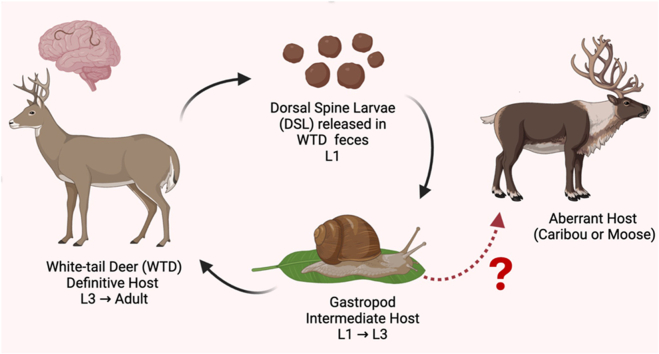 Figure 1
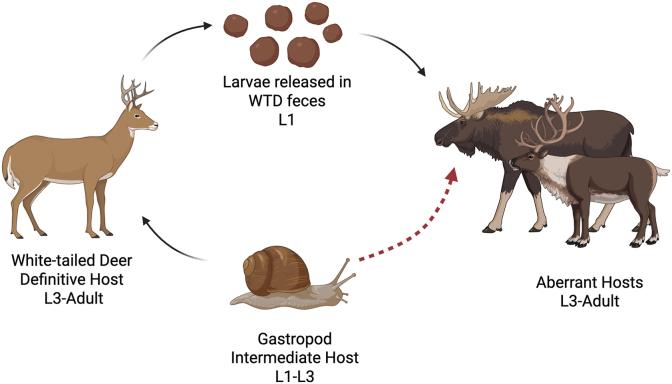 Figure 2
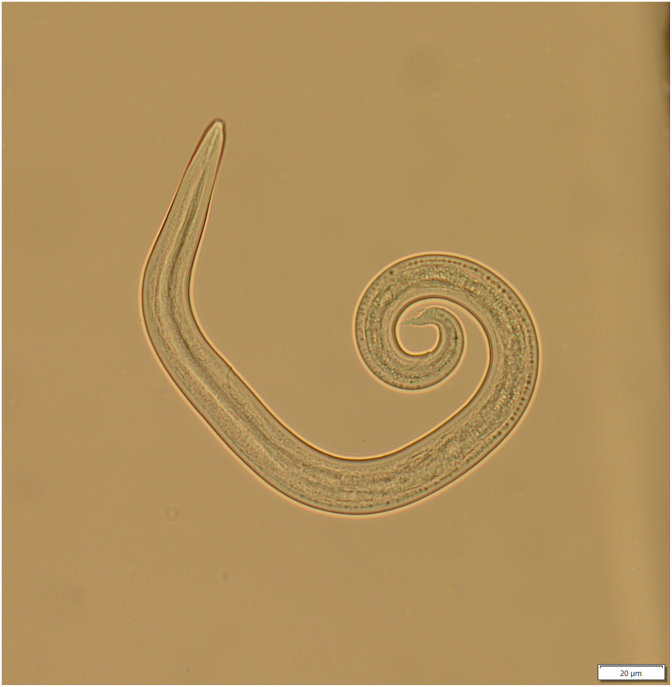 Figure 3
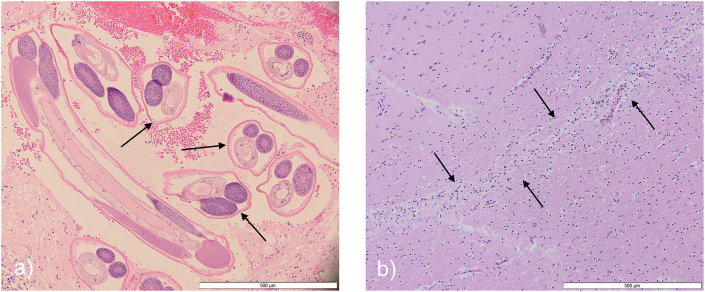 Figure 4
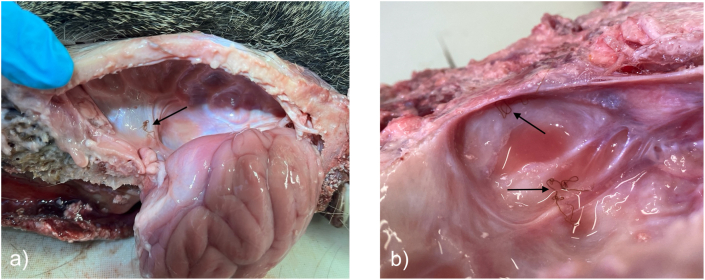 Figure 5
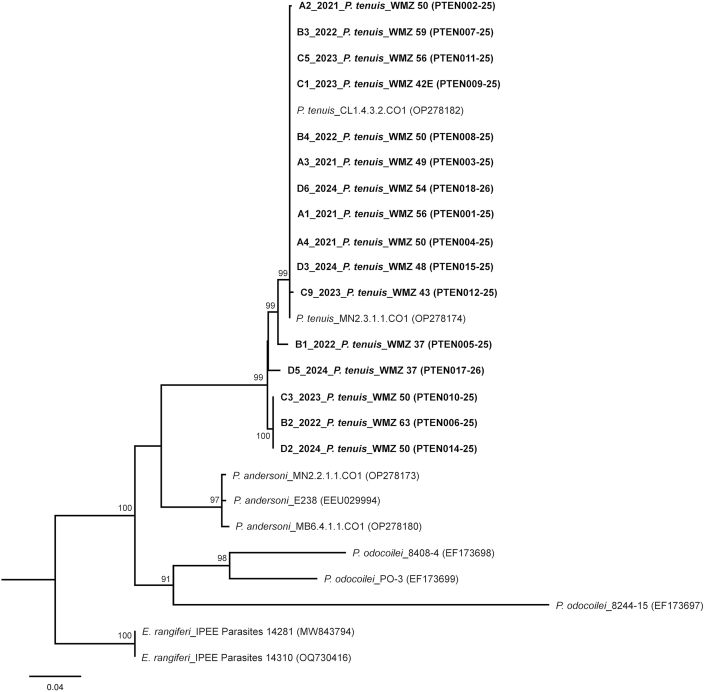 Figure 6
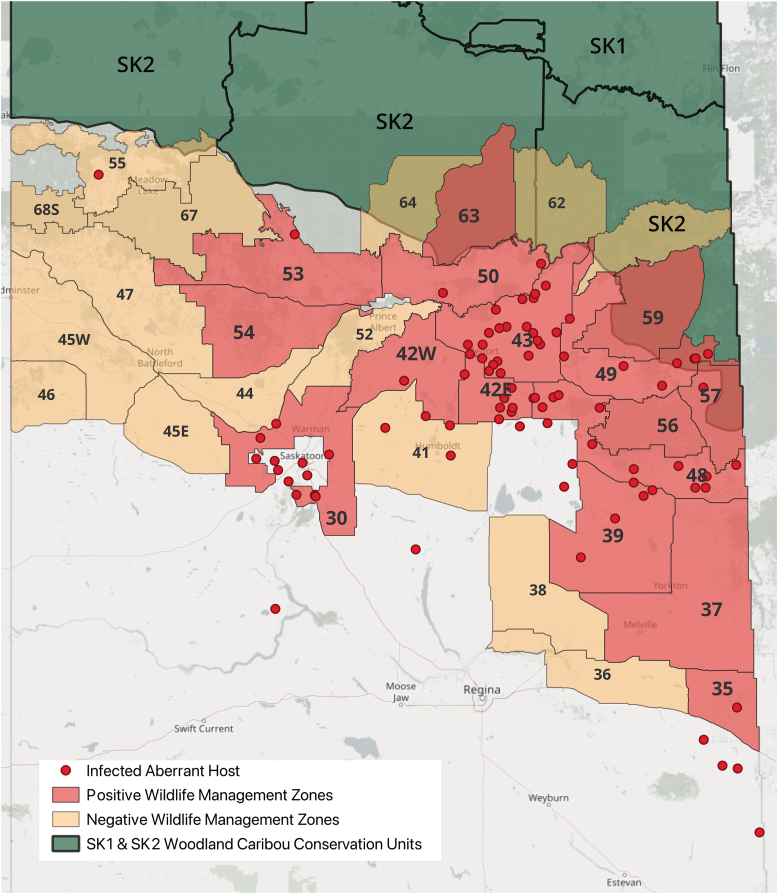 Figure 7
Peer Reviews
No public reviews on file for this paper yet. If you reviewed it on a platform where reviews are public (OpenReview, ICLR, NeurIPS, ICML), you can paste yours below so the community can read it here.
Videos
No videos yet. Explain this paper in a talk, walkthrough, or lecture? Add one.
Taxonomy
TopicsHelminth infection and control · Parasite Biology and Host Interactions · Mollusks and Parasites Studies