A Large, Real‐World Cohort Analysis of Arrhythmia Detection and Therapeutic Interventions in Patients With Insertable Cardiac Monitors and Long‐Term Monitoring
Sandeep A. Saha, Sarah Rosemas, Shantanu Sarkar, Veronica Ramos, Andrew P. Radtke, Shubha Majumder, Mirko De Melis, Jiani Zhou, J. Jason Sims

TL;DR
This study analyzes real-world data from cardiac monitors to show how often arrhythmias are detected and how often patients receive treatments based on those findings.
Contribution
The study presents the largest real-world analysis of arrhythmia detection and therapeutic interventions using AI-enabled insertable cardiac monitors.
Findings
60.6% of patients had at least one arrhythmia detected during long-term monitoring.
Over half of patients received medication adjustments or procedural interventions based on monitor findings.
Arrhythmias other than AF were detected in a significant proportion of patients with suspected AF or cryptogenic stroke.
Abstract
Insertable cardiac monitors (ICMs) provide long‐term continuous monitoring for arrhythmia diagnosis and management for various clinical indications. However, little data exists on comprehensive real‐world arrhythmia diagnostic yield and therapy rates in patients indicated for ICMs with validated artificial intelligence (AI) algorithms enabling large‐scale, automated adjudication of ICM‐detected episodes. We report the largest real‐world analysis of arrhythmia detection as well as medical and procedural therapies in patients with ICMs implanted for guideline‐approved indications with long‐term monitoring. Patients who received a Reveal LINQ ICM between October 1, 2016, and June 30, 2020, with ≥ 1 year of follow‐up were identified in two databases (Medtronic CareLink data warehouse, N = 12 020, and Optum Clinformatics Data Mart claims database, N = 17 037) to analyze arrhythmia…
Genes, proteins, chemicals, diseases, species, mutations and cell lines named across the full text — each resolved to its canonical identifier and authoritative record.
Click any figure to enlarge with its caption.
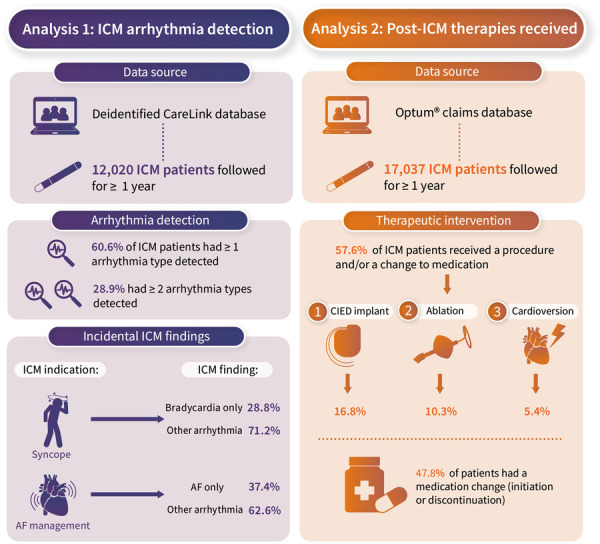 Figure 1
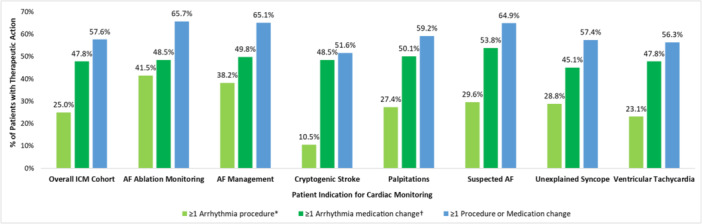 Figure 2
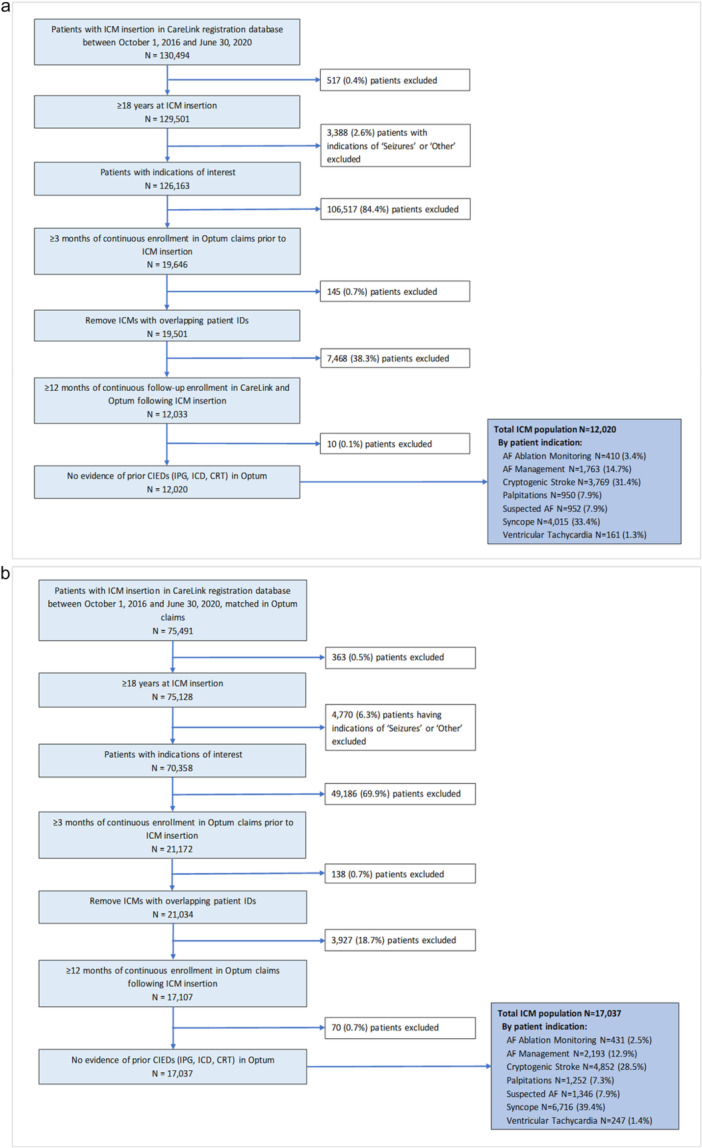 Figure 3
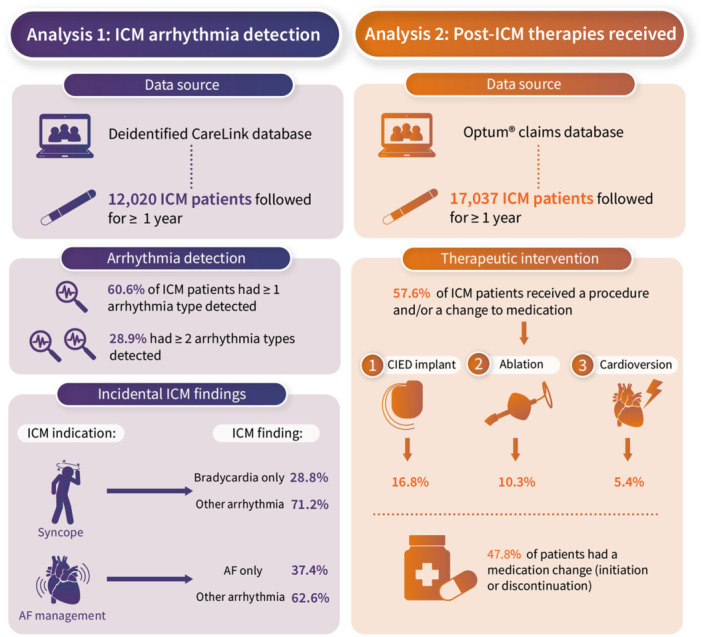 Figure 4
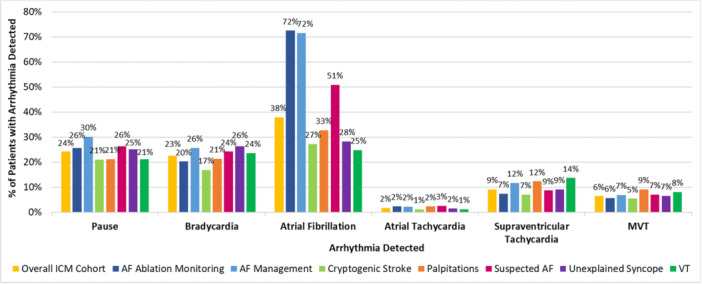 Figure 5
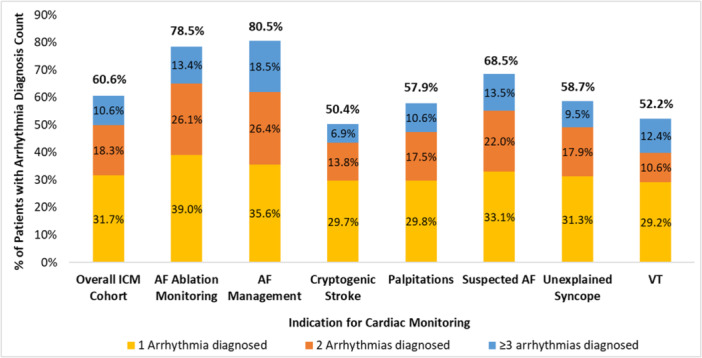 Figure 6
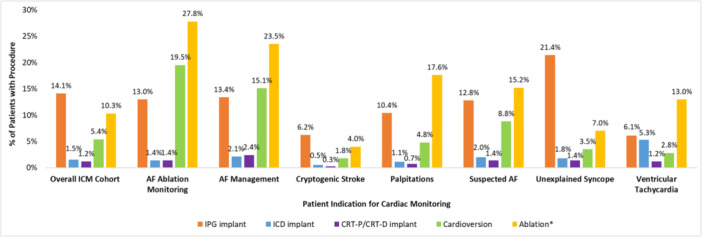 Figure 7
Peer Reviews
No public reviews on file for this paper yet. If you reviewed it on a platform where reviews are public (OpenReview, ICLR, NeurIPS, ICML), you can paste yours below so the community can read it here.
Videos
No videos yet. Explain this paper in a talk, walkthrough, or lecture? Add one.
Taxonomy
TopicsHealthcare Technology and Patient Monitoring · Cardiovascular Syncope and Autonomic Disorders · Non-Invasive Vital Sign Monitoring