The Athabasca River regulates methylmercury burdens of waterbirds breeding downstream
John Chételat, Craig Hebert, Jason D. Demers, Colin A. Cooke, Christine McClelland, Maureen Angell, Bridgit Bergquist, Marlene Evans, Maria F. Fahnestock, Kuzey Güneşli, Sarah Greenwood, Bruce Maclean, Mark McMaster, Lukas Mundy, Gerald Tetreault, Philippe J. Thomas

TL;DR
The Athabasca River is a major source of mercury for downstream waterbirds, with high flow years increasing mercury levels in their eggs.
Contribution
This study uses mercury isotopes to quantify the river's role in mercury bioaccumulation in downstream ecosystems.
Findings
The Athabasca River contributes 62–94% of mercury in downstream biota like otters, fish, and tern eggs.
High river flow years double mercury concentrations in tern eggs compared to low flow years.
Mercury in the river primarily originates from terrestrial sources, not oil sands operations.
Abstract
This study characterized the transport pathways and sources of mercury in downstream food webs of the Athabasca River Basin in northern Alberta, Canada. Flowing through a large boreal watershed in the Athabasca Oil Sands Region, the river drains into the ecologically-sensitive Peace-Athabasca Delta and western Lake Athabasca. Mercury stable isotope measurements on abiotic and biotic matrices were combined with spatial and temporal sampling to evaluate the importance of the Athabasca River as a conduit for mercury. Mixing model estimates derived from mercury isotopes indicated the Athabasca River was the source of 62–94% of the bioaccumulated mercury in otter, fish, and tern eggs collected from the delta or lake. A time series from 2009 to 2022 showed mercury loads from the Athabasca River enhanced bioaccumulation in western Lake Athabasca with the doubling of total mercury (THg)…
Genes, proteins, chemicals, diseases, species, mutations and cell lines named across the full text — each resolved to its canonical identifier and authoritative record.
Click any figure to enlarge with its caption.
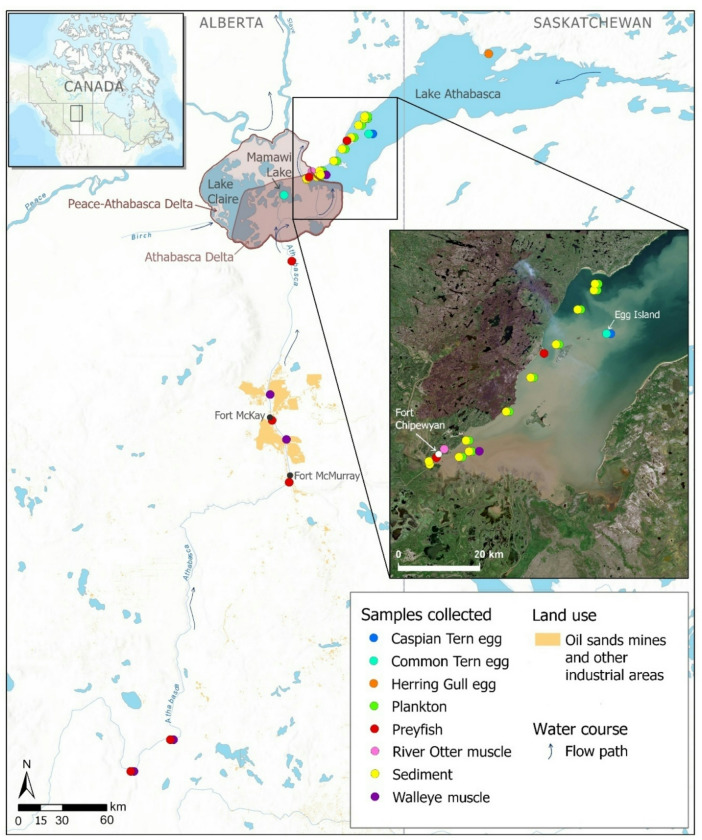 Figure 1
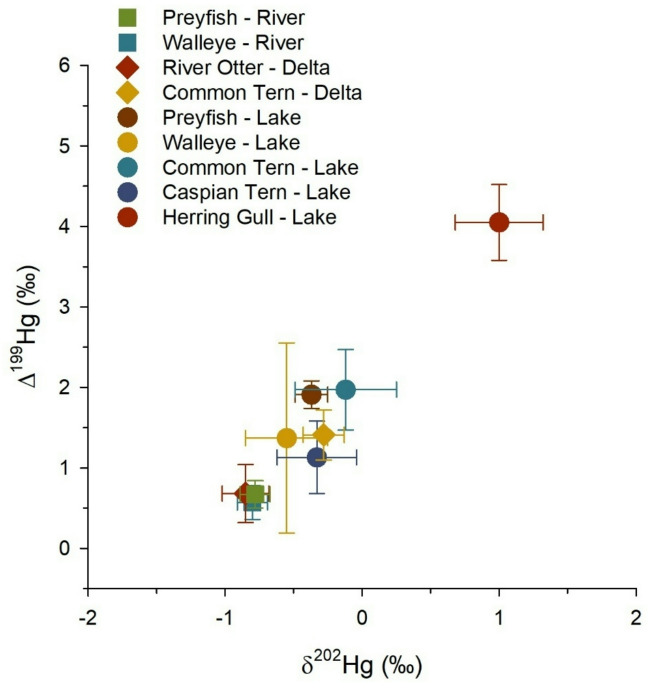 Figure 2
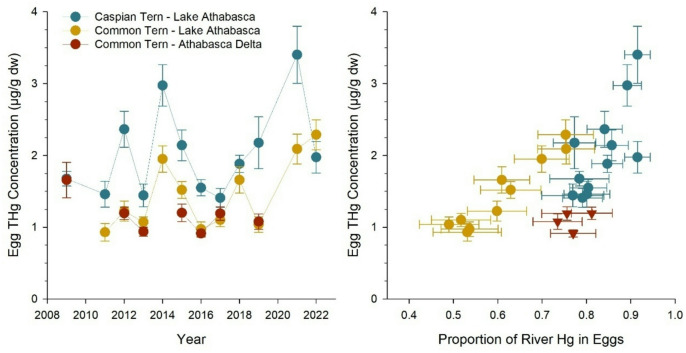 Figure 3
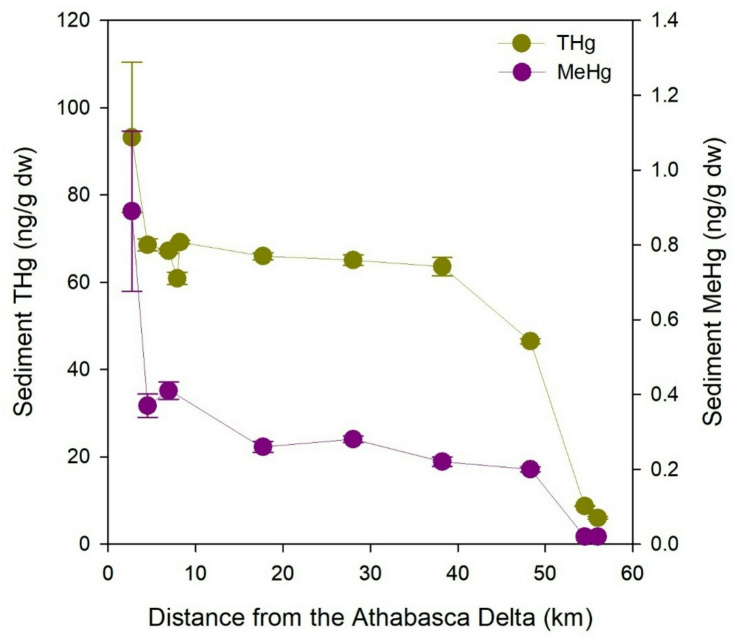 Figure 4
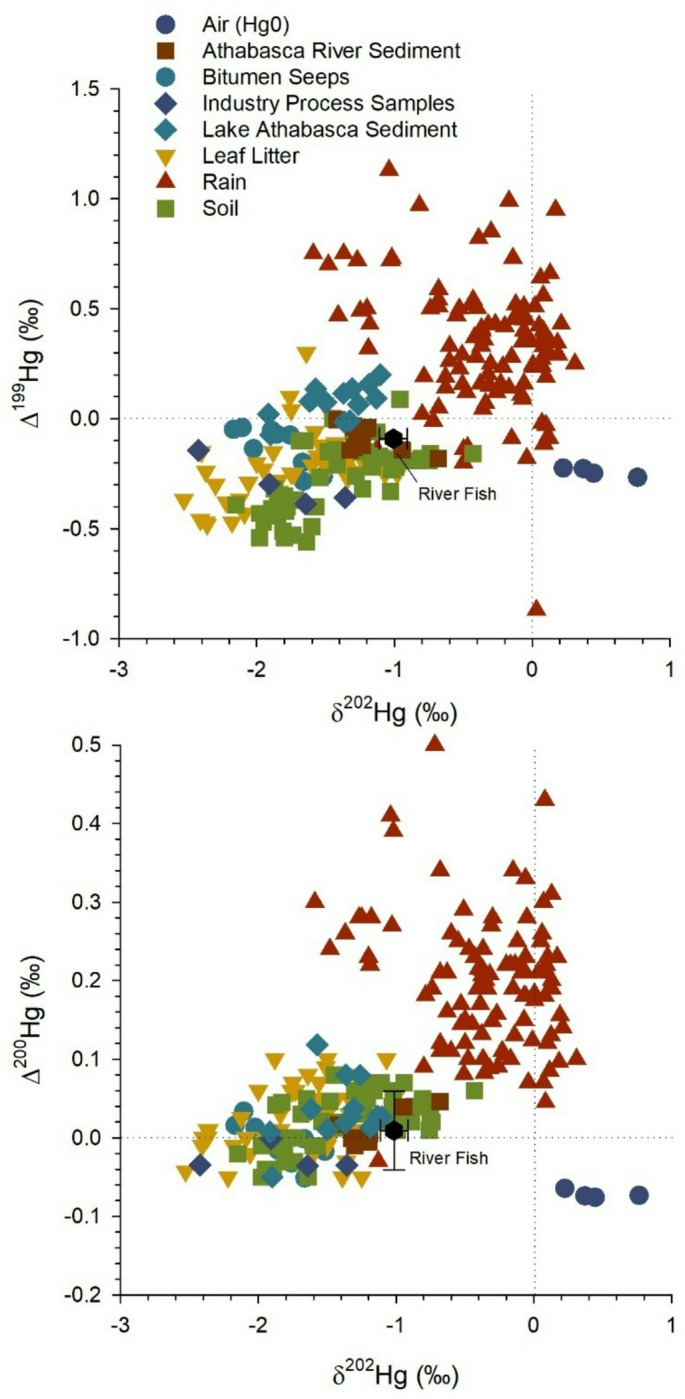 Figure 5
Peer Reviews
No public reviews on file for this paper yet. If you reviewed it on a platform where reviews are public (OpenReview, ICLR, NeurIPS, ICML), you can paste yours below so the community can read it here.
Videos
No videos yet. Explain this paper in a talk, walkthrough, or lecture? Add one.
Taxonomy
TopicsMercury impact and mitigation studies · Toxic Organic Pollutants Impact · Isotope Analysis in Ecology