Upright and supine assessment of pelvic floor muscle defects in women with and without prolapse
Irina de Alba Alvarez, Frieda van den Noort, Frank F.J. Simonis, Anique T.M. Grob

TL;DR
This study compares pelvic floor muscle defects in women with and without prolapse using MRI scans in upright and supine positions.
Contribution
The study introduces upright MRI as a more accurate method to assess pelvic floor muscle defects in women with prolapse.
Findings
Nulliparous women had no PCM defects, while POP patients showed 68.8% major PCM defects.
The POP group had a significantly sharper iliococcygeus angle compared to other groups.
Major ICM defects were exclusive to the POP group, indicating severe pelvic floor damage.
Abstract
The levator ani muscle (LAM), crucial for pelvic organ support, can develop defects that contribute to pelvic floor disorders (PFD) like pelvic organ prolapse (POP). Factors such as childbirth, aging, and menopause increase the risk of LAM damage. While MRI is commonly used to assess LAM, most studies use the supine position, potentially underestimating POP severity. Upright MRI offers a more accurate view of pelvic floor support under natural conditions. The aim of this study was to compare the pelvic floor support across four groups of women—nulliparous, parous premenopausal, parous postmenopausal, and women with POP, by analysing pubococcygeus muscle (PCM) and iliococcygeus muscle (ICM) defects and the iliococcygeus angle (ICA) using a tiltable magnetic resonance imaging (MRI) scanner. Sixty-three women were included and divided into 4 groups: 15 nulliparous (Nulli), 15…
Genes, proteins, chemicals, diseases, species, mutations and cell lines named across the full text — each resolved to its canonical identifier and authoritative record.
Click any figure to enlarge with its caption.
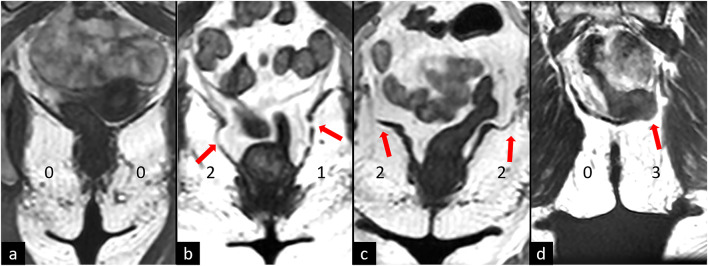 Figure 1
 Figure 2
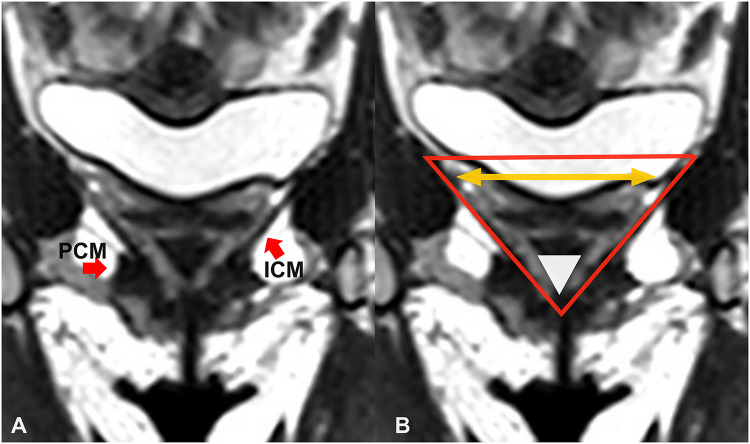 Figure 3
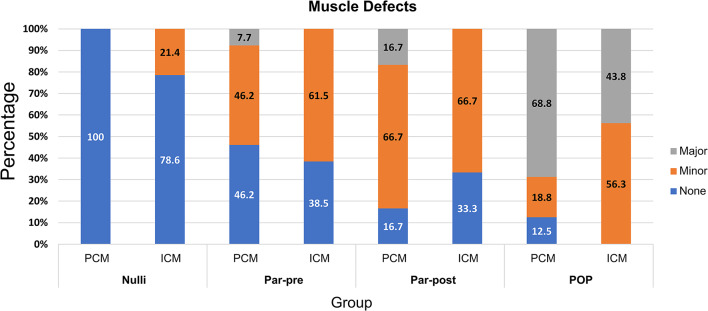 Figure 4
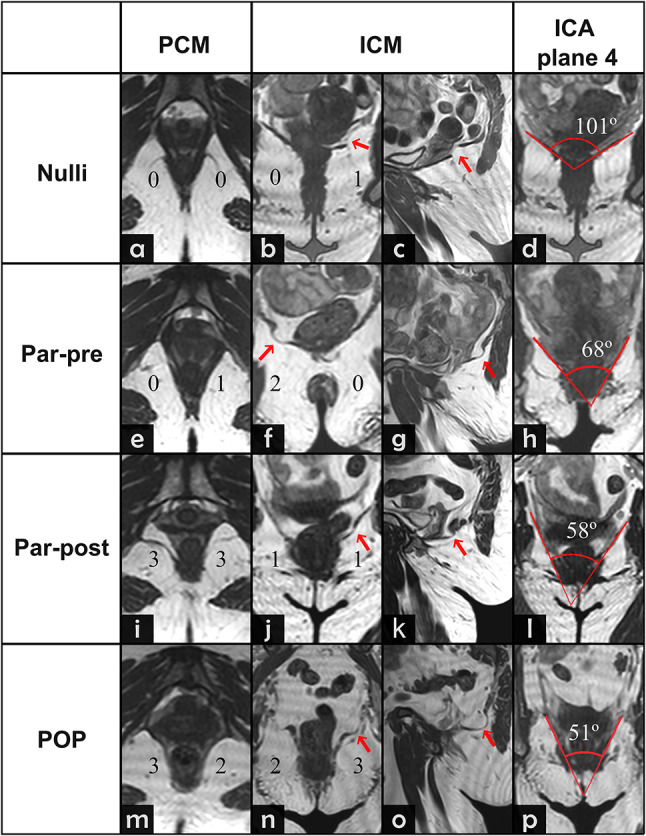 Figure 5
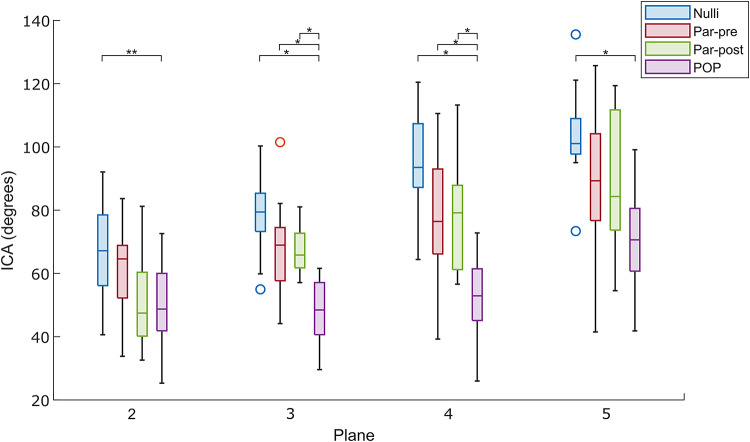 Figure 6
Peer Reviews
No public reviews on file for this paper yet. If you reviewed it on a platform where reviews are public (OpenReview, ICLR, NeurIPS, ICML), you can paste yours below so the community can read it here.
Videos
No videos yet. Explain this paper in a talk, walkthrough, or lecture? Add one.
Taxonomy
TopicsPelvic floor disorders treatments · Maternal and Perinatal Health Interventions · Preterm Birth and Chorioamnionitis