Need for cognitive closure predicts preference for similar others and reduced diversity in social networks
Katarzyna Growiec, Ewa Szumowska

TL;DR
People who dislike uncertainty tend to prefer similar others, leading to less diverse social networks.
Contribution
This study shows that Need for Cognitive Closure predicts homophilous social preferences and reduced network diversity.
Findings
Higher NFC is consistently linked to lower heterophily across multiple studies.
High-NFC individuals have fewer acquaintances and discussion partners.
Uncertainty reduces interest in dissimilar others, especially for high-NFC individuals.
Abstract
People vary in their tolerance for uncertainty, and this motivation—known as Need for Cognitive Closure (NFC)—can shape social behavior. Individuals high in NFC are driven to avoid ambiguity and quickly resolve uncertainty. Because interacting with similar others (homophily) tends to reduce uncertainty, while engaging with dissimilar others (heterophily) can increase it, we examined whether NFC predicts preferences for homophilous over heterophilous interactions. Across four correlational studies and a preregistered experiment, we found that higher NFC was consistently associated with lower heterophily. Meta-analytic results confirmed the robustness of this association across samples. High-NFC individuals also reported fewer acquaintances and fewer people to discuss important matters with. To investigate whether uncertainty reduction motivates these patterns, we experimentally induced…
Genes, proteins, chemicals, diseases, species, mutations and cell lines named across the full text — each resolved to its canonical identifier and authoritative record.
Click any figure to enlarge with its caption.
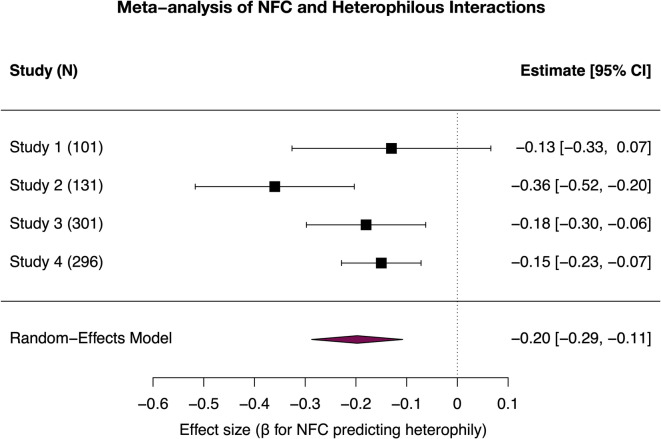 Figure 1
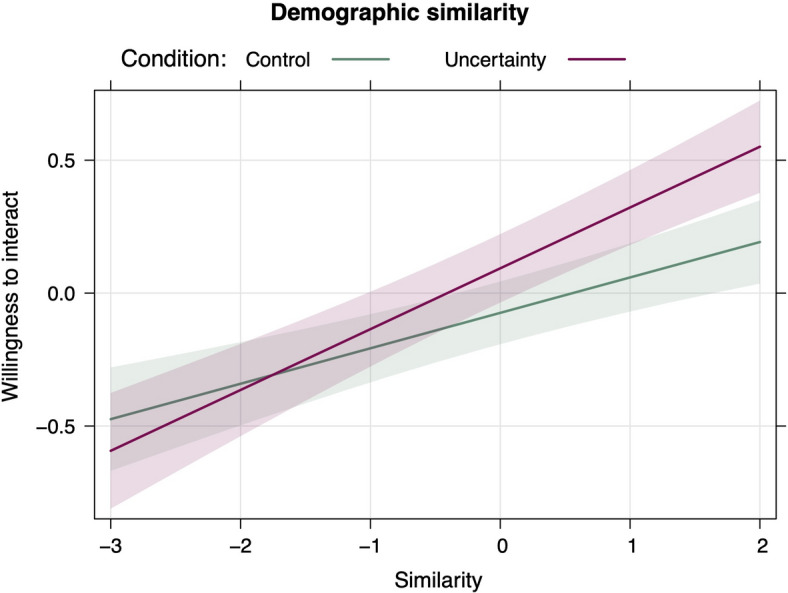 Figure 2
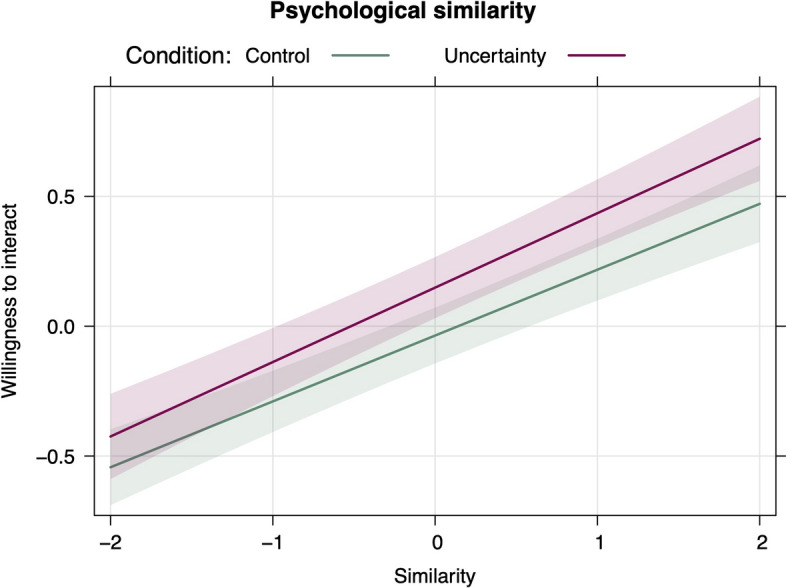 Figure 3
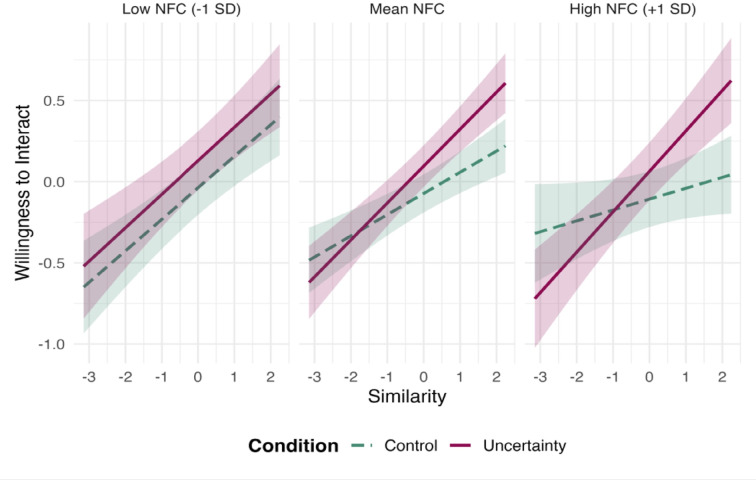 Figure 4
Peer Reviews
No public reviews on file for this paper yet. If you reviewed it on a platform where reviews are public (OpenReview, ICLR, NeurIPS, ICML), you can paste yours below so the community can read it here.
Videos
No videos yet. Explain this paper in a talk, walkthrough, or lecture? Add one.
Taxonomy
TopicsSocial and Intergroup Psychology · Action Observation and Synchronization · Neural and Behavioral Psychology Studies