Free-breathing phase-resolved functional lung (PREFUL) low-field magnetic resonance imaging (LF-MRI) of pulmonary dysfunction after surviving childhood cancer
Alexander Dierl, Maximilian Hinsen, Eva-Maria Wild, Nadine Bayerl, Rafael Heiss, Armin M. Nagel, Sandy Schmidt, Robert Grimm, Jens Vogel-Claussen, Andreas Voskrebenzev, Nora Naumann-Bartsch, Felix Anderheiden, Felix Huber, Nicolas Mueller, Isabelle Schoeffl, Joachim Woelfle

TL;DR
This study uses a new MRI technique to detect early lung damage in childhood cancer survivors, even before symptoms appear.
Contribution
The study introduces PREFUL low-field MRI as a novel method for detecting subclinical pulmonary dysfunction in childhood cancer survivors.
Findings
Significant time-dependent ventilation and perfusion defects were detected in asymptomatic survivors.
A strong negative correlation was found between time since treatment and defect-free lung tissue in ALL patients.
PREFUL MRI may serve as a sensitive tool for early detection of long-term pulmonary toxicity.
Abstract
Childhood cancer survivors have a high risk of chronic multi-organ disease that does not plateau over time. To date, there is a lack of sensitive diagnostic techniques that allow early detection of tissue damage before clinical symptoms occur, particularly regarding pulmonary function. Free-breathing phase-resolved functional lung (PREFUL) low-field magnetic resonance imaging (LF-MRI) may enable visualization and quantification of functional and structural lung damage without the need of specific contrast agents. In this single-center, cross-sectional diagnostic study, we performed LF-MRI in a cohort of n = 27 children and adolescents (age range: 5 to 17 years) after treatment for acute lymphoblastic leukemia (ALL; n = 21) and Hodgkin’s disease (HD; n = 6) to determine the frequency of morphologic and functional lung parenchymal changes. Here, we show that despite the absence of…
Genes, proteins, chemicals, diseases, species, mutations and cell lines named across the full text — each resolved to its canonical identifier and authoritative record.
Click any figure to enlarge with its caption.
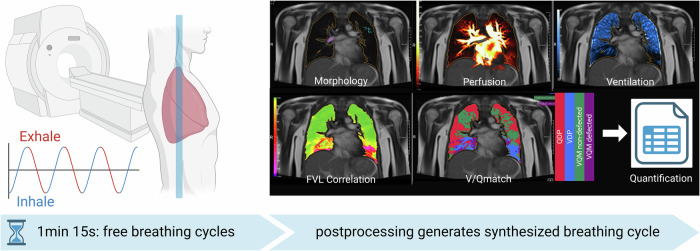 Figure 1
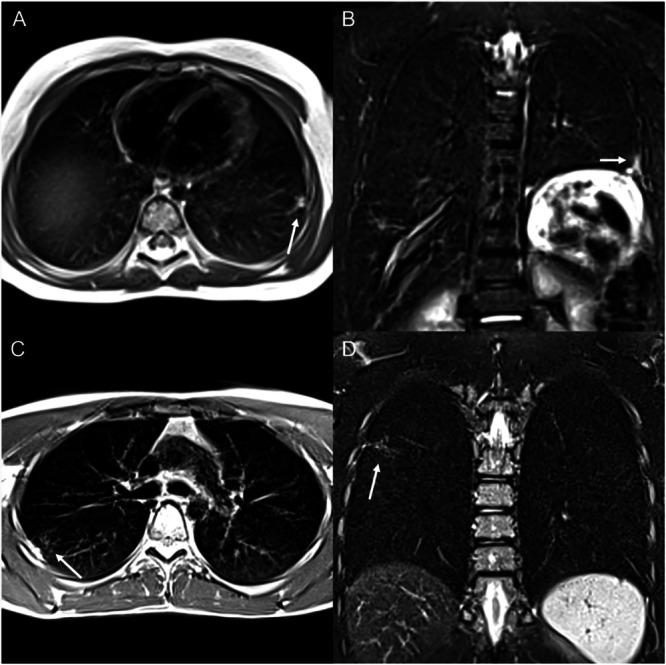 Figure 2
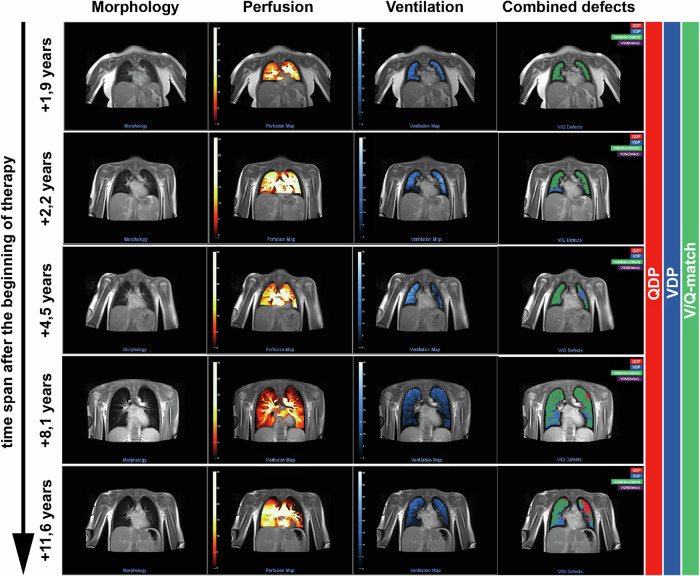 Figure 3
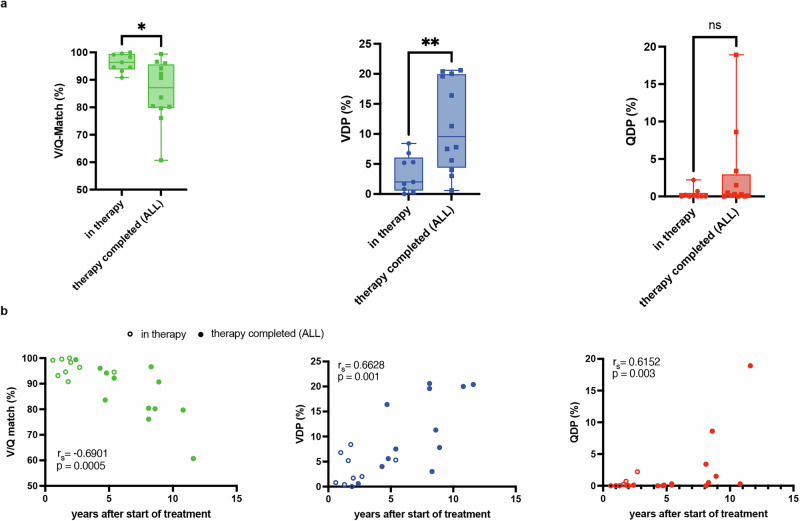 Figure 4
Peer Reviews
No public reviews on file for this paper yet. If you reviewed it on a platform where reviews are public (OpenReview, ICLR, NeurIPS, ICML), you can paste yours below so the community can read it here.
Videos
No videos yet. Explain this paper in a talk, walkthrough, or lecture? Add one.
Taxonomy
TopicsAtomic and Subatomic Physics Research · Ultrasound and Hyperthermia Applications · Electromagnetic Fields and Biological Effects