Exploring the links between swimming performance, glucocorticoid profiles, behavioral types and cardiac morphology in migrating Atlantic salmon (Salmo salar) smolts
Erik Höglund, Kurt Johansen, Silje Marie Ulset, Elise T. Sannes, Tormod Haraldstad, Ida B. Johansen, Michael Frisk, Marco A. Vindas, Marta Moyano

TL;DR
This study explores how swimming ability, stress hormones, and behavior are connected in young Atlantic salmon during migration.
Contribution
The study identifies links between swimming performance, glucocorticoid levels, and behavioral traits in migrating Atlantic salmon smolts.
Findings
Strong swimmers showed increased activity in confinement tests, indicating bolder behavior.
Strong swimmers had higher cortisone levels 24 hours after swimming, suggesting a protective stress response.
Acoustic telemetry showed a trend of lower survival for strong swimmers in predator-rich areas.
Abstract
It has been become increasingly clear that swimming performance is crucial for the migratory success of wild Atlantic salmon (Salmo salar) smolts, yet the associated traits remain largely unexplored. In this study, smolts were caught during their downstream migration to the sea and were categorized as strong or poor swimmers based on their time to fatigue in a swimming test. Behavioral profiles were characterized through a confinement and novelty test, and relationships to cardiac morphology and glucocorticoid profiles were investigated. Strong swimmers increased activity over time in the confinement test, while poor swimmers showed the opposite trend, indicating differences in boldness. There were no differences in plasma cortisol in groups of fish with contrasting swimming performance. Still, strong swimmers had higher cortisone levels 24 h after the swim test, suggesting a protective…
Genes, proteins, chemicals, diseases, species, mutations and cell lines named across the full text — each resolved to its canonical identifier and authoritative record.
Click any figure to enlarge with its caption.
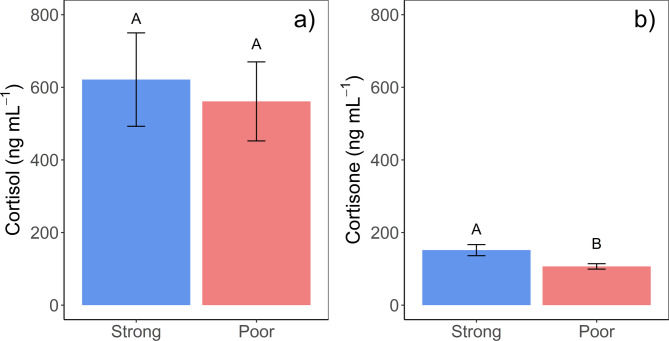 Figure 1
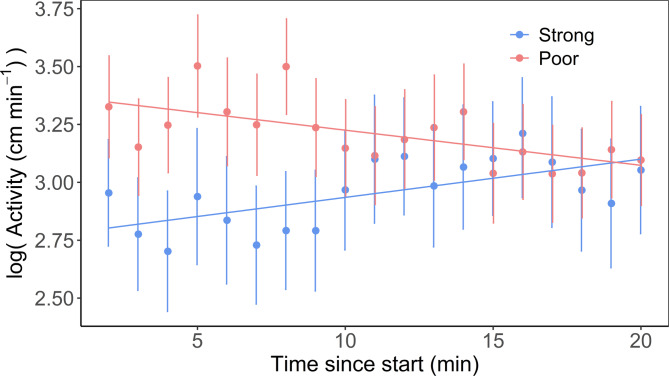 Figure 2
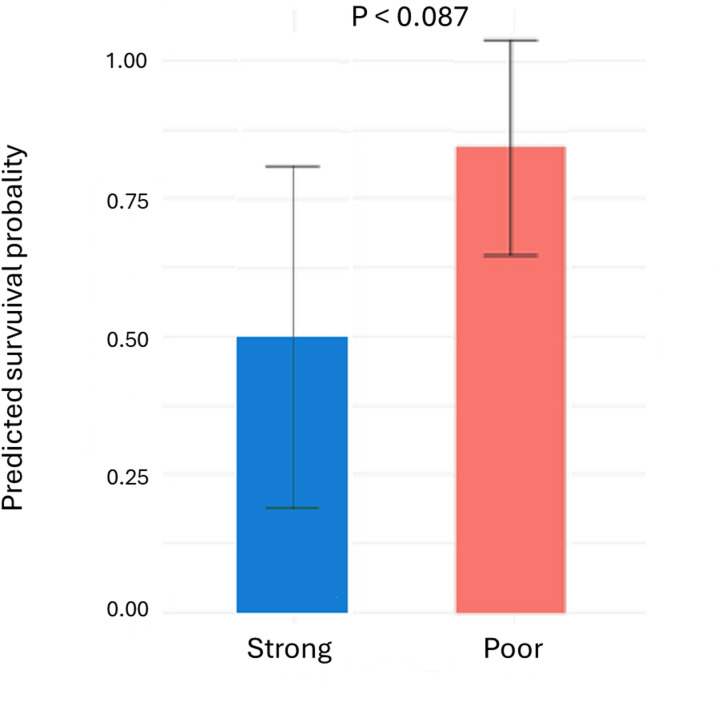 Figure 3
Peer Reviews
No public reviews on file for this paper yet. If you reviewed it on a platform where reviews are public (OpenReview, ICLR, NeurIPS, ICML), you can paste yours below so the community can read it here.
Videos
No videos yet. Explain this paper in a talk, walkthrough, or lecture? Add one.
Taxonomy
TopicsPhysiological and biochemical adaptations · Fish Ecology and Management Studies · Reproductive biology and impacts on aquatic species