Efficacy of ambulance air purifiers with different photocatalytic oxidation components in the removal of Bacillus subtilis spores
Akkrapol Poohpajit, Santisith Khiewkhern, Chuleewan Thunyasirinon, Prapat Pentamwa

TL;DR
This study tested different air purifier setups in ambulances and found that UVA plus TiO₂ was most effective at killing Bacillus subtilis spores.
Contribution
The study identifies UVA + TiO₂ as a superior, ozone-free photocatalytic system for ambulance disinfection.
Findings
UVA + TiO₂ achieved >80% airborne spore reduction within 15 minutes and complete removal within 90 minutes.
UVA + TiO₂ reduced surface contamination by 96.77% at 120 minutes.
ZnO- and UVC-based systems showed lower or inconsistent disinfection performance.
Abstract
Ambulances are enclosed environments that carry a high risk of airborne and surface microbial transmission, yet effective disinfection technologies remain limited. This study evaluated four photocatalytic oxidation (PCO) configurations—O₃+UVA + TiO₂, UVA + TiO₂, O₃+UVC + ZnO, and UVC + ZnO—against B. subtilis spores. The testing employed a prototype air purification system for ambulance applications, where the photocatalyst TiO2 or ZnO was integrated into a filter medium. This system operated in combination with its corresponding UV light source (UVA or UVC) and an optional ozone generator; all housed within a laboratory-simulated ambulance cabin. (8.998 m³), where spores at 1.5 × 10⁸ CFU/mL (8 mL) were spray misted using a nebulizer and sampled using an Andersen Impactor, following the NIOSH method. Disinfection efficacy was quantified as the percentage reduction of B. subtilis spores…
Genes, proteins, chemicals, diseases, species, mutations and cell lines named across the full text — each resolved to its canonical identifier and authoritative record.
Click any figure to enlarge with its caption.
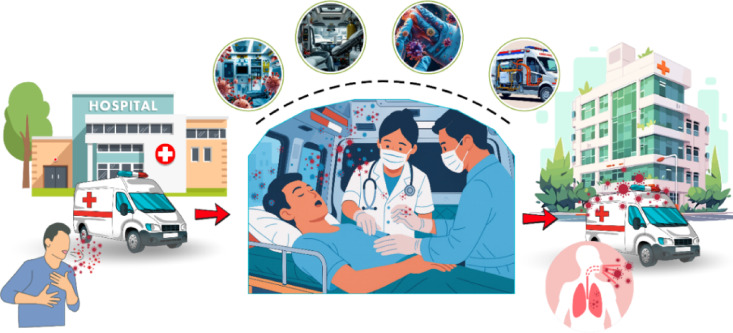 Figure 1
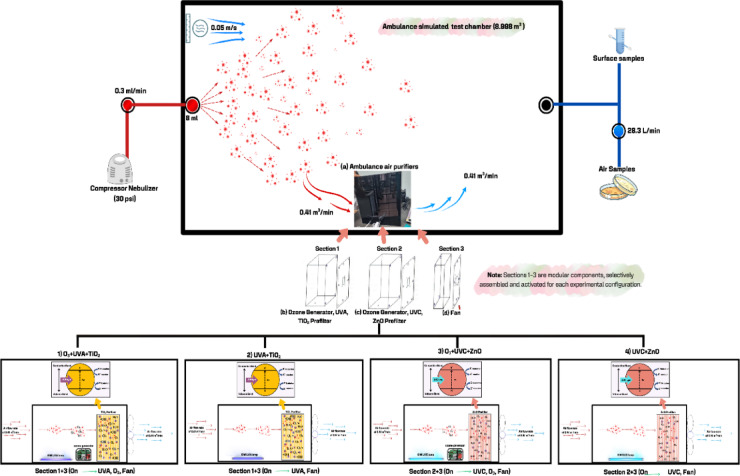 Figure 2
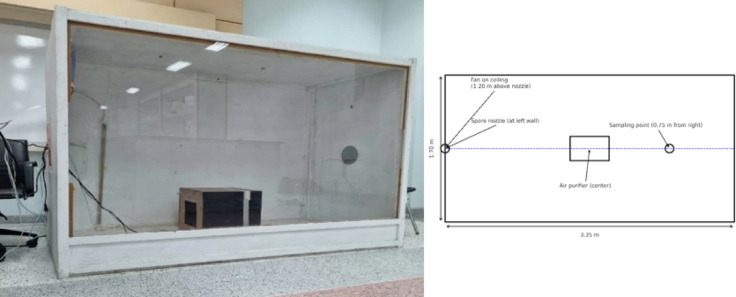 Figure 3
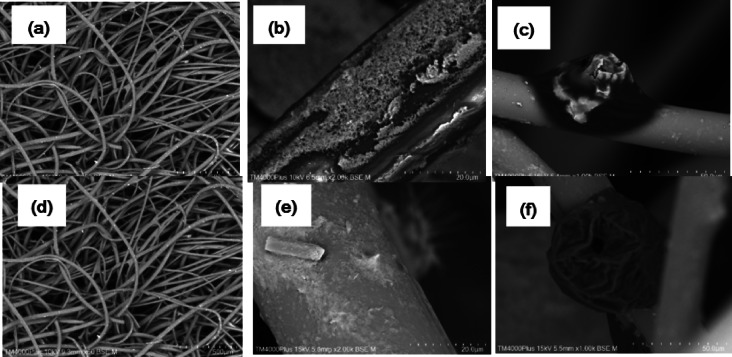 Figure 4
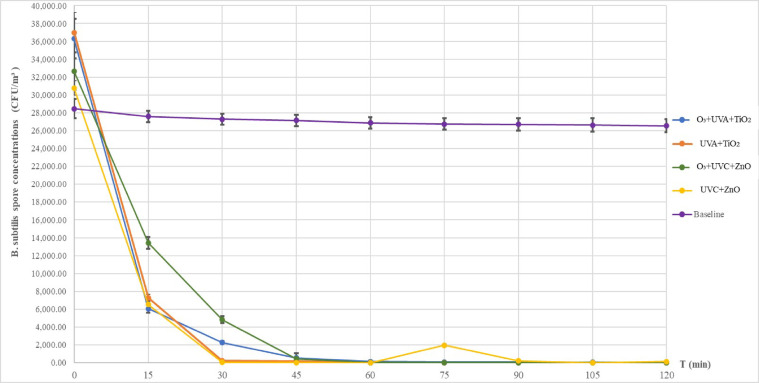 Figure 5
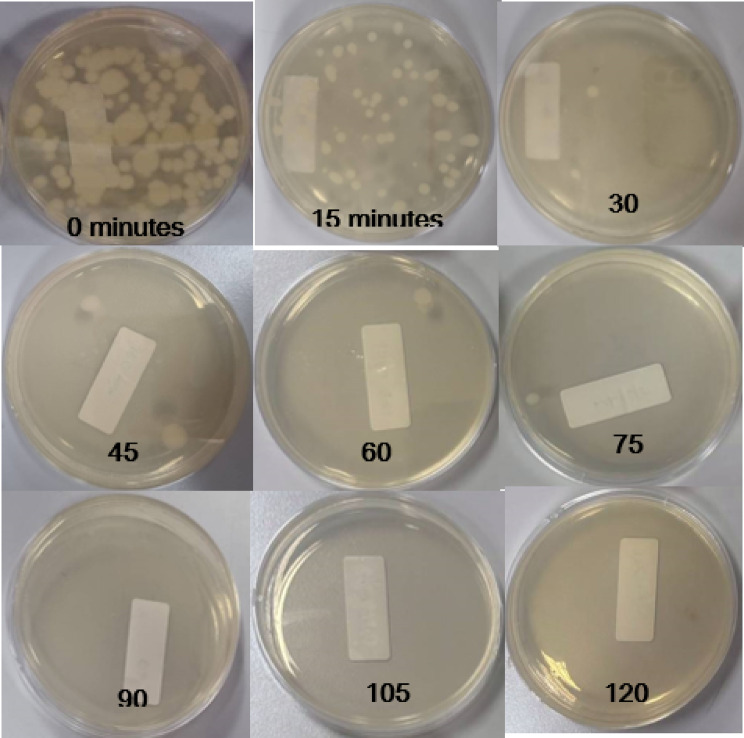 Figure 6
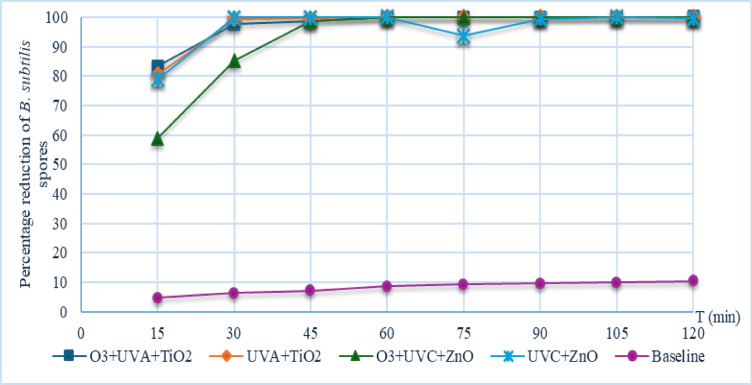 Figure 7
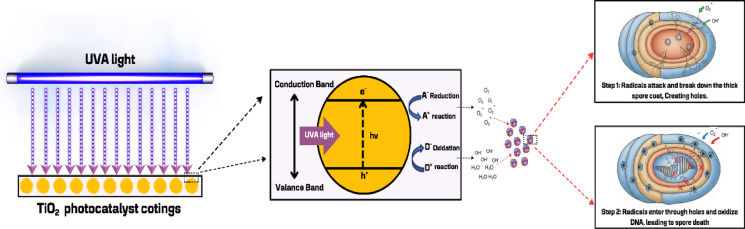 Figure 8
Peer Reviews
No public reviews on file for this paper yet. If you reviewed it on a platform where reviews are public (OpenReview, ICLR, NeurIPS, ICML), you can paste yours below so the community can read it here.
Videos
No videos yet. Explain this paper in a talk, walkthrough, or lecture? Add one.
Taxonomy
TopicsBacillus and Francisella bacterial research · Legionella and Acanthamoeba research · Infection Control in Healthcare