Neutralizing human monoclonal antibodies to poliovirus map to the receptor binding site
Benjamin T. Waddey, Andrew J. Charnesky, Julia E. Faust, Nadia M. DiNunno, Rama Devudu Puligedda, Sung Hyun Cho, Carol M. Bator, Steven D. Dong, Kutub Mahmood, Konstantin M. Chumakov, Scott K. Dessain, Susan L. Hafenstein

TL;DR
Scientists identified human antibodies that neutralize all three types of poliovirus by mimicking the virus's receptor binding, which could help in developing antiviral treatments.
Contribution
The study provides high-resolution structures of poliovirus-antibody complexes, revealing how antibodies mimic receptor binding to neutralize the virus.
Findings
Human monoclonal antibodies bind to the poliovirus receptor binding site, neutralizing all three serotypes.
Structural analysis shows antibody binding overlaps with the poliovirus receptor's interaction site on the viral capsid.
Cross-neutralizing antibodies bind deep in the capsid canyon, suggesting a mechanism for broad antiviral activity.
Abstract
Poliovirus remains a serious threat to human health. Complete eradication of wild-type poliovirus has not yet succeeded, making the development of successful antivirals critical. Microneutralization assays against all three poliovirus serotypes identified a panel of human monoclonal IgGs, which are either serotype-specific or cross-neutralizing. Here, through cryoEM single particle analysis, we solved high resolution structures of four distinct poliovirus-FAb complexes. These antibodies bind to capsids at the circular depression (canyon) surrounding the icosahedral five-fold symmetry axis, which is also the binding site of the poliovirus receptor (PVR). Analysis of these structures confirms overlap of FAb contacts on the viral capsid with those of PVR. For three of the FAbs, the capsid residues are identified that dictate serotype-specific recognition. Contacts for the…
Genes, proteins, chemicals, diseases, species, mutations and cell lines named across the full text — each resolved to its canonical identifier and authoritative record.
Click any figure to enlarge with its caption.
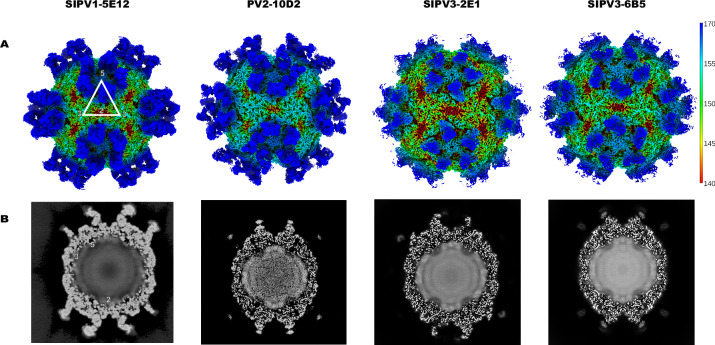 Figure 1
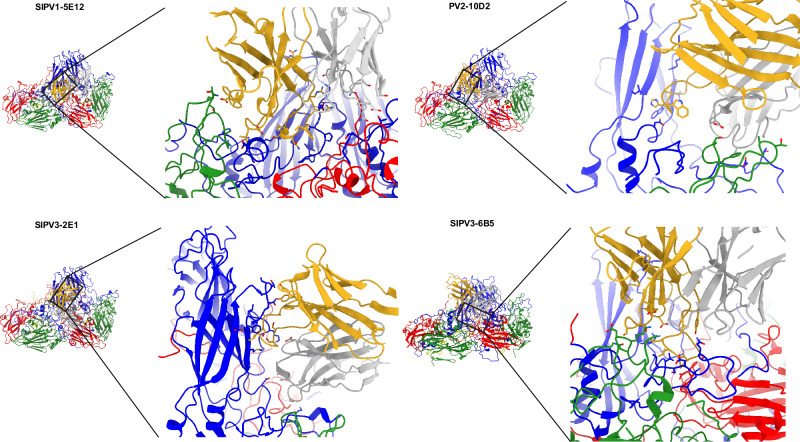 Figure 2
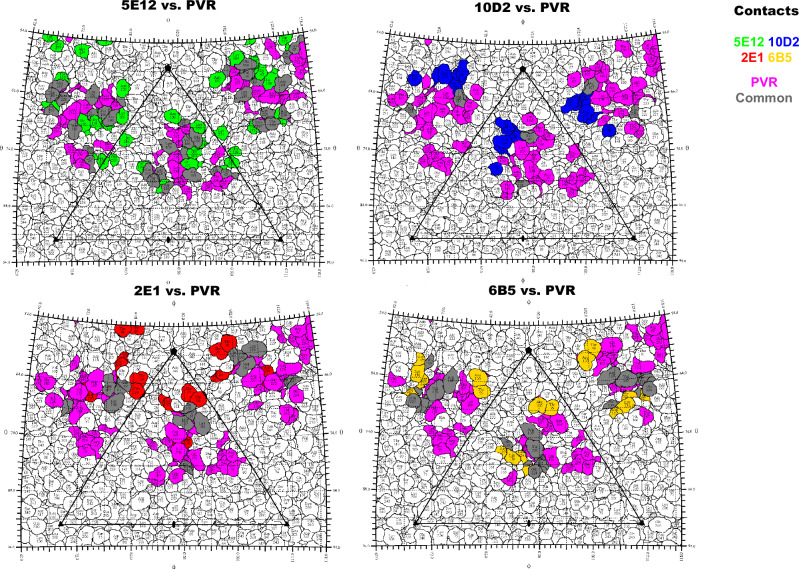 Figure 3
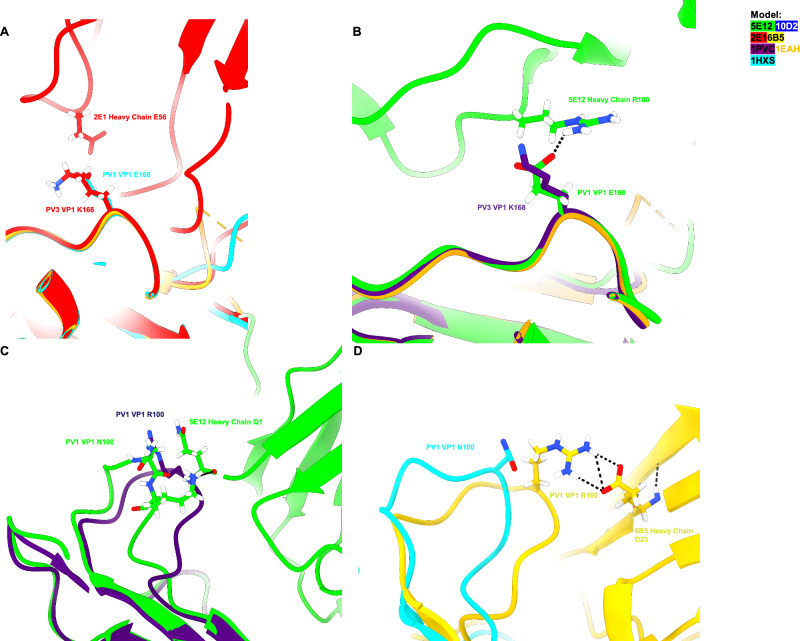 Figure 4
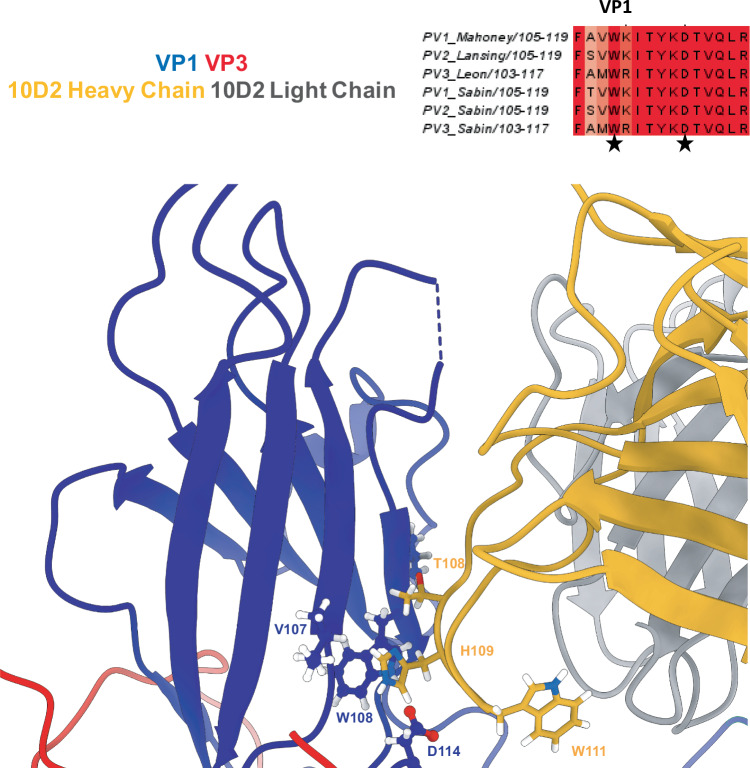 Figure 5
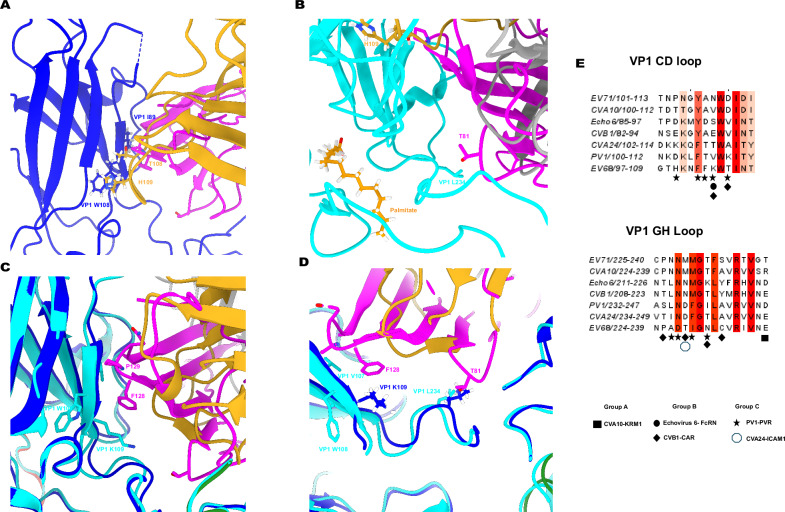 Figure 6
Peer Reviews
No public reviews on file for this paper yet. If you reviewed it on a platform where reviews are public (OpenReview, ICLR, NeurIPS, ICML), you can paste yours below so the community can read it here.
Videos
No videos yet. Explain this paper in a talk, walkthrough, or lecture? Add one.
Taxonomy
TopicsViral Infections and Immunology Research · Viral gastroenteritis research and epidemiology · Respiratory viral infections research