Maternal inheritance of primary sex ratios in the dark-winged fungus gnat Lycoriella ingenua
Maria Shlyakonova, Katy M. Monteith, Laura Ross, Robert B. Baird

TL;DR
This study explores how sex ratios in a type of fungus gnat are inherited and how they vary across generations.
Contribution
The study provides evidence that primary sex ratios in Lycoriella ingenua are heritable but not significantly affected by temperature.
Findings
Sibling crosses showed highly variable and heritable primary sex ratios in Lycoriella ingenua.
Temperature-shift experiments did not reveal a significant environmental effect on sex ratios.
The findings contribute to understanding the evolution of sex determination in fungus gnats.
Abstract
Sex determination mechanisms in insects are extraordinarily diverse, although most species have zygotic genotypic sex determination where sex is established by sex chromosomes upon fertilisation. Dark-winged fungus gnats (Diptera: Sciaridae) are a large and speciose family of flies where sex determination is a result of an unusual interplay of zygotic, maternal, and environmental factors. This causes some species to produce broods that deviate considerably from the standard 1:1 sex ratio. An early study suggested that these primary sex ratios may be heritable from mother to daughter, but this observation has not been corroborated and the genetic basis for this trait remains unknown. Other studies have found that in some species, there is an additional temperature effect on the primary sex ratio, but again the mechanism is unknown. Here, we perform sibling crosses and temperature-shift…
Genes, proteins, chemicals, diseases, species, mutations and cell lines named across the full text — each resolved to its canonical identifier and authoritative record.
Click any figure to enlarge with its caption.
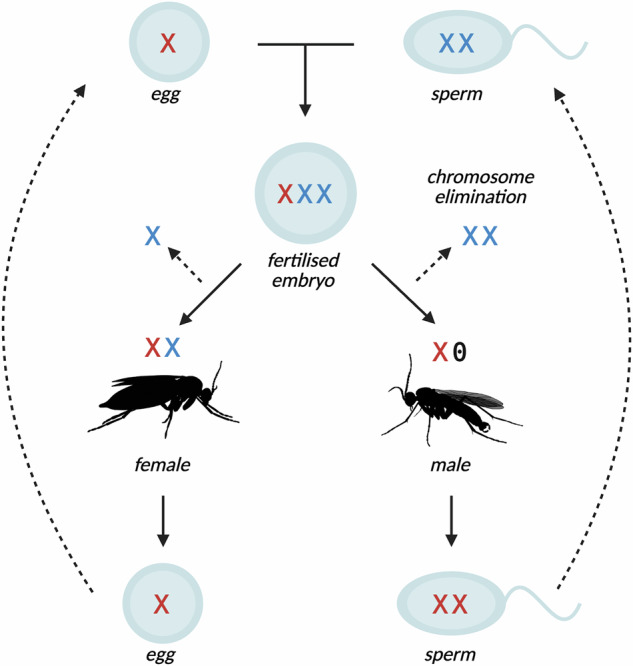 Figure 1
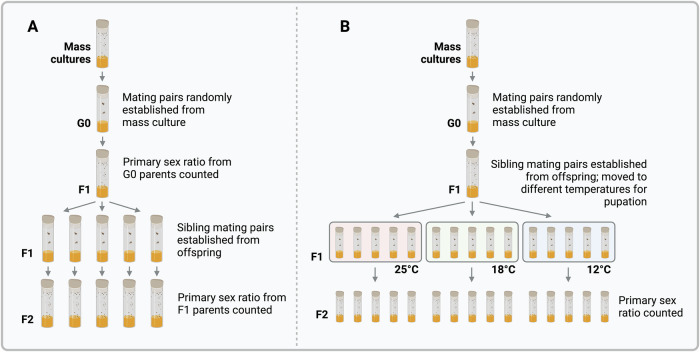 Figure 2
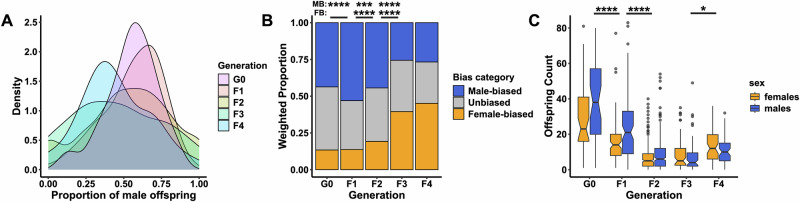 Figure 3
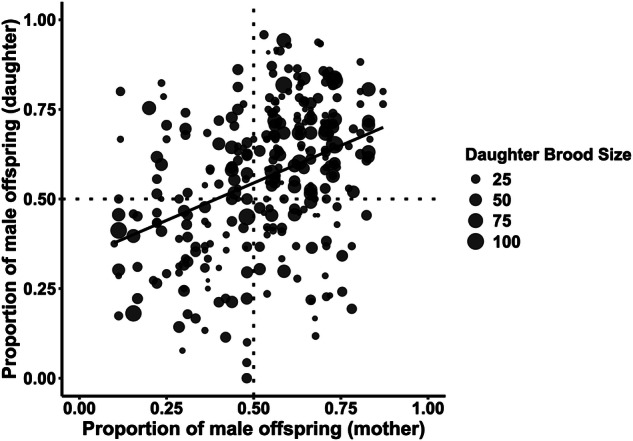 Figure 4
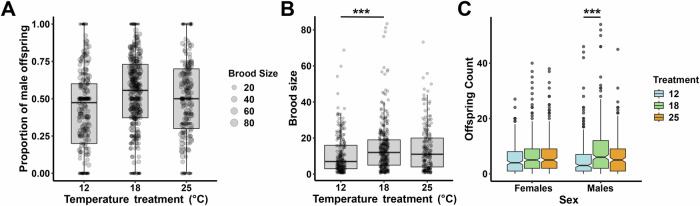 Figure 5
Peer Reviews
No public reviews on file for this paper yet. If you reviewed it on a platform where reviews are public (OpenReview, ICLR, NeurIPS, ICML), you can paste yours below so the community can read it here.
Videos
No videos yet. Explain this paper in a talk, walkthrough, or lecture? Add one.
Taxonomy
TopicsNeurobiology and Insect Physiology Research · Animal Behavior and Reproduction · Entomopathogenic Microorganisms in Pest Control