Low tumoral Trefoil Factor 1 expression relates to aggressive tumor features and poor survival in young women with breast cancer
Amalie B. Kvamme, Ulrikke Hugaas, Anna K. M. Sæle, Lise M. Ingebriktsen, Amalie A. Svanøe, Rasmus O. C. Humlevik, Ingeborg Winge, Turid Aas, Anette Heie, Lars A. Akslen, Erling A. Hoivik, Elisabeth Wik

TL;DR
Low levels of Trefoil Factor 1 in breast cancer tumors are linked to aggressive cancer features and worse survival in young women.
Contribution
This study identifies Trefoil Factor 1 as a potential biomarker for aggressive breast cancer in young patients.
Findings
Low TFF1 expression correlates with younger age, aggressive tumor features, and poor survival in young breast cancer patients.
TFF1-low tumors show stem-like traits, immune checkpoint upregulation, and higher proliferation scores.
High TFF1 in lymph node metastases predicts worse survival in patients under 40.
Abstract
In young breast cancer (BC) patients, there is a need for additional biomarkers beyond those currently available. Trefoil Factor 1 (TFF1) is an estrogen-regulated protein with proposed prognostic relevance in BC. We assessed TFF1 protein expression by immunohistochemistry (IHC) in biopsies from patients with primary breast cancer diagnosed before age 50 and their paired axillary lymph node (LN) metastases within our in-house Bergen Young BC Cohort (n = 319). In addition, TFF1 mRNA levels and associated gene expression patterns were analyzed using publicly available datasets, including the Molecular Taxonomy of Breast Cancer International Consortium (METABRIC, n = 939) and the Cancer Cell Line Encyclopedia (n = 47). Our aim was to investigate how TFF1 expression in primary tumors (PT) and paired LN metastases relates to age at diagnosis, clinico-pathological features, and…
Genes, proteins, chemicals, diseases, species, mutations and cell lines named across the full text — each resolved to its canonical identifier and authoritative record.
Click any figure to enlarge with its caption.
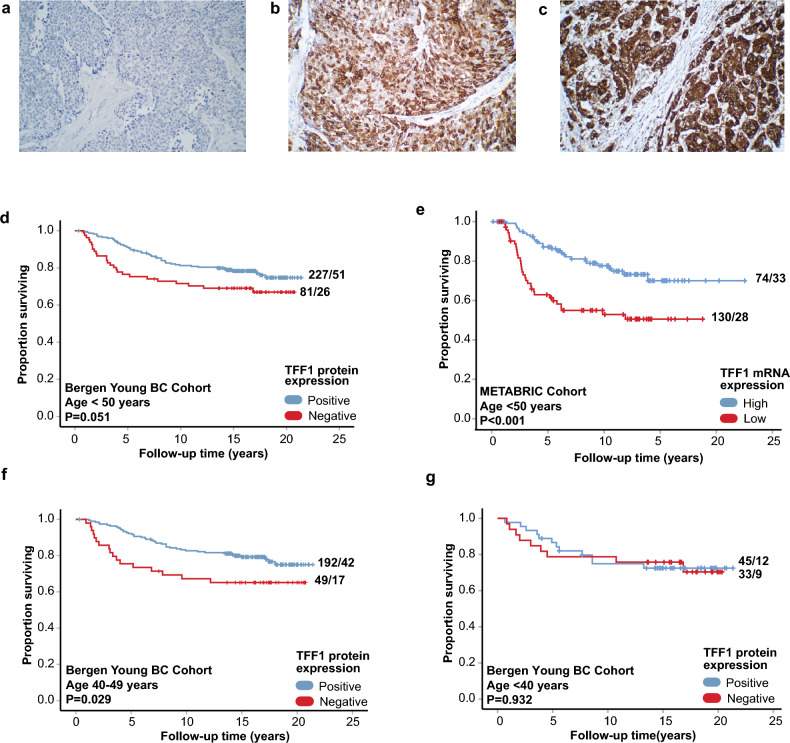 Figure 1
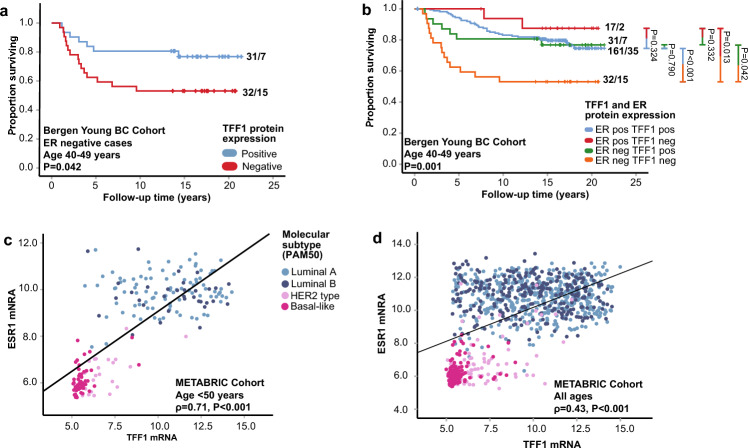 Figure 2
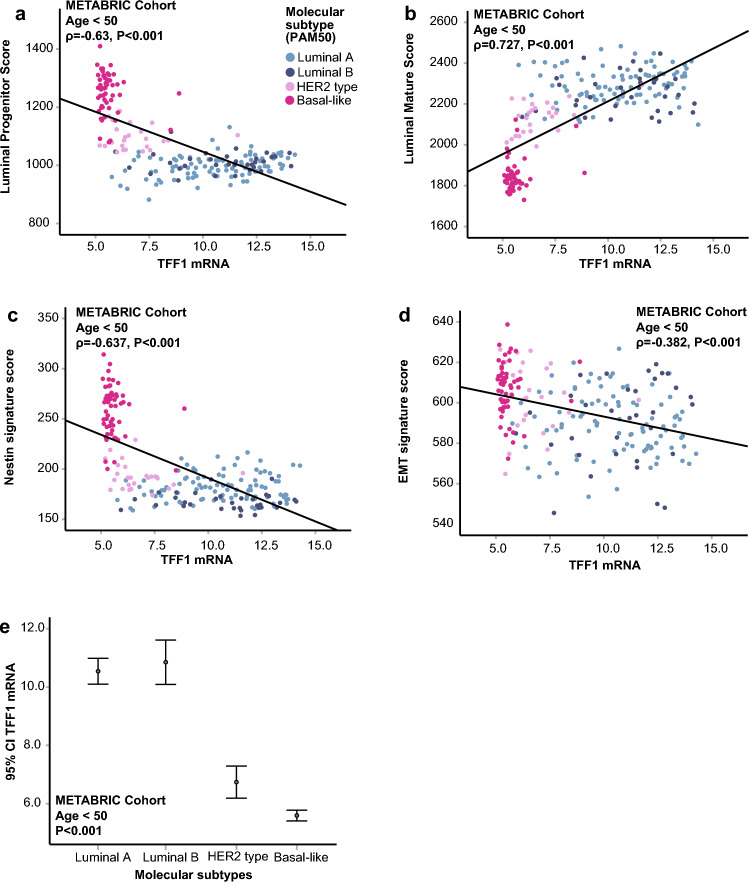 Figure 3
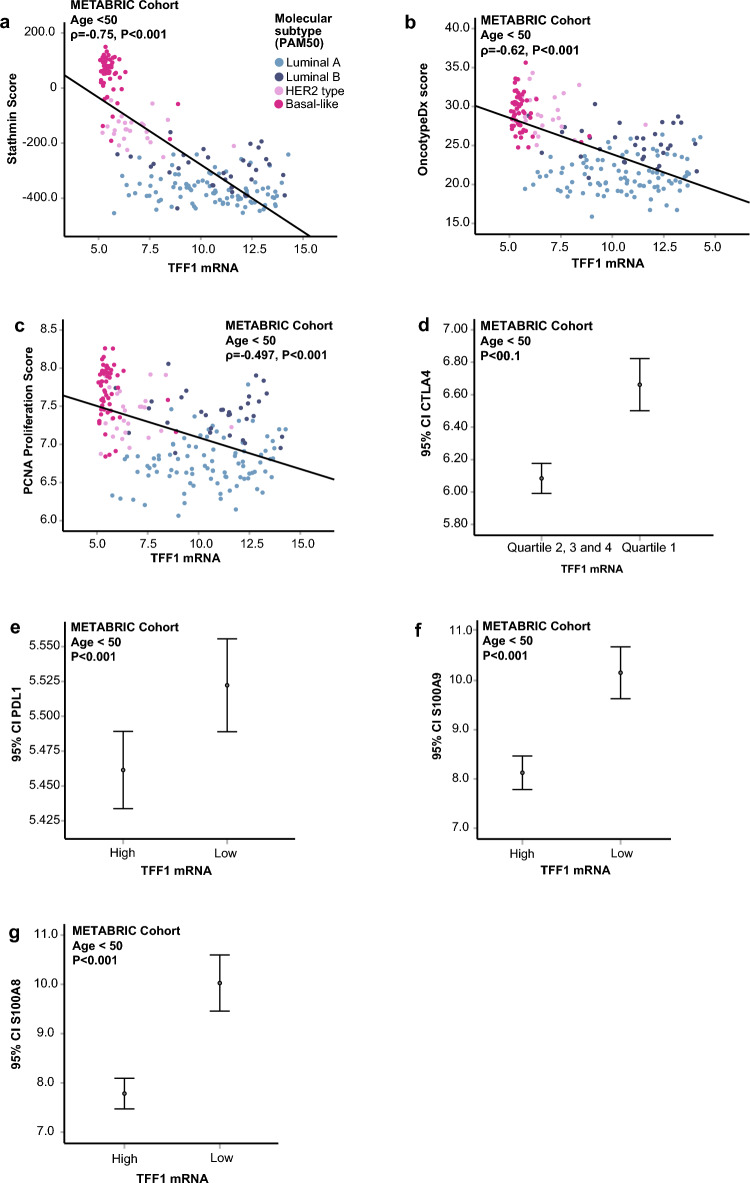 Figure 4
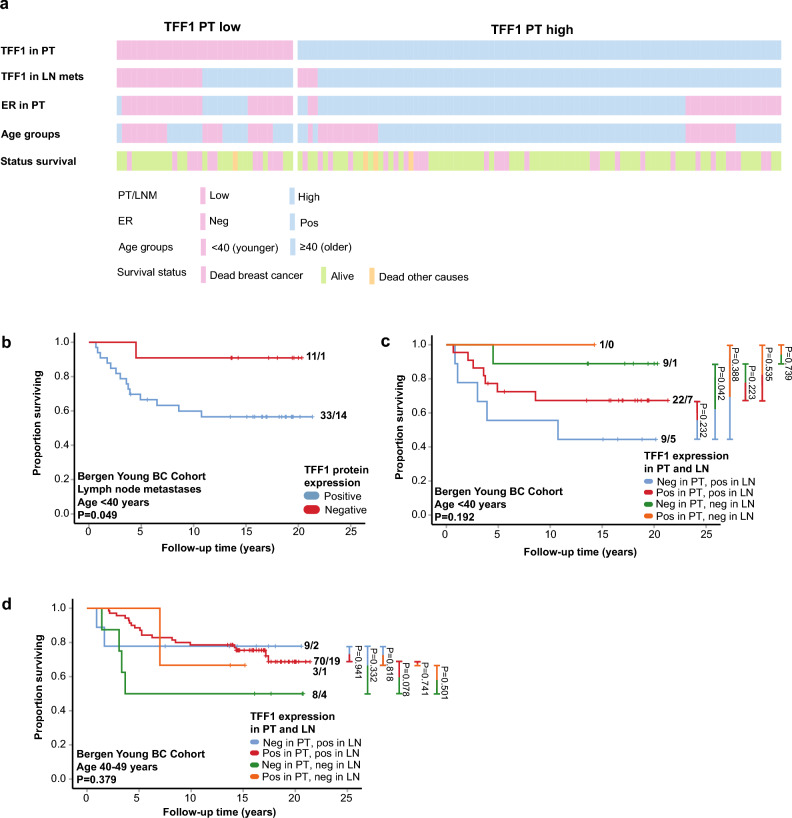 Figure 5
Peer Reviews
No public reviews on file for this paper yet. If you reviewed it on a platform where reviews are public (OpenReview, ICLR, NeurIPS, ICML), you can paste yours below so the community can read it here.
Videos
No videos yet. Explain this paper in a talk, walkthrough, or lecture? Add one.
Taxonomy
TopicsHelicobacter pylori-related gastroenterology studies · Galectins and Cancer Biology · Cancer Research and Treatments