Tailored biochar from oil palm trunk via controlled carbonization for efficient dye adsorption
Mohd Idham Hakimi, Mohammed Abdillah Ahmad Farid, Mohd Nor Faiz Norrrahim, Mohd Rafein Zakaria, Yoshihito Shirai, Mohd Ali Hassan, Mohd Zulkhairi Mohd Yusoff

TL;DR
This study explores converting oil palm trunks into biochar for dye adsorption, finding that controlled carbonization improves adsorption performance.
Contribution
The study reveals that adsorption performance is governed by surface functional chemistry and pore accessibility, not just surface area.
Findings
Biochar produced at 300°C for 2 hours had the highest surface area (10.24 m²/g).
Maximum methylene blue removal (52.5%) occurred at 300°C for 4 hours.
Langmuir isotherm analysis showed a maximum adsorption capacity of 3.57 mg/g.
Abstract
Oil palm trunks (OPT) represent an underutilized agricultural byproduct that poses significant environmental challenges. The effectiveness of OPT as feedstock for biochar production will be depends on carbonization conditions, yet the relationship between process parameters and biochar properties remains insufficiently explored. This study investigates the potential of converting OPT into micropores bioadsorbent through controlled carbonization. Biochar was produced at temperatures of 300, 400, and 500 °C, with residence times of 2, 3, and 4 h, and subsequently characterized for its physicochemical properties and adsorption capacity. The results indicate that biochar produced at 300 °C for 2 h exhibited the highest surface area (10.24 m2/g), while the carbon content peaked at 79.9% in biochar synthesized at 500 °C for 4 h. Notably, although the maximum surface area was observed at 300…
Genes, proteins, chemicals, diseases, species, mutations and cell lines named across the full text — each resolved to its canonical identifier and authoritative record.
Click any figure to enlarge with its caption.
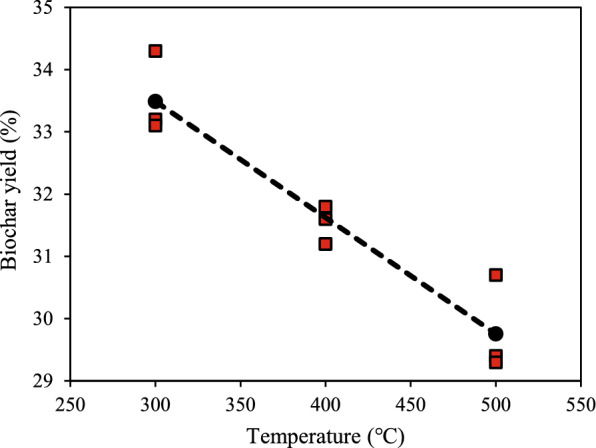 Figure 1
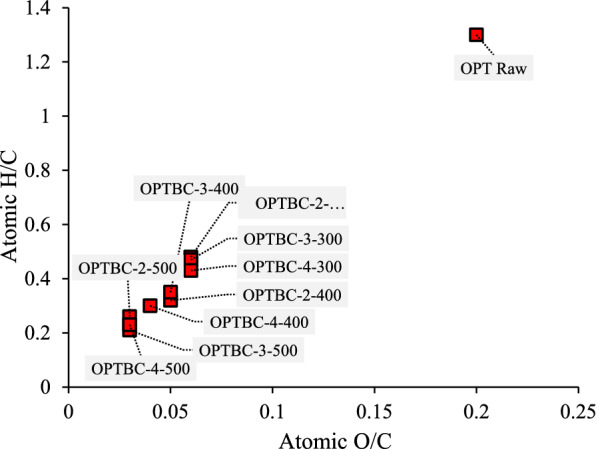 Figure 2
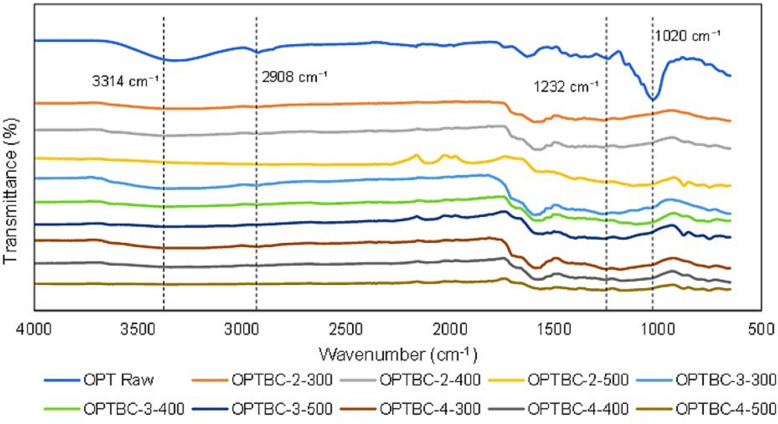 Figure 3
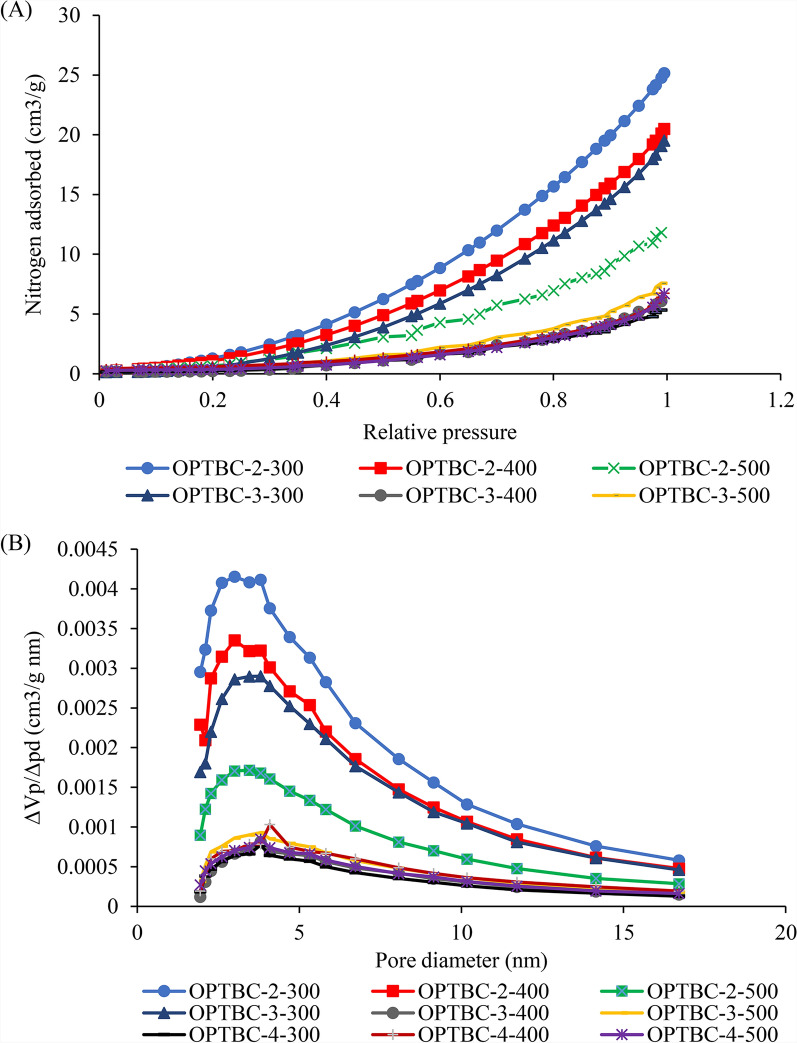 Figure 4
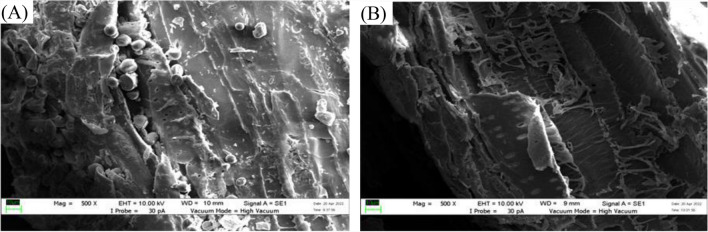 Figure 5
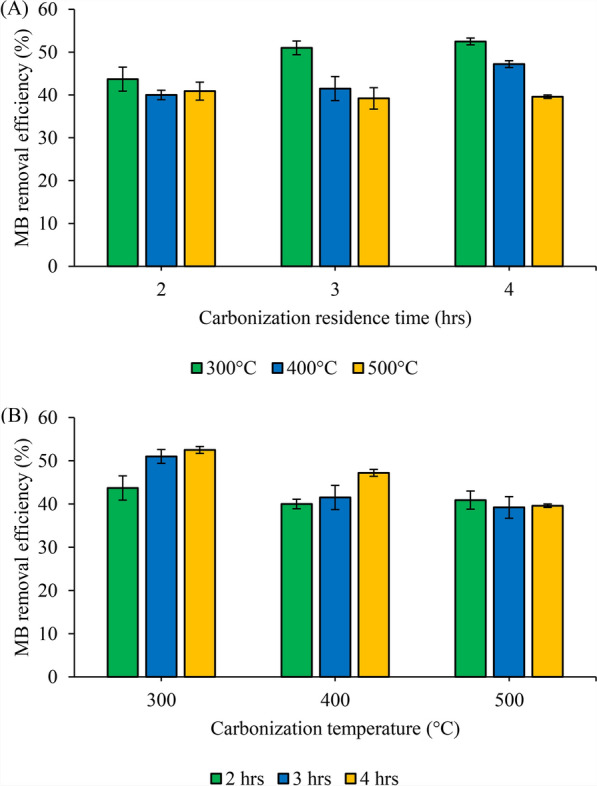 Figure 6
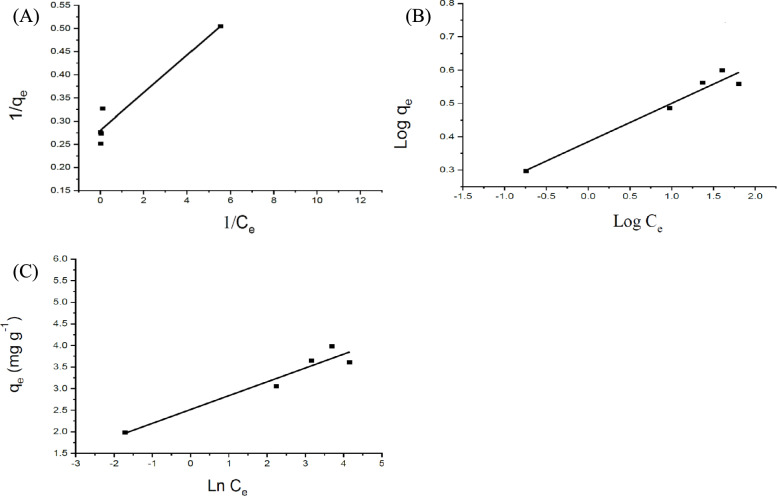 Figure 7
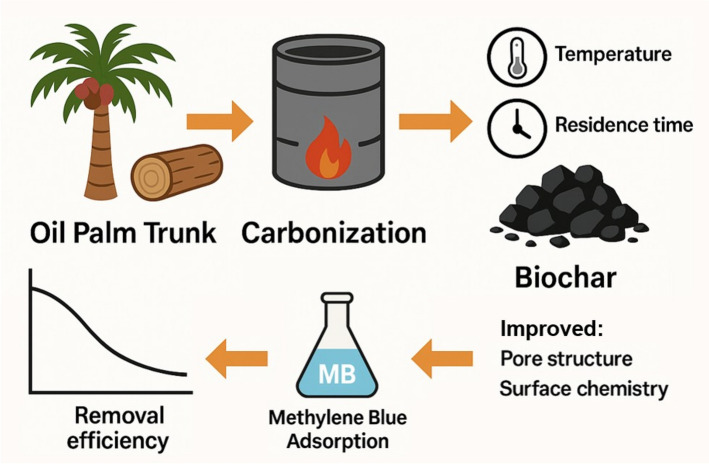 Figure 8
Peer Reviews
No public reviews on file for this paper yet. If you reviewed it on a platform where reviews are public (OpenReview, ICLR, NeurIPS, ICML), you can paste yours below so the community can read it here.
Videos
No videos yet. Explain this paper in a talk, walkthrough, or lecture? Add one.
Taxonomy
TopicsAdsorption and biosorption for pollutant removal · Thermochemical Biomass Conversion Processes · Supercapacitor Materials and Fabrication