FullSynesth: Syntenic Reconciliation of a Set of Consistent Gene Trees
Mathieu Gascon, Mattéo Delabre, Nadia El-Mabrouk

TL;DR
FullSynesth is a new algorithm that efficiently predicts the evolutionary history of gene syntenies across species by reconciling multiple gene trees.
Contribution
FullSynesth introduces a polynomial-time method for reconciling multiple gene trees with a species tree while inferring a synteny supertree.
Findings
FullSynesth improves the running time of previous methods when applied to simulated datasets.
The algorithm can handle evolutionary events like duplications, losses, and synteny transfers.
It simultaneously builds and reconciles a synteny supertree for a fixed number of gene trees.
Abstract
We present FullSynesth, a tree reconciliation algorithm predicting the evolution of a set of homologous genomic regions or syntenies, inside a species tree. The considered evolutionary model involves segmental events (i.e. acting on multiple genes) including duplications (D), losses (L), synteny fissions and transfers possibly going through unsampled or extinct species. Formally, given a set of syntenies in a set of genomes and a set \documentclass[12pt]{minimal} \usepackage{amsmath} \usepackage{wasysym} \usepackage{amsfonts} \usepackage{amssymb} \usepackage{amsbsy} \usepackage{mathrsfs} \usepackage{upgreek} \setlength{\oddsidemargin}{-69pt} \begin{document}\end{document}G of consistent gene trees for the gene families composing the syntenies, the problem is to infer a most parsimonious evolutionary history explaining the observed…
Genes, proteins, chemicals, diseases, species, mutations and cell lines named across the full text — each resolved to its canonical identifier and authoritative record.
Click any figure to enlarge with its caption.
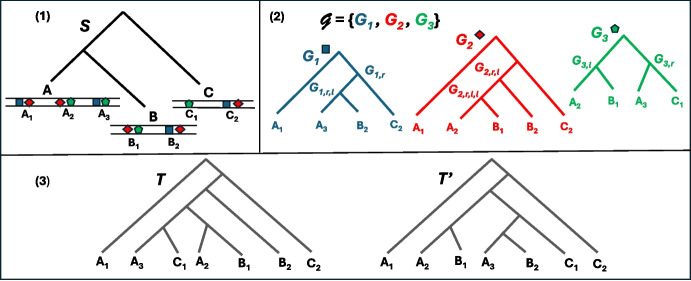 Figure 1
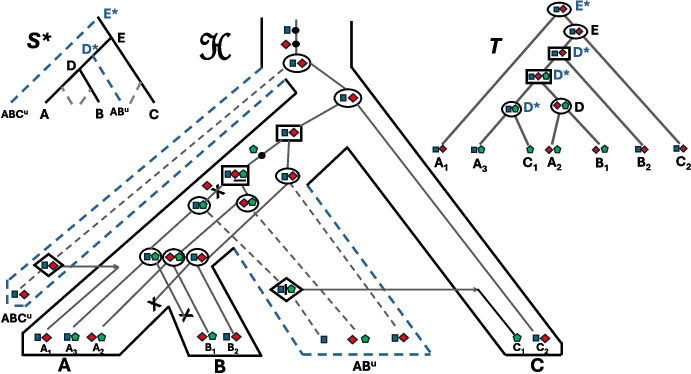 Figure 2
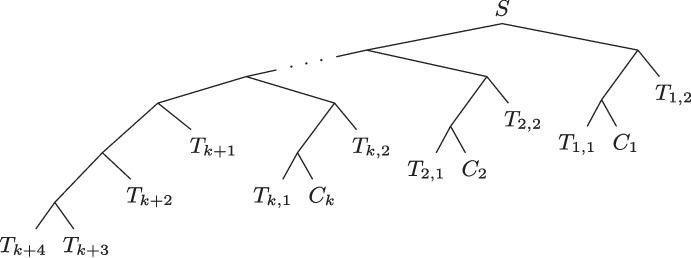 Figure 3
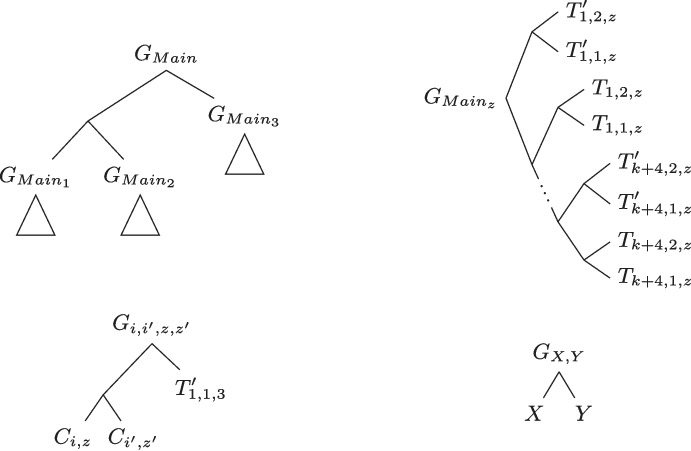 Figure 4
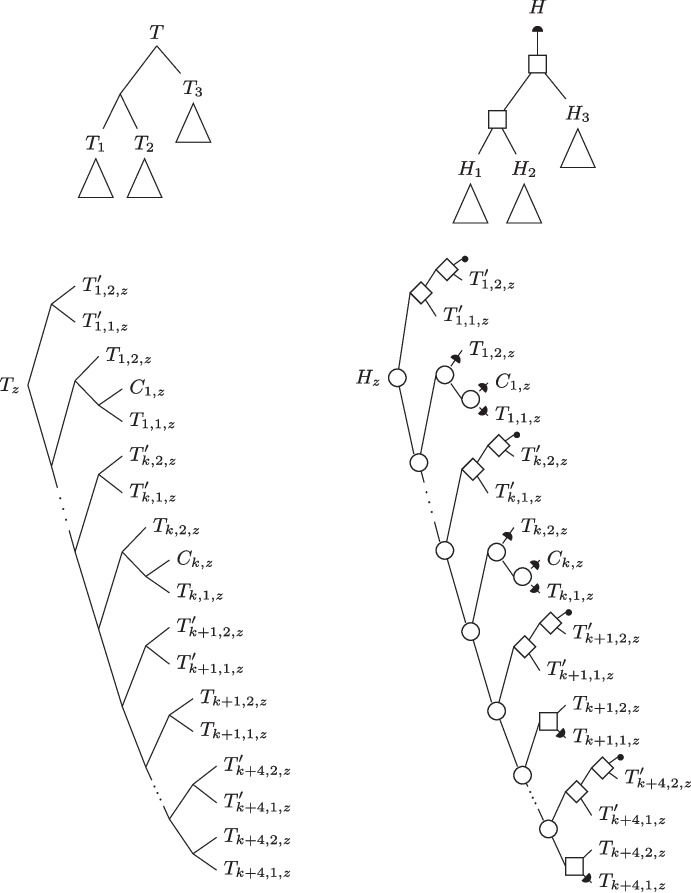 Figure 5
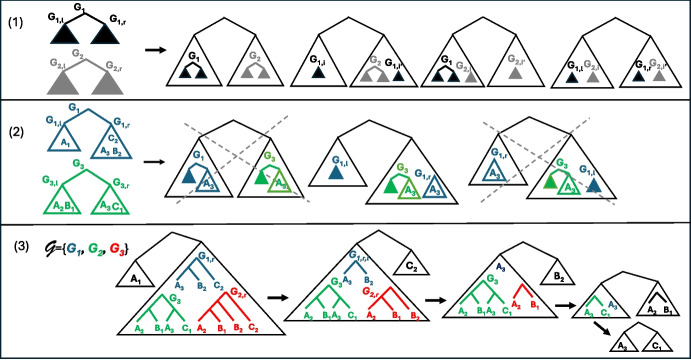 Figure 6
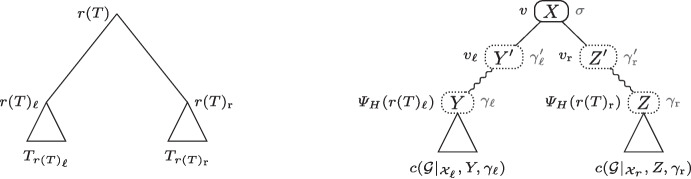 Figure 7
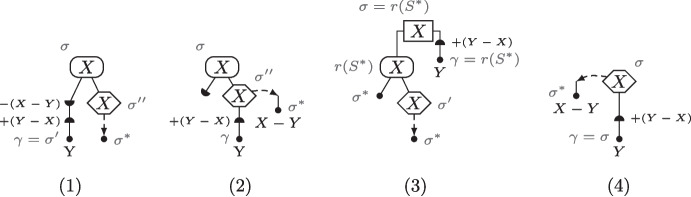 Figure 8
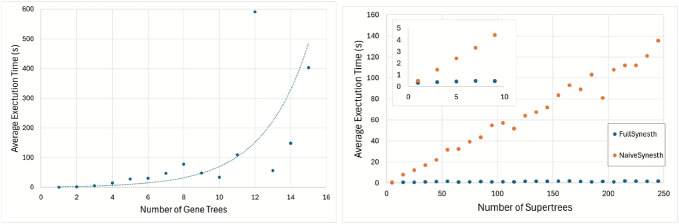 Figure 9
 Figure 10
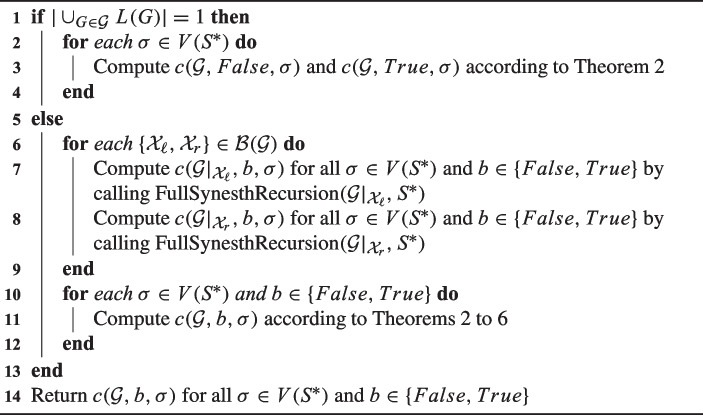 Figure 11
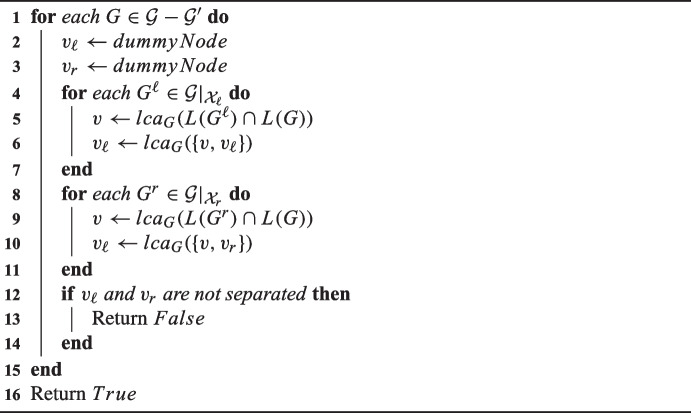 Figure 12
Peer Reviews
No public reviews on file for this paper yet. If you reviewed it on a platform where reviews are public (OpenReview, ICLR, NeurIPS, ICML), you can paste yours below so the community can read it here.
Videos
No videos yet. Explain this paper in a talk, walkthrough, or lecture? Add one.
Taxonomy
TopicsGenome Rearrangement Algorithms · Genomics and Phylogenetic Studies · Bioinformatics and Genomic Networks