Real-world data on the abuse potential of medications for the treatment of insomnia: a disproportionality analysis of the FAERS database
Paul Saskin, William V. McCall, David N. Neubauer, Antonio Crucitti, Bradford Perry, Pierre Philippe Luyet, Riphed Jaziri, Cedric Vaillant

TL;DR
This study analyzed real-world data to compare the abuse potential of insomnia medications, finding that DORAs have lower abuse risks than scheduled drugs like Z-drugs and trazodone.
Contribution
The study provides new evidence that DORAs may be less prone to abuse than other insomnia medications, challenging their Schedule IV classification.
Findings
DORAs had the lowest rates of abuse-related adverse events compared to benzodiazepines, Z-drugs, and trazodone.
DORAs showed significantly lower odds of abuse-related reports than zolpidem and trazodone.
The findings suggest DORAs may be safer in terms of abuse potential than currently scheduled medications.
Abstract
Insomnia disorder is a chronic medical condition estimated to affect 12% of adults. The potential for abuse of hypnotics often contributes to physician reluctance to prescribe medications to treat insomnia as a chronic condition. This study examined the real-world abuse potential of approved and off-label medications used to treat insomnia, employing data from the FDA Adverse Event Reporting System (FAERS) database. Data from 1 January 2014 to 31 March 2024 were retrieved. Drugs of interest included Schedule IV drugs (benzodiazepines, Z-drugs, dual orexin receptor antagonists [DORAs]) and non-scheduled drugs (trazodone, doxepin, ramelteon). Relevant reported adverse events denoting drug abuse were identified if they contained an event with any preferred terms from the SMQ Drug abuse, dependence, and withdrawal (MedDRA v26.1), with cases of overdose due to suicide attempts excluded. The…
Genes, proteins, chemicals, diseases, species, mutations and cell lines named across the full text — each resolved to its canonical identifier and authoritative record.
Click any figure to enlarge with its caption.
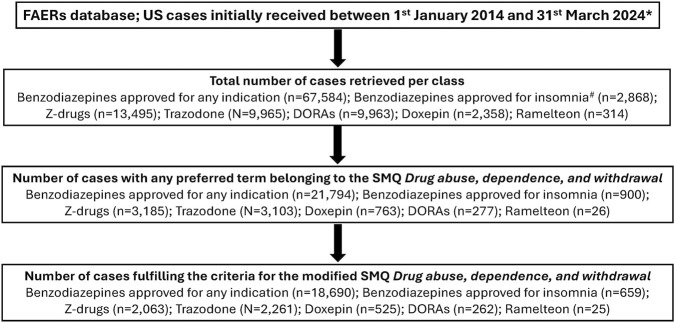 Figure 1
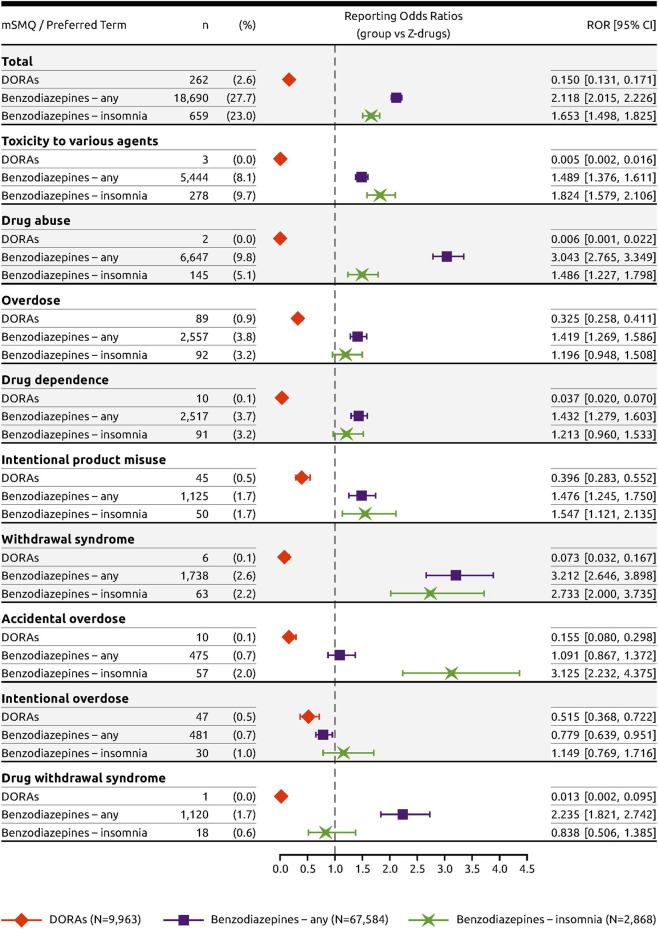 Figure 2
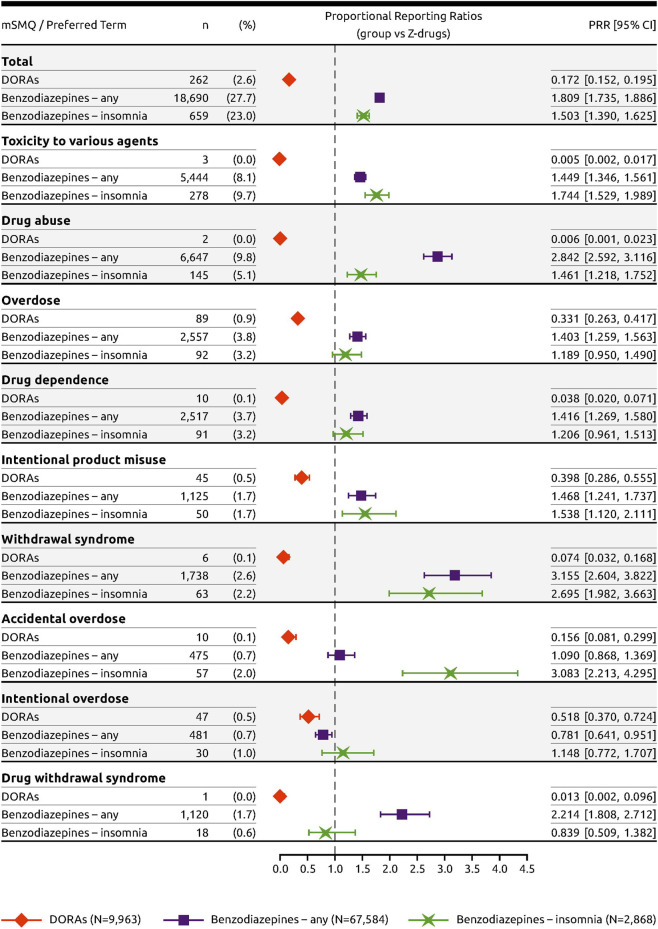 Figure 3
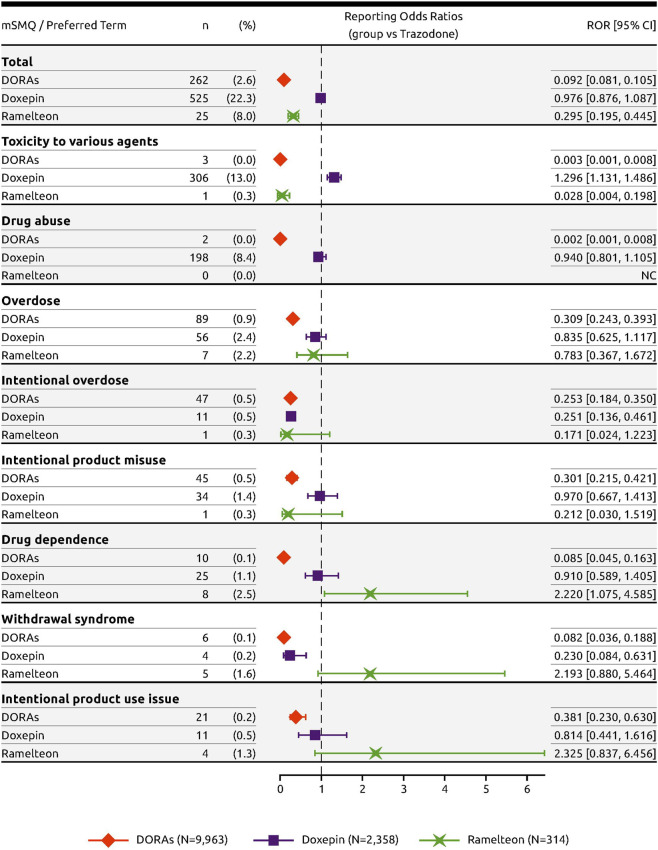 Figure 4
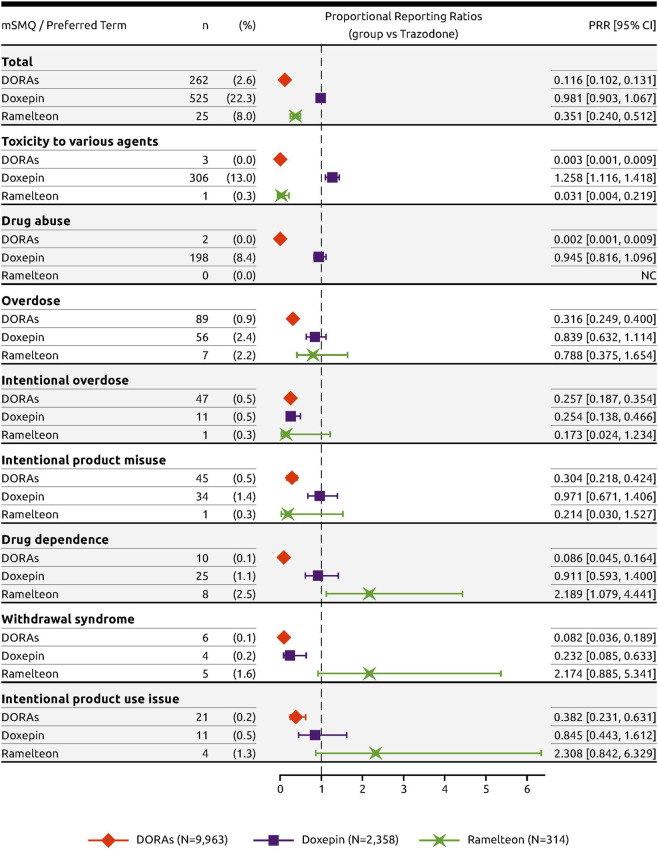 Figure 5
Peer Reviews
No public reviews on file for this paper yet. If you reviewed it on a platform where reviews are public (OpenReview, ICLR, NeurIPS, ICML), you can paste yours below so the community can read it here.
Videos
No videos yet. Explain this paper in a talk, walkthrough, or lecture? Add one.
Taxonomy
TopicsSleep and related disorders · Sleep and Wakefulness Research · Obstructive Sleep Apnea Research