Altered static and dynamic functional network connectivity between subcortical nuclei and cortical regions of the default mode network in type 2 diabetes mellitus
Dongsheng Zhang, Xiaoling Zhang, Lei Wang, Xuejiao Yan, Xiaoyan Lei, Min Tang, Jie Gao, Yarong Wang

TL;DR
This study finds that type 2 diabetes affects brain networks linked to cognition, with specific changes in connections between subcortical and cortical regions.
Contribution
The study identifies novel patterns of static and dynamic functional connectivity disruptions in T2DM patients involving subcortical nuclei and the default mode network.
Findings
T2DM patients show decreased resting-state functional connectivity between the basal forebrain and dorsomedial prefrontal cortex.
Dynamic functional connectivity analysis reveals altered state frequencies and dwell times in T2DM patients compared to healthy controls.
Reduced connectivity correlates with cognitive scores and disease duration in T2DM patients.
Abstract
Disruptions in functional connectivity (FC) within the default mode network (DMN) are well established as a key neuropathology underlying cognitive impairment in type 2 diabetes mellitus (T2DM). Subcortical nuclei, including the basal forebrain (BF) and mediodorsal thalamus, play critical roles in regulating DMN-associated cognitive processes and are particularly vulnerable to hyperglycemia and brain insulin resistance. However, the specific FC patterns between these subcortical nuclei and DMN cortical regions in patients with T2DM, as well as their potential associations with cognitive impairment, remain incompletely elucidated. Eighty-two patients with T2DM and 79 healthy controls (HCs) were enrolled in this study. Clinical data, neuropsychological assessments, and resting-state functional magnetic resonance imaging were collected from all participants. Resting-state (rs-FNC) and…
Genes, proteins, chemicals, diseases, species, mutations and cell lines named across the full text — each resolved to its canonical identifier and authoritative record.
Click any figure to enlarge with its caption.
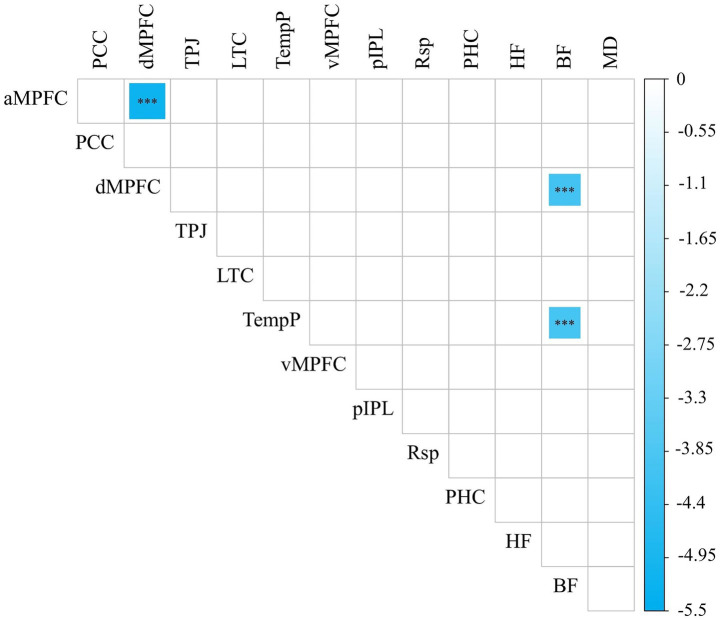 Figure 1
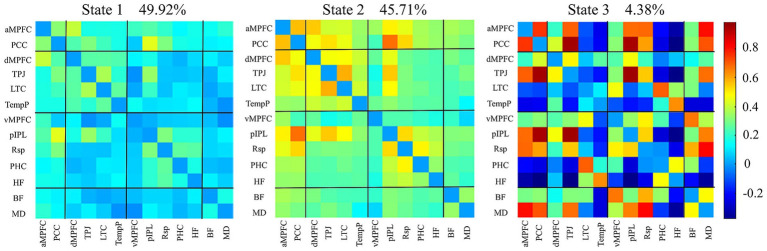 Figure 2
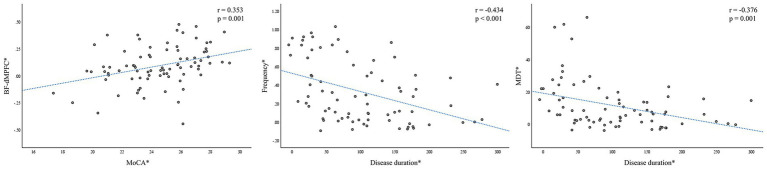 Figure 3
Peer Reviews
No public reviews on file for this paper yet. If you reviewed it on a platform where reviews are public (OpenReview, ICLR, NeurIPS, ICML), you can paste yours below so the community can read it here.
Videos
No videos yet. Explain this paper in a talk, walkthrough, or lecture? Add one.
Taxonomy
TopicsFunctional Brain Connectivity Studies · Dementia and Cognitive Impairment Research · Heart Rate Variability and Autonomic Control