Wedelolactone, a natural coumestan with multiple pharmacological effects
Shanshan Han, Minghe Li, Longfei Yang, Xinming Zhuang

TL;DR
This review summarizes the various health benefits of wedelolactone, a natural compound from Wedelia Chinensis, including its anti-inflammatory, antiviral, and protective effects.
Contribution
The paper compiles recent findings on wedelolactone's pharmacological effects, highlighting its potential for treating multiple diseases.
Findings
Wedelolactone shows anti-inflammatory, antiviral, and antibacterial activities.
It has antitumor and anti-osteoporosis effects and protects against organ damage.
The compound demonstrates potential for use in treating various diseases.
Abstract
Natural products, especially those from medicinal plants, have been increasingly attractive to researchers. Wedelolactone (WL) is a natural coumestan that was first isolated from Wedelia Chinensis. The past decades have seen an increase in the pharmacological reports on this compound, which show that WL possesses anti-inflammatory, antiviral, antibacterial, antitumor and anti-osteoporosis activities, as well as protective effects on organ damages. This review integrates the recent progresses available on its pharmacological effects both in vitro and in vivo, and highlights its potential uses in multiple diseases.
Genes, proteins, chemicals, diseases, species, mutations and cell lines named across the full text — each resolved to its canonical identifier and authoritative record.
Click any figure to enlarge with its caption.
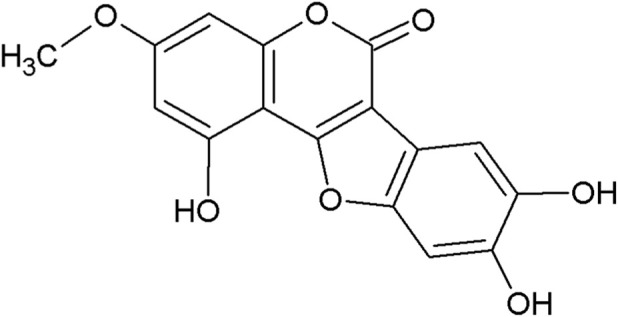 Figure 1
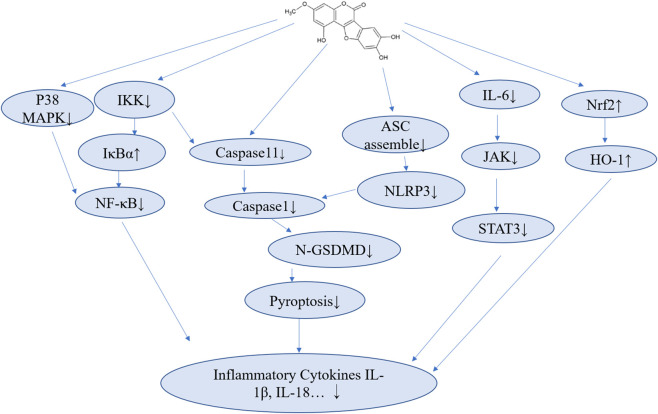 Figure 2
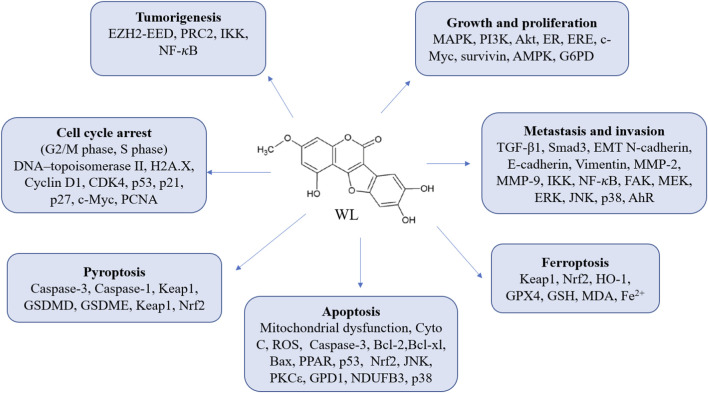 Figure 3
Peer Reviews
No public reviews on file for this paper yet. If you reviewed it on a platform where reviews are public (OpenReview, ICLR, NeurIPS, ICML), you can paste yours below so the community can read it here.
Videos
No videos yet. Explain this paper in a talk, walkthrough, or lecture? Add one.
Taxonomy
TopicsMedicinal Plants and Neuroprotection · GABA and Rice Research · Morinda citrifolia extract uses