The influence of disaster knowledge, official trust, and sources of warning information on public risk perception in typhoon-prone areas of China: a structural equation modeling analysis
Ping Wei, Na Zhang, Fang Bai, Zhenyu Zhao, Yajuan Zhao, Xuren Wang, Zhongxia Wang, Chunhua Dai, Yani Lu, Siyuan Qin, Baichao Xu, Yuan Mei, Hua Zhang

TL;DR
This study explores how disaster knowledge, trust in officials, and warning sources influence public risk perception during typhoons in China.
Contribution
The study identifies that warning information's effect on risk perception is fully mediated by disaster knowledge and official trust.
Findings
Disaster knowledge and official trust are directly and positively associated with risk perception.
The relationship between warning information and risk perception is fully mediated by disaster knowledge and official trust.
The proposed model fits the data well, showing significant correlations between the variables.
Abstract
Typhoons are one of the most common natural disasters, seriously jeopardizing public safety. Risk perception, defined as the subjective judgment that people make about the characteristics and severity of a risk, plays a crucial role in public preparedness behavior during typhoon disasters. However, there is a lack of knowledge regarding public risk perception and its influencing factors in typhoon-prone areas. This study aims to fill the knowledge gap by evaluating the public risk perception and key factors associated with perceptions among the general public. In addition, the relationship between the disaster knowledge, official trust, sources of warning information, and risk perception will be explored. A cross-sectional study was conducted from October 2024 to January 2025 with participants from Hainan Island, China. The target population consisted of residents aged 18 years and…
Genes, proteins, chemicals, diseases, species, mutations and cell lines named across the full text — each resolved to its canonical identifier and authoritative record.
Click any figure to enlarge with its caption.
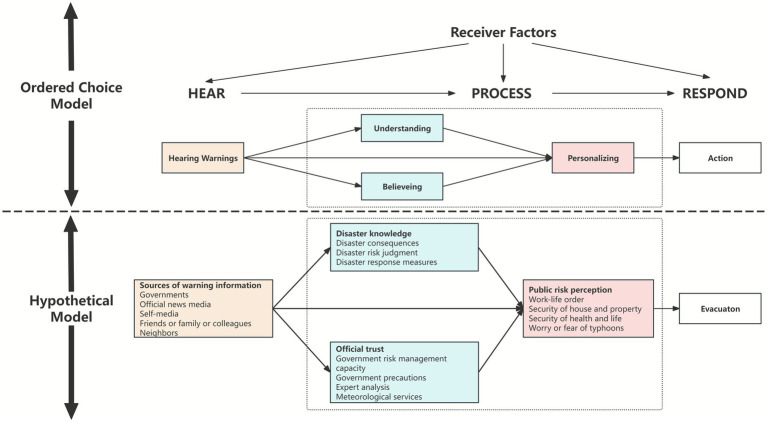 Figure 1
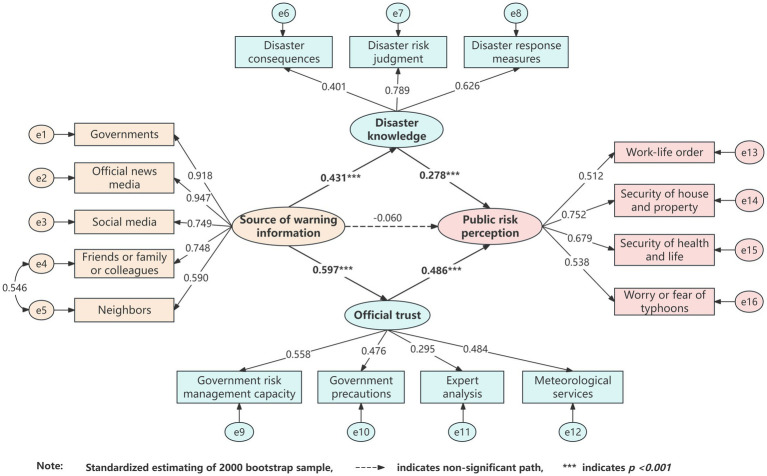 Figure 2
Peer Reviews
No public reviews on file for this paper yet. If you reviewed it on a platform where reviews are public (OpenReview, ICLR, NeurIPS, ICML), you can paste yours below so the community can read it here.
Videos
No videos yet. Explain this paper in a talk, walkthrough, or lecture? Add one.
Taxonomy
TopicsDisaster Management and Resilience · Risk Perception and Management · Public Relations and Crisis Communication