Genomic-based biosurveillance for avian influenza: whole genome sequencing from wild mallards sampled during autumn migration in 2022–2023 reveals a high co-infection rate on migration stopover site in Georgia
Ana Papkiauri, Lela Urushadze, Tea Tevdoradze, Ketevan Sidamonidze, Giorgi Tomashvili, Mari Gavashelidze, Levan Ninua, Ivane Daraselia, Sopio Kiknavelidze, Nika Melikishvili, Bin Hu, Patrick Chain, Kaetlyn Gibson, Martha Dix, Valerie Li, Jeanne Fair, Jennifer Owen

TL;DR
This study used whole genome sequencing to show that wild mallards in Georgia carry diverse and co-infected avian influenza strains during migration, highlighting the region's role in virus mixing.
Contribution
The study reveals a high co-infection rate and genetic diversity of avian influenza in wild mallards during migration in Georgia.
Findings
55 influenza-positive samples showed significant genetic diversity, including H6N1 and H6N6 subtypes.
Co-infections with combinations like H6H3, N8N1, and N2N6 were identified, indicating reassortment potential.
Some strains showed uncommon genetic traits, suggesting Georgia acts as a mixing vessel for influenza viruses.
Abstract
The Caucasus region, including Georgia, is an important intersection for migratory waterbirds, offering potential for avian influenza virus (AIV) transmission between populations from different geographic areas. In 2022 and 2023, wild ducks were sampled during autumn migration events in Georgia to study the genetic relationships and molecular characteristics of influenza strains. Sequencing and phylogenetic analysis were used to compare the sampled strains to reference sequences from Africa, Asia, and Europe, allowing assessment of genetic relationships and virus transmission between migratory birds. Protein language modeling identified potential co-infections. Of 225 duck samples, 128 tested positive for the influenza M gene. 55 influenza-positive samples underwent whole-genome sequencing, revealing significant diversity. Analysis of the hemagglutinin (HA) segment showed notable…
Genes, proteins, chemicals, diseases, species, mutations and cell lines named across the full text — each resolved to its canonical identifier and authoritative record.
Click any figure to enlarge with its caption.
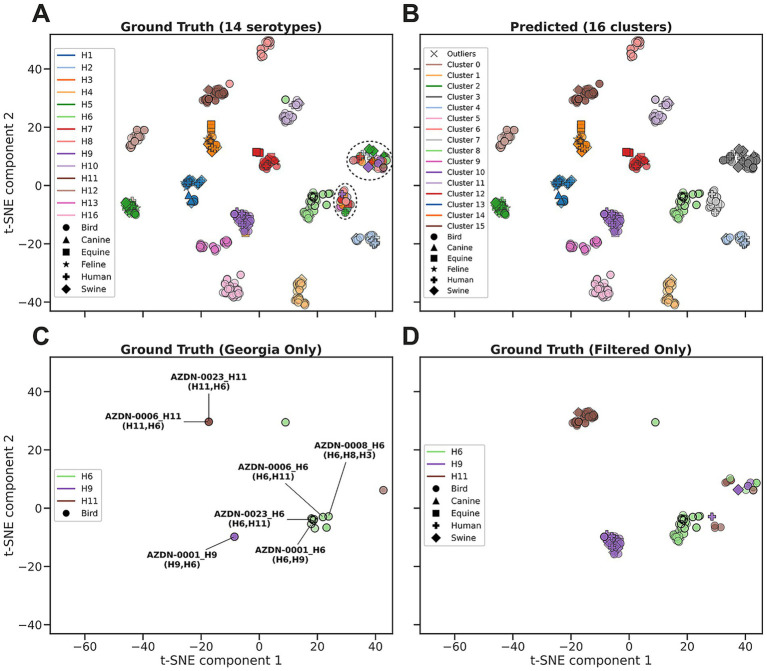 Figure 1
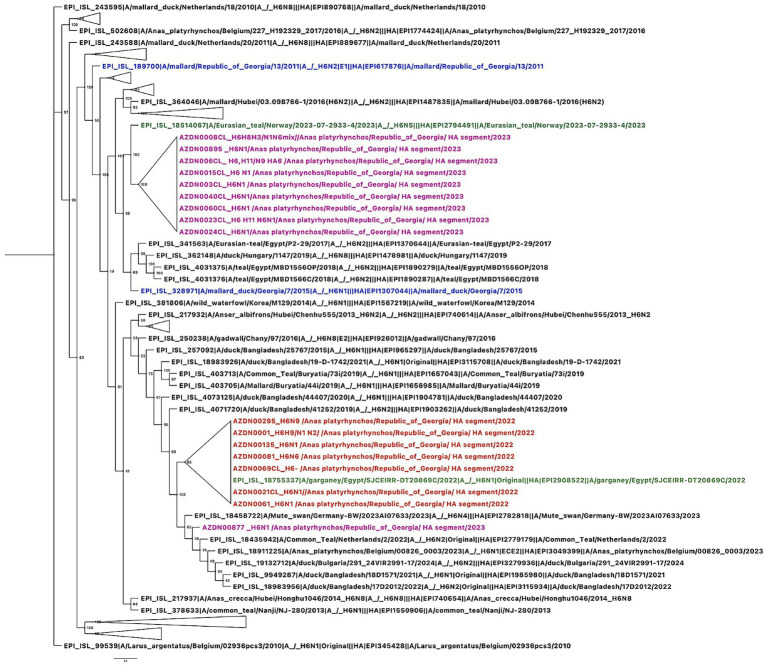 Figure 2
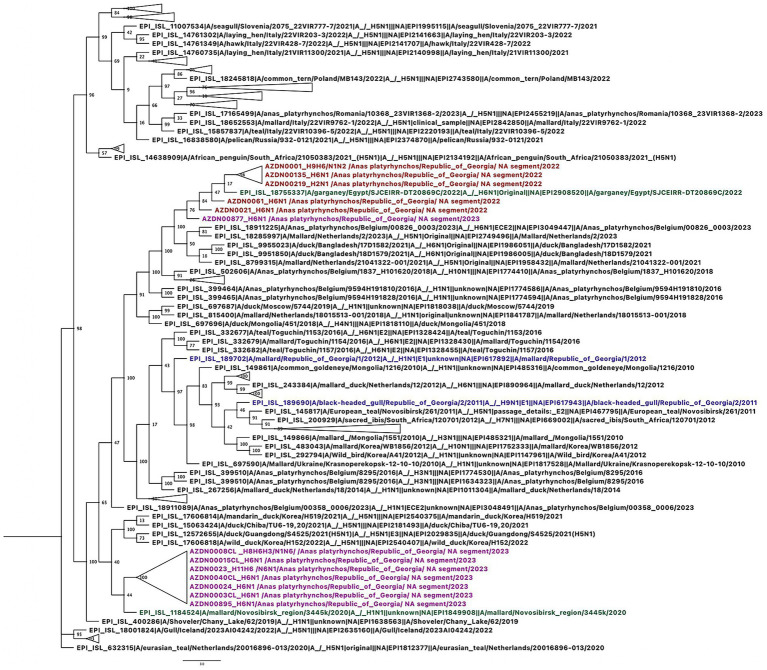 Figure 3
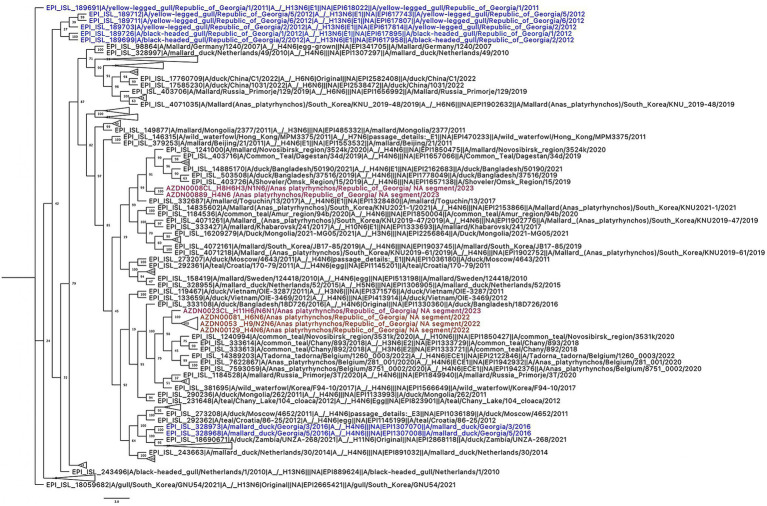 Figure 4
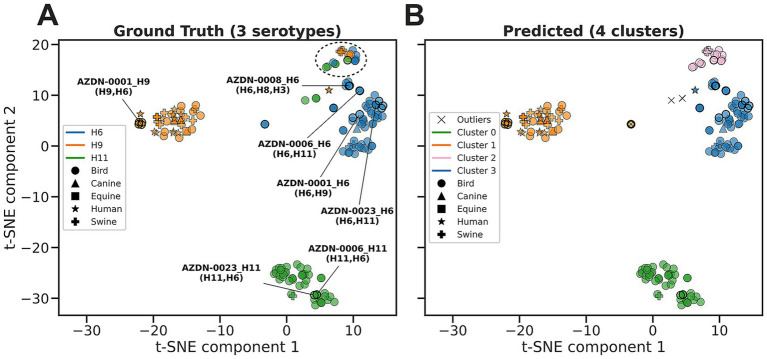 Figure 5
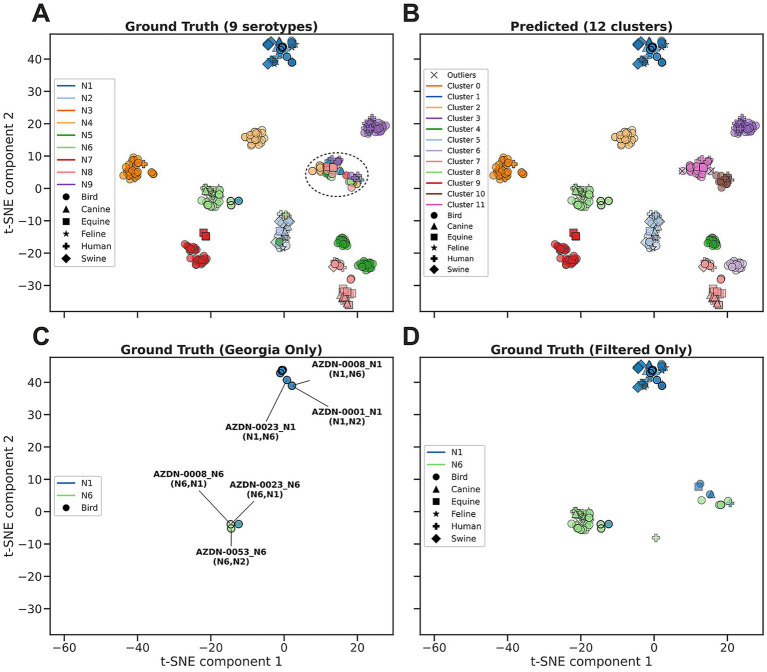 Figure 6
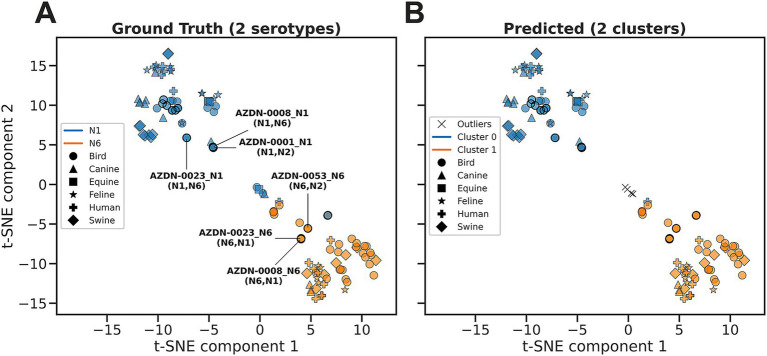 Figure 7
Peer Reviews
No public reviews on file for this paper yet. If you reviewed it on a platform where reviews are public (OpenReview, ICLR, NeurIPS, ICML), you can paste yours below so the community can read it here.
Videos
No videos yet. Explain this paper in a talk, walkthrough, or lecture? Add one.
Taxonomy
TopicsInfluenza Virus Research Studies · Genetic diversity and population structure · Identification and Quantification in Food