Could artificial intelligence gradually replace classical adjuvants?
Jose G. Marchan-Alvarez

TL;DR
The paper suggests that AI could design vaccines that replace traditional adjuvants by integrating their functions into antigens.
Contribution
Proposes a novel hypothesis that AI-designed antigens may gradually replace classical adjuvants in vaccines.
Findings
AI can enhance antigen engineering and optimize vaccine design.
AI-driven vaccines may replicate or surpass traditional adjuvant functions.
A roadmap is proposed for transitioning to AI-driven adjuvant surrogates.
Abstract
Adjuvants have been indispensable in vaccinology, enhancing immunogenicity, shaping adaptive immune polarization, and extending the durability of protective responses. Classical adjuvants, including alum, oil-in-water emulsions, liposomal formulations, and toll-like receptor agonists, function by fueling innate immunity, promoting antigen presentation, and modulating cytokine milieus. Yet, these compounds face persistent limitations such as reactogenicity, species-specific responses, manufacturing complexity, and regulatory barriers. Artificial intelligence (AI) and core subfields such as machine learning are revolutionizing vaccine design by enhancing antigen engineering, delivery system optimization, immunogenicity modeling, and in silico screening of novel immune potentiators. Here, I propose a speculative yet testable hypothesis: AI-driven design of potent antigens may progressively…
Genes, proteins, chemicals, diseases, species, mutations and cell lines named across the full text — each resolved to its canonical identifier and authoritative record.
Click any figure to enlarge with its caption.
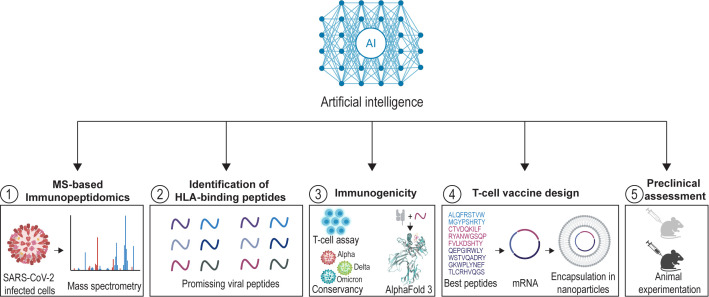 Figure 1
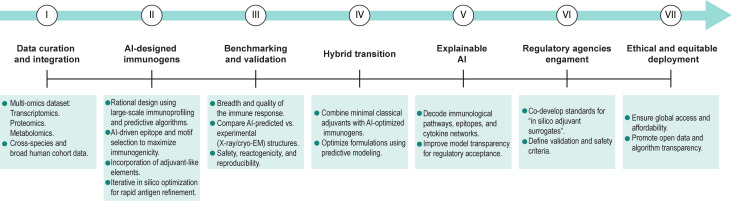 Figure 2
Peer Reviews
No public reviews on file for this paper yet. If you reviewed it on a platform where reviews are public (OpenReview, ICLR, NeurIPS, ICML), you can paste yours below so the community can read it here.
Videos
No videos yet. Explain this paper in a talk, walkthrough, or lecture? Add one.
Taxonomy
Topicsvaccines and immunoinformatics approaches · Immunotherapy and Immune Responses · SARS-CoV-2 and COVID-19 Research