How agency shapes behavior and performance: the triple impact of control-feedback on stimulus–response learning, motor reinforcement, and motivated action selection
Noam Karsh

TL;DR
This study shows how immediate feedback from actions improves learning, motor performance, and voluntary choices.
Contribution
The paper introduces a triple impact model of control feedback on learning, motor reinforcement, and action selection.
Findings
Control feedback improves stimulus–response learning and motor performance.
Immediate feedback reinforces motor execution and action choice preferences.
Reinforced pairings influence voluntary actions even without conscious awareness.
Abstract
Agency confirmation via control feedback (e.g., an immediate sensory consequence of one’s action) has been shown to motivate action choice and reinforce motor responses. Recent work also demonstrated that it qualitatively improves motor performance. The present study tested the hypothesis that this improvement arises because control feedback selectively strengthens stimulus–response (S–R) associations, and further examined its reinforcing impact on motor responses and action choice to provide an integrated account of how agency confirmation shapes behavior and performance. Three experiments employed an acquisition-test paradigm. During acquisition, specific stimulus–response combinations triggered an immediate perceptual effect, while other combinations produced no effect (Experiments 1 and 3) or a delayed effect (Experiment 2). In the test phase, the perceptual effect depended solely…
Click any figure to enlarge with its caption.
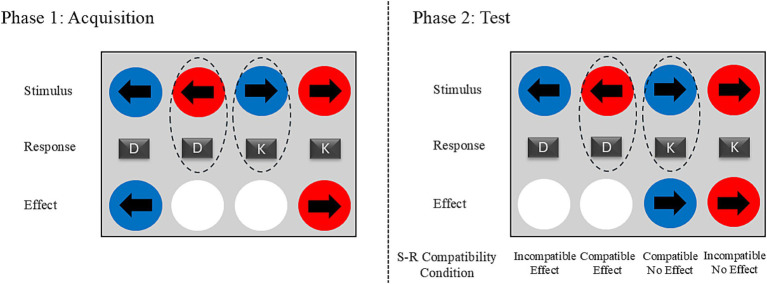 Figure 1
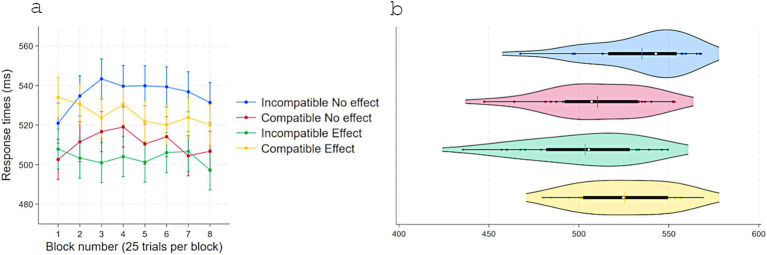 Figure 2
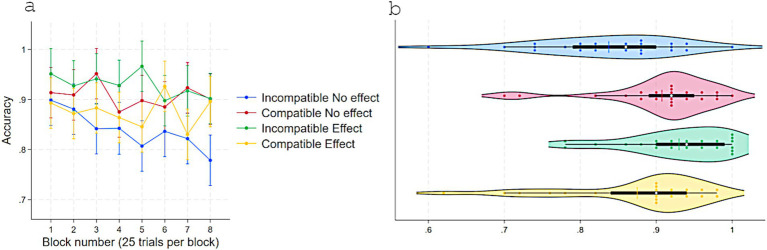 Figure 3
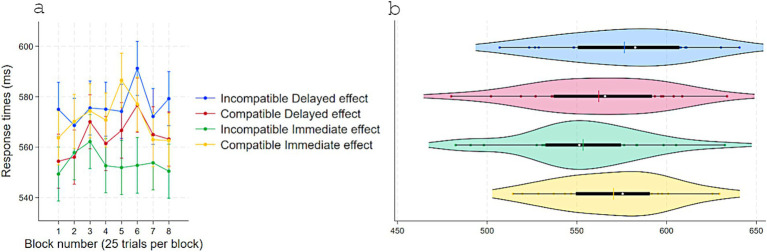 Figure 4
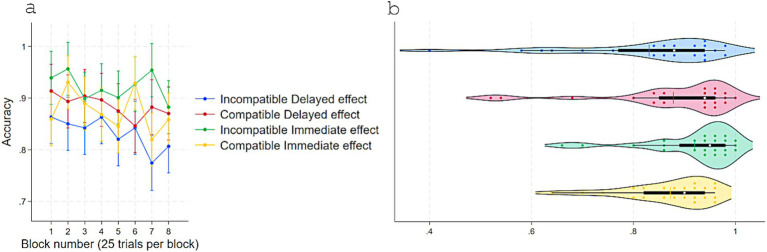 Figure 5
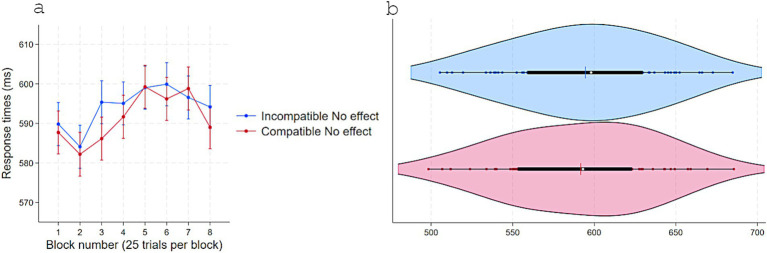 Figure 6
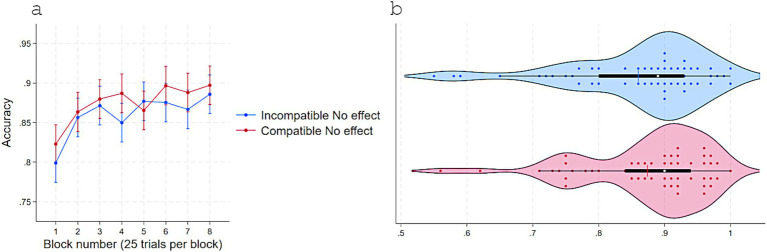 Figure 7
Peer Reviews
No public reviews on file for this paper yet. If you reviewed it on a platform where reviews are public (OpenReview, ICLR, NeurIPS, ICML), you can paste yours below so the community can read it here.
Videos
No videos yet. Explain this paper in a talk, walkthrough, or lecture? Add one.
Taxonomy
TopicsFree Will and Agency · Action Observation and Synchronization · Neural and Behavioral Psychology Studies