DC-STAMP and OC-STAMP cooperatively regulate osteoclast and foreign body giant cell cell–cell fusion
Fuka Homma, Ryotaro Iwasaki, Makoto Tateyama, Tomoya Soma, Mayu Morita, Makiko Kashio, Taneaki Nakagawa, Takeshi Miyamoto

TL;DR
This study shows that two proteins, DC-STAMP and OC-STAMP, work together to help form multi-nuclear cells like osteoclasts and foreign body giant cells, and their absence leads to increased bone formation.
Contribution
The study reveals that DC-STAMP and OC-STAMP cooperatively regulate cell fusion in osteoclasts and FBGCs, and their dual deficiency leads to increased osteogenesis.
Findings
Co-cultures of DC-STAMP or OC-STAMP knockout cells with wild-type cells still show normal cell fusion.
Co-cultures of DC-STAMP and OC-STAMP double knockout cells fail to undergo cell fusion.
DKO mice exhibit enhanced bone formation compared to wild-type mice.
Abstract
Osteoclasts and foreign body giant cells (FBGCs) are multi-nuclear cells established by fusion of their mono-nuclear forms. Multi-nucleation via cell–cell fusion is a common characteristic of osteoclasts and FBGCs, and Dendritic Cell-Specific Transmembrane Protein (DC-STAMP) and Osteoclast Stimulatory Transmembrane Protein (OC-STAMP) are both required for the process. Thus, it is thought that DC-STAMP and OC-STAMP interaction likely induces this fusion, but details of these mechanisms are not clear. We crossed DC-STAMP knockout (KO) with OC-STAMP KO mice to obtain DC-STAMP/OC-STAMP doubly deficient (DKO) mice. Osteoclasts and FBGC common progenitors were isolated from wild-type (WT), DC-STAMP KO, OC-STAMP KO or DKO mice. We then set up 4 co-culture systems: (1) WT with DC-STAMP KO cells, (2) WT with OC-STAMP KO cells, (3) WT with DKO cells, and (4) DC-STAMP KO with OC-STAMP KO cells to…
Genes, proteins, chemicals, diseases, species, mutations and cell lines named across the full text — each resolved to its canonical identifier and authoritative record.
Click any figure to enlarge with its caption.
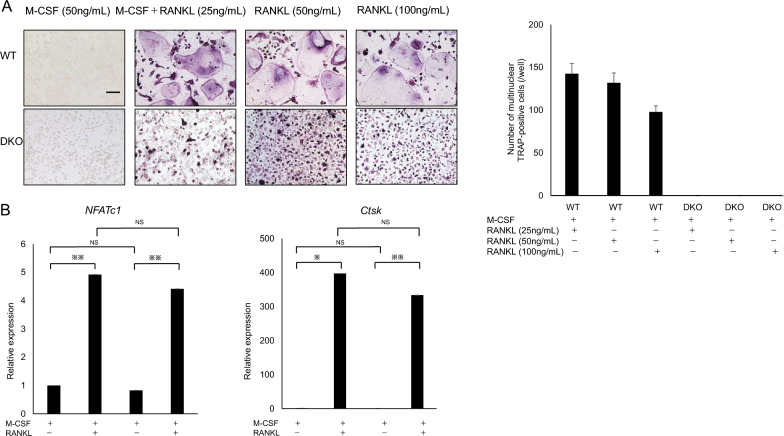 Figure 1
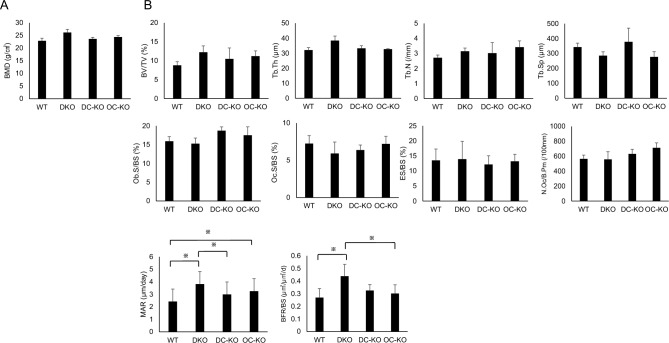 Figure 2
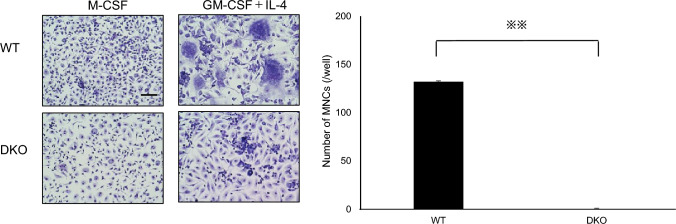 Figure 3
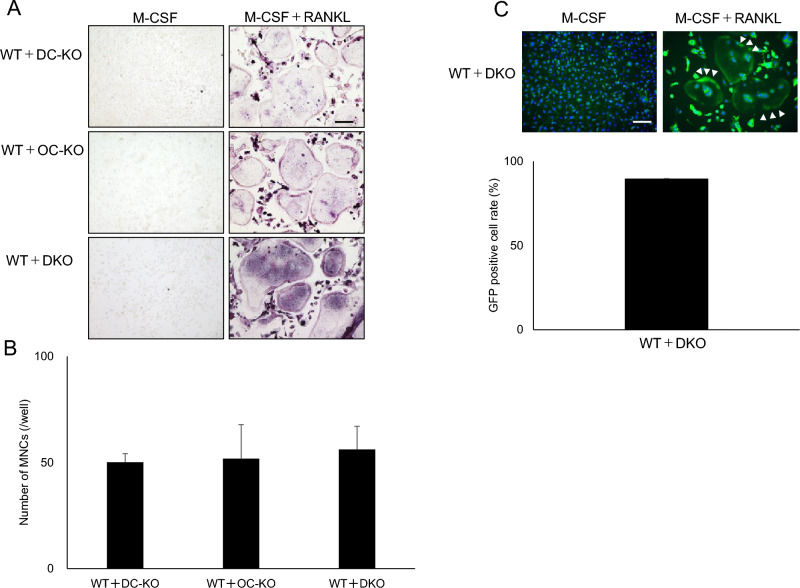 Figure 4
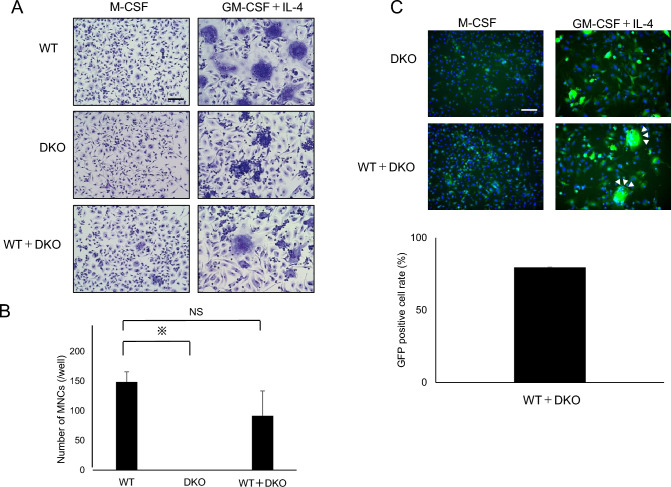 Figure 5
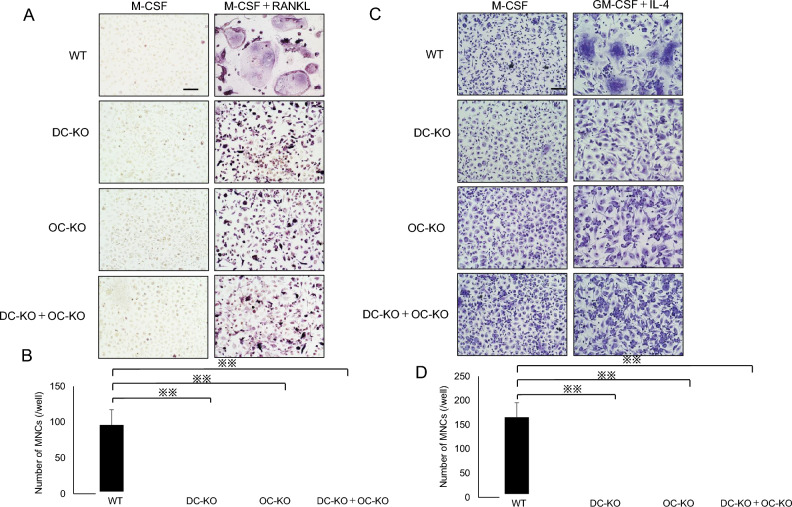 Figure 6
Peer Reviews
No public reviews on file for this paper yet. If you reviewed it on a platform where reviews are public (OpenReview, ICLR, NeurIPS, ICML), you can paste yours below so the community can read it here.
Videos
No videos yet. Explain this paper in a talk, walkthrough, or lecture? Add one.
Taxonomy
TopicsBone Metabolism and Diseases · Bone Tissue Engineering Materials · Cell Adhesion Molecules Research