Exploration of the correlation between clinical indicators and prognosis in hospitalized children with pneumonia and construction of a risk prediction model based on machine learning algorithms
Jin Xue, Guangzhong He, Qiaoying Chen

TL;DR
This study uses machine learning to predict which children with pneumonia are at higher risk of poor outcomes, such as longer hospital stays or ICU admission.
Contribution
A novel XGBoost-based risk prediction model for childhood pneumonia prognosis using clinical indicators and machine learning.
Findings
The XGBoost model achieved an AUC of 0.84 in predicting adverse outcomes in children with pneumonia.
Admission PCT, CRP, and respiratory rate were identified as the top predictors of poor prognosis.
The model's performance was robust even when excluding cases of COVID-19.
Abstract
Childhood pneumonia is a leading cause of hospitalization and death in children under 5 years globally. Its prognosis varies individually and is affected by multiple clinical indicators, while traditional assessment lacks quantitative risk stratification tools. Machine learning (ML) enables comprehensive analysis of high-dimensional clinical data, making it valuable for identifying key prognostic factors and building robust prediction models to optimize clinical decision-making. A total of 582 hospitalized children (1 month–5 years) with community-acquired pneumonia were retrospectively enrolled (January 2022–June 2025). Demographic, laboratory (WBC, CRP, PCT, LYM%, serum albumin), vital sign, and underlying disease data were collected. Adverse prognosis was defined as a composite of prolonged hospitalization (>7 days), PICU admission, or in-hospital death. Patients were randomly split…
Genes, proteins, chemicals, diseases, species, mutations and cell lines named across the full text — each resolved to its canonical identifier and authoritative record.
Click any figure to enlarge with its caption.
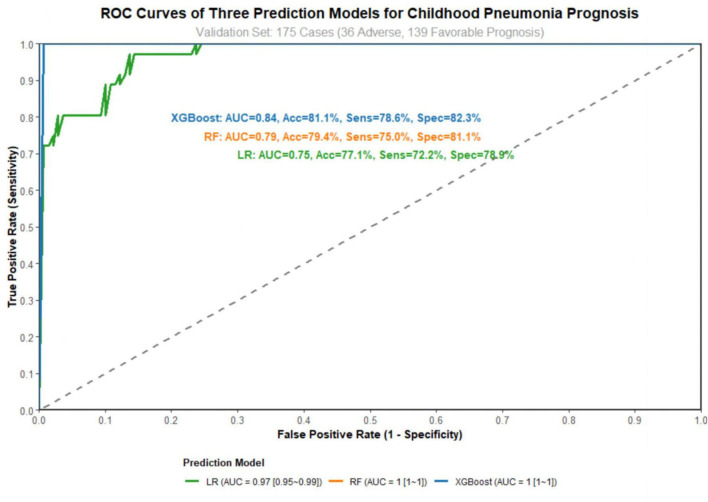 Figure 1
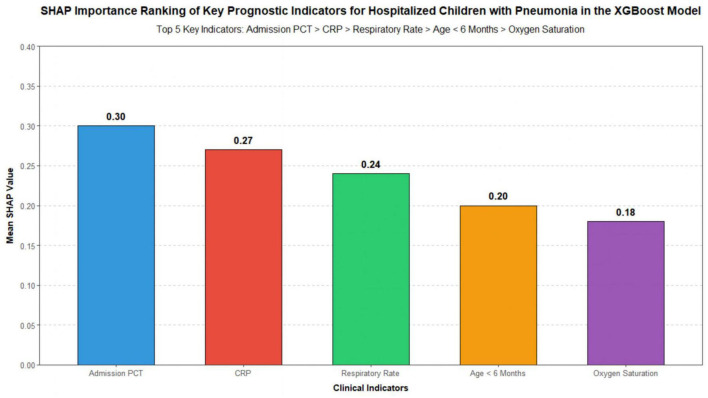 Figure 2
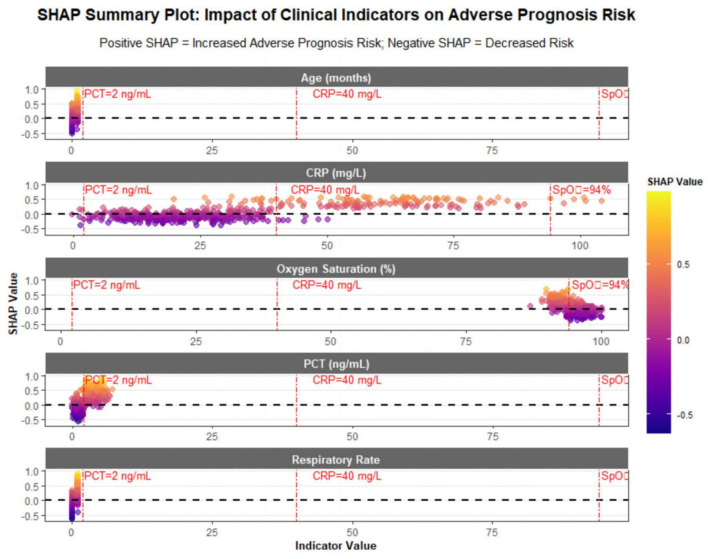 Figure 3
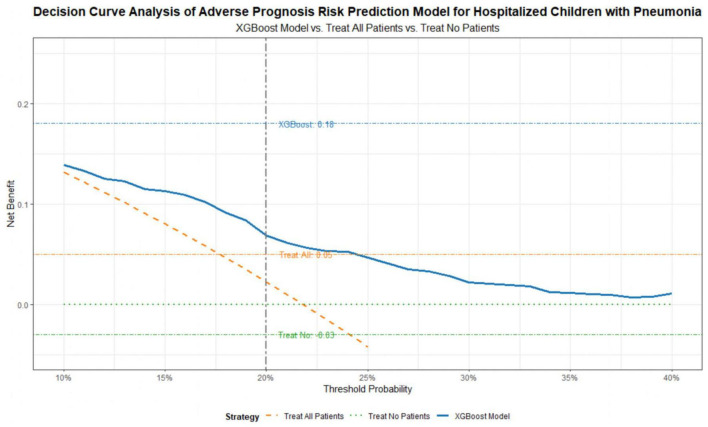 Figure 4
Peer Reviews
No public reviews on file for this paper yet. If you reviewed it on a platform where reviews are public (OpenReview, ICLR, NeurIPS, ICML), you can paste yours below so the community can read it here.
Videos
No videos yet. Explain this paper in a talk, walkthrough, or lecture? Add one.
Taxonomy
TopicsSepsis Diagnosis and Treatment · Pneumonia and Respiratory Infections · Machine Learning in Healthcare