Activity of Biocidin® against microbial biofilms
Amy V. Mundanchira, Agnes Wong, Kristen Klos-Maki, Jocelyn Strand, Cláudia N. H. Marques

TL;DR
This study shows that Biocidin®, a botanical supplement, can effectively reduce and even eradicate biofilms of several harmful microbes.
Contribution
The novel finding is that Biocidin® achieves biofilm eradication at certain concentrations, particularly against Pseudomonas aeruginosa, Staphylococcus aureus, and Escherichia coli.
Findings
A single dose of Biocidin® reduced biofilm and planktonic populations by more than 2 Log.
A 24-h continuous dose of 50% Biocidin® eradicated biofilms of P. aeruginosa, S. aureus, and E. coli.
Sub-inhibitory concentrations of Biocidin® did not affect biofilm viability.
Abstract
Biofilms—microbial communities—are present throughout the environment and interact with humans as part of the resident microbiome or when causing infection and disease. Antibiotics are commonly used to treat bacterial infections, including those due to biofilms. However, antimicrobial tolerance and resistance are common traits of these microbial communities. Resistance to antimicrobials is now widespread, and the search for alternative treatments, such as plant- or herbal-derived extracts, essential oils, and honey, is on the rise. Here, we investigated the effect of Biocidin®, a botanical supplement, on biofilms of Escherichia coli, Staphylococcus aureus, Pseudomonas aeruginosa, Klebsiella pneumoniae, and Candida albicans. A single (bolus) dose of Biocidin® resulted in a significant decrease (> 2 Log) of biofilm and planktonic populations, while a 24-h continuous dose of 25% and 50%…
Genes, proteins, chemicals, diseases, species, mutations and cell lines named across the full text — each resolved to its canonical identifier and authoritative record.
Click any figure to enlarge with its caption.
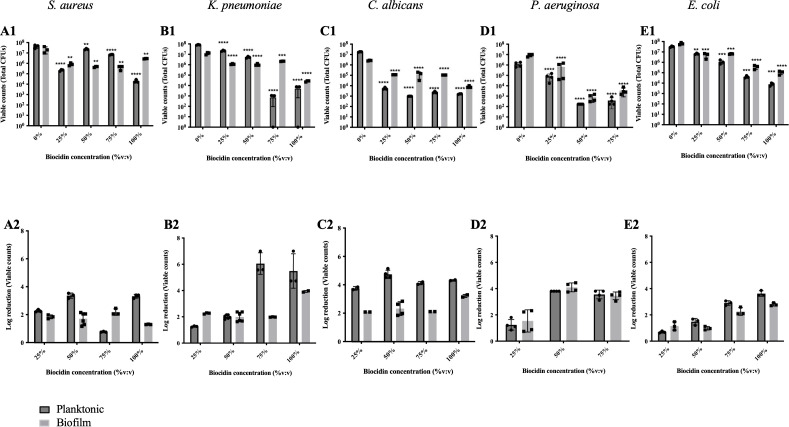 Figure 1
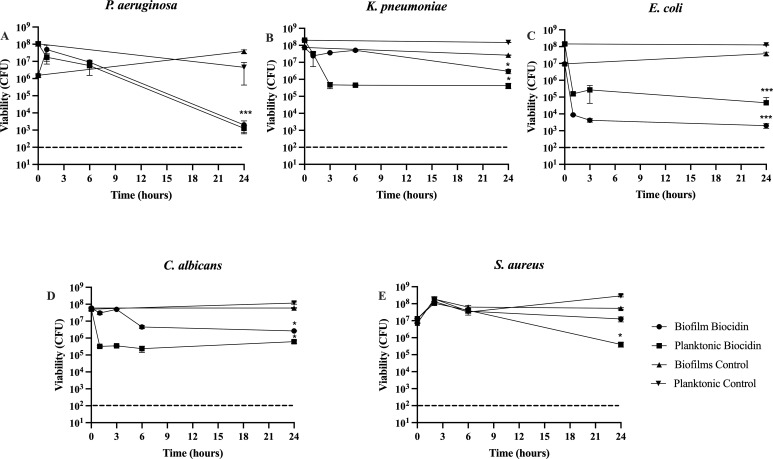 Figure 2
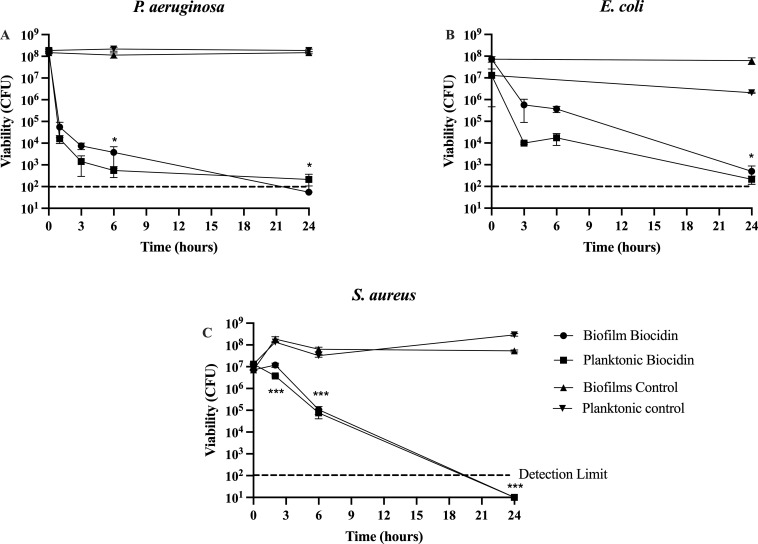 Figure 3
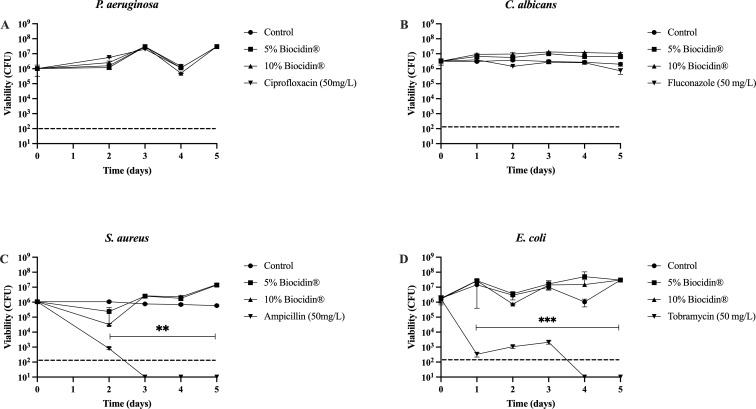 Figure 4
Peer Reviews
No public reviews on file for this paper yet. If you reviewed it on a platform where reviews are public (OpenReview, ICLR, NeurIPS, ICML), you can paste yours below so the community can read it here.
Videos
No videos yet. Explain this paper in a talk, walkthrough, or lecture? Add one.
Taxonomy
TopicsBacterial biofilms and quorum sensing · Essential Oils and Antimicrobial Activity · Antimicrobial agents and applications