Prognostic value of lymphatic vessel density in the capsule of early-stage hepatocellular carcinoma: implications for postoperative recurrence risk
Jin Li, Yu-Bo Liang, Xing-Ming Chen, Zhi-Yan Ou, Qing-Bo Wang, Wan-Ling Luo, Yawhan Lakang, Zi-Sheng Yang, Jin-Xiang Zuo, Yu-Kai Li, Hao-Wen Qin, Xin-Wu Lv, Xiang Kui, Yan Wang, Yang Ke

TL;DR
This study shows that higher lymphatic vessel density in the tumor capsule of early-stage liver cancer is linked to worse survival and more cancer spread, suggesting it could help predict patient outcomes.
Contribution
This is one of the first studies to investigate the prognostic value of lymphatic vessel density specifically in the tumor capsule of early-stage hepatocellular carcinoma.
Findings
High lymphatic vessel density in the tumor capsule was an independent risk factor for worse overall and recurrence-free survival.
High lymphatic vessel density was associated with microvascular invasion and satellite nodules in early-stage hepatocellular carcinoma.
Assessing lymphatic vessel density in the tumor capsule could help predict prognosis and guide personalized treatment strategies.
Abstract
Lymphatic vessels are present in the capsule of hepatocellular carcinoma (HCC) at an early stage, but their value in the prognosis remains unclear. The study aimed to evaluate the prognostic impact of lymphatic vessels in the tumor capsule on patients with HCC at Barcelona Clinic Liver Cancer (BCLC) stages 0-A. This is one of the first studies to investigate the tumor capsule specifically. This retrospective study included HCC patients at BCLC stages 0-A, who underwent radical liver resection between January 2017 and December 2020. Lymphatic vessel density (LVD) in the tumor capsule was determined by immunohistochemistry using anti-D2-40. Patients were stratified into the high and low LVD groups. Their overall survival (OS) and recurrence-free survival (RFS) were analyzed. The potential risk factors affecting survival and for predicting microvascular invasion (MVI) or satellite nodules…
Genes, proteins, chemicals, diseases, species, mutations and cell lines named across the full text — each resolved to its canonical identifier and authoritative record.
Click any figure to enlarge with its caption.
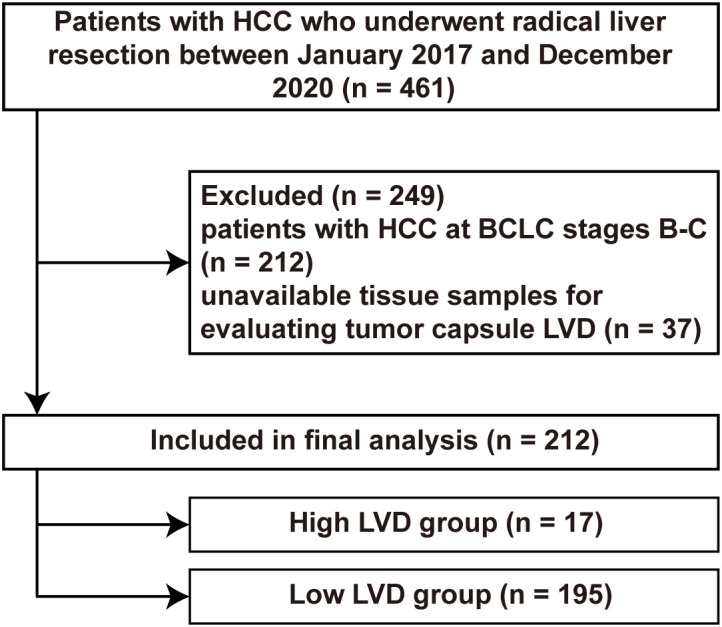 Figure 1
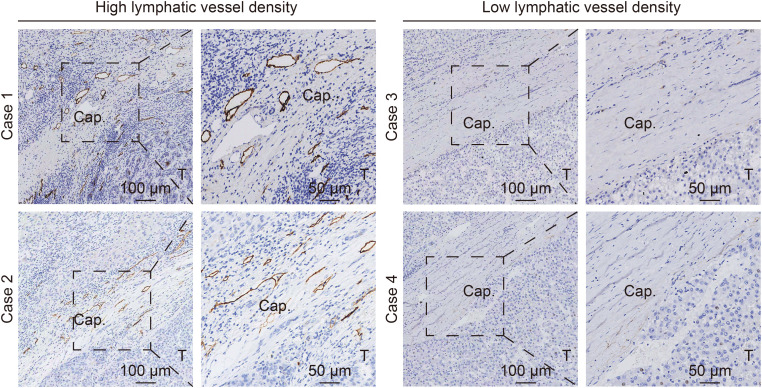 Figure 2
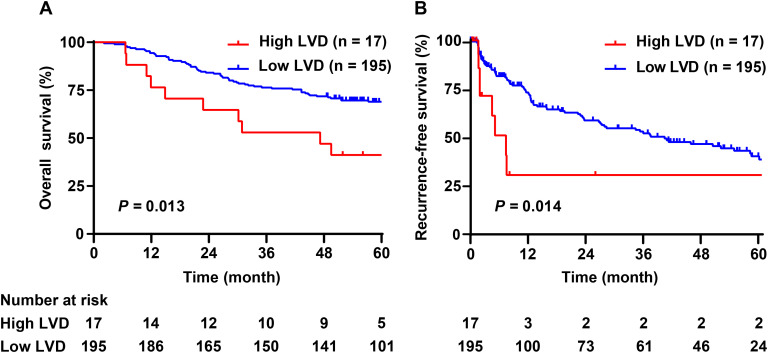 Figure 3
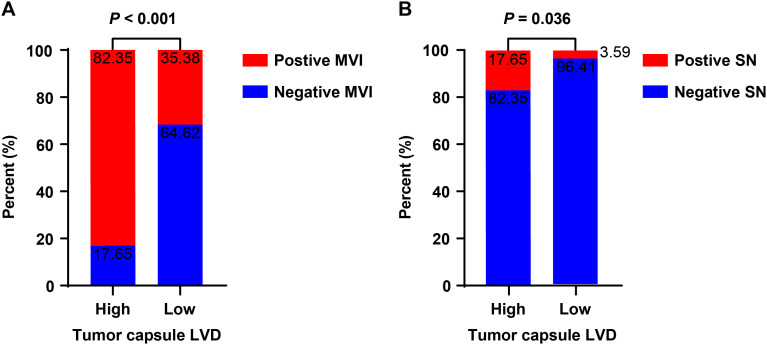 Figure 4
Peer Reviews
No public reviews on file for this paper yet. If you reviewed it on a platform where reviews are public (OpenReview, ICLR, NeurIPS, ICML), you can paste yours below so the community can read it here.
Videos
No videos yet. Explain this paper in a talk, walkthrough, or lecture? Add one.
Taxonomy
TopicsLymphatic System and Diseases · Hepatocellular Carcinoma Treatment and Prognosis · Lymphatic Disorders and Treatments