Comparative outcomes of laparoscopic and robotic colorectal cancer surgery in the NHS: real-world evidence from sequential adoption of Versius and da Vinci Xi
Samuel Massias, Qamil Pajaziti, Arian Arjomandi Rad, Bibechan Thapa, Bhamini Vadhwana, Lillian Reza, Vanash Patel

TL;DR
This study compares laparoscopic and two robotic systems for colorectal cancer surgery in the NHS, finding that the da Vinci Xi system offers shorter hospital stays and better outcomes.
Contribution
The study provides real-world comparative evidence on robotic colorectal cancer surgery outcomes in the NHS, including learning curves and adjusted clinical metrics.
Findings
da Vinci Xi (dV) showed a significantly shorter length of stay compared to laparoscopy and Versius (CMR).
dV had a higher lymph-node yield and a more favorable learning curve for operative time reduction.
Both robotic systems were found to be oncologically equivalent and safe.
Abstract
Multiple robotic systems are now available for colorectal cancer surgery, yet comparative real-world evidence to guide NHS adoption remains limited. This study compared perioperative, oncological, and learning-curve outcomes for laparoscopic, Versius (CMR), and da Vinci Xi (dV) resections. A single-centre evaluation included elective colorectal cancer resections between November 2021 and May 2025 using laparoscopy, CMR or dV. Primary outcomes were length of stay (LOS) and operative time; secondary outcomes included lymph-node yield and Clavien–Dindo ≥ 2 complications. Analyses used non-parametric tests, Bonferroni-adjusted comparisons and multivariable regression. Learning curves were assessed with rolling means, LOWESS and CUSUM. A total of 290 patients were included: laparoscopy (n = 85), CMR (n = 103), and dV (n = 102). Median LOS was 5, 5 and 4 days respectively (p < 0.001) with dV…
Genes, proteins, chemicals, diseases, species, mutations and cell lines named across the full text — each resolved to its canonical identifier and authoritative record.
Click any figure to enlarge with its caption.
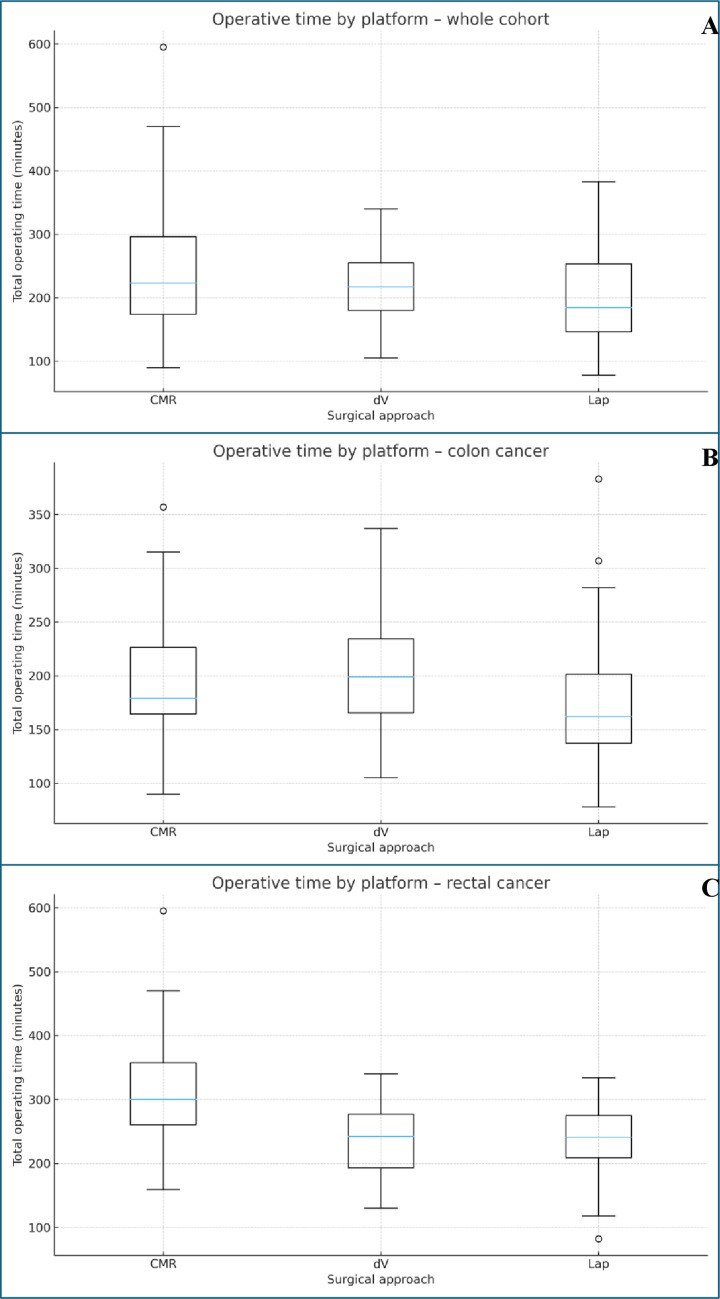 Figure 1
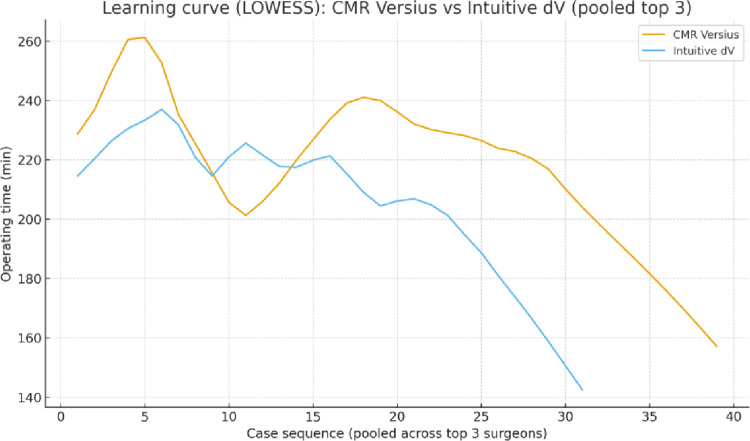 Figure 2
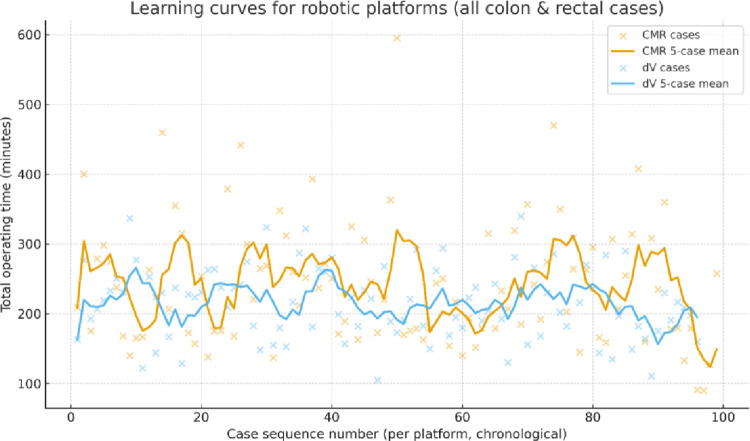 Figure 3
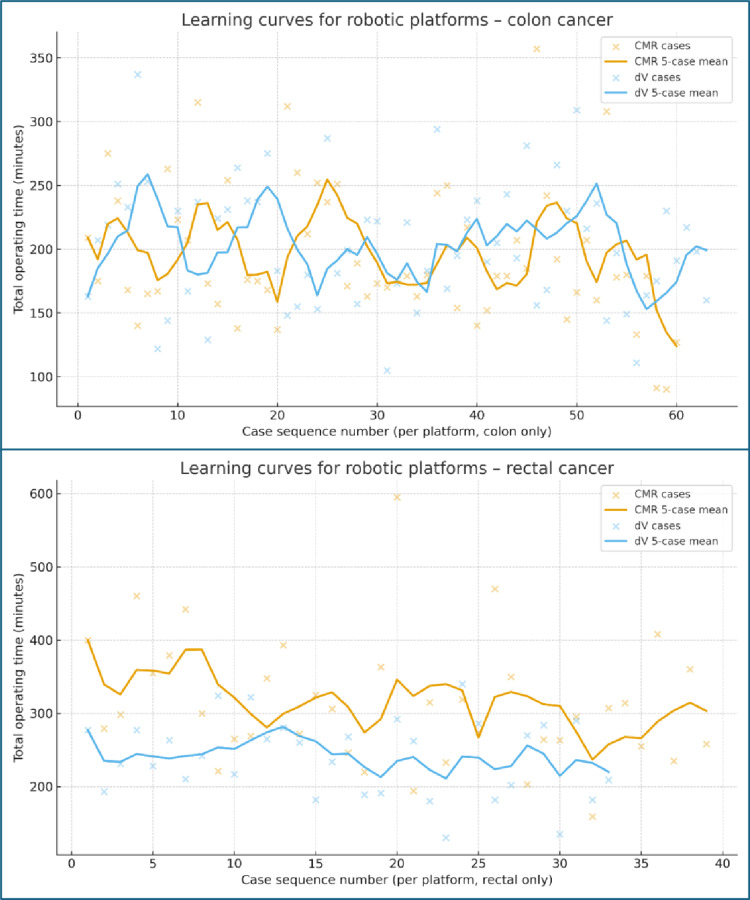 Figure 4
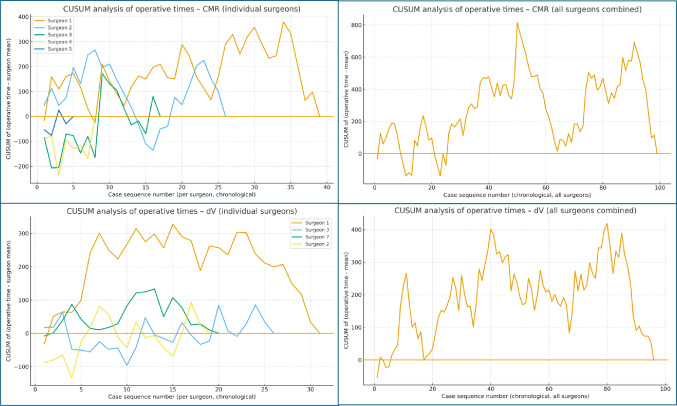 Figure 5
Peer Reviews
No public reviews on file for this paper yet. If you reviewed it on a platform where reviews are public (OpenReview, ICLR, NeurIPS, ICML), you can paste yours below so the community can read it here.
Videos
No videos yet. Explain this paper in a talk, walkthrough, or lecture? Add one.
Taxonomy
TopicsColorectal Cancer Surgical Treatments · Minimally Invasive Surgical Techniques · Surgical Simulation and Training